'We are treated as outcasts': Acid attack survivor fights for justice and dignity

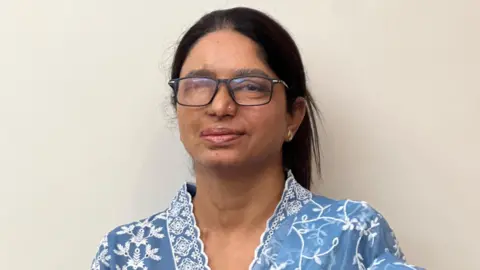 Shaheen Malik
Warning: This story contains distressing details
Shaheen Malik, an acid-attack survivor and disability rights activist in India, is fighting an uphill legal and social battle to secure justice and rehabilitation for others like her - and says she will not give up despite the odds.
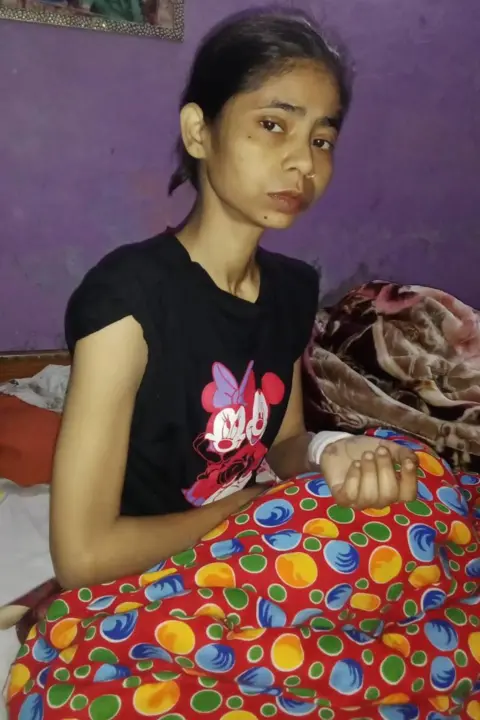
One survivor she's been helping is Ruman* who alleges that her husband beat her and forced her to drink acid during an episode of domestic violence in 2019.
The alleged incident left her with severe internal injuries and a damaged oesophagus that had to be artificially reconstructed so that she could eat.
Despite years of treatment, Ruman struggles to swallow food and eats little. At 28, she weighs just 21kg, less than the average weight of an eight-year-old girl. Basic tasks like going to the bathroom exhaust her and she needs constant medical supervision.
But despite her grave situation, Ruman is unable to seek compensation and rehabilitative benefits that acid attack survivors are allowed under India's disability law.
The Rights of Persons with Disabilities Act, 2016 only recognises those as victims who have suffered visible disfiguration due to the "throwing of acid or similar substances", excluding those who have been forced to ingest acid.
In December, Shaheen petitioned the Supreme Court saying the disability law must also include survivors like Ruman.
"For survivors of forced acid ingestion, the disfigurement is internal and hence not as obvious. But their lives are extremely challenging as they find it difficult to breathe, speak and swallow food despite numerous surgeries," she says.
Malik, 42, has been campaigning for the rights of acid attack survivors for over a decade. Her determination to help others seems to come from the challenges she has had to battle as a survivor.
She has undergone 25 surgeries and lost vision in her left eye after she was attacked with acid outside her workplace in northern Haryana state in 2009. Malik was in her 20s at the time and was working as a student counsellor.
For 16 years, she fought a legal battle to bring her perpetrators to justice before a trial court acquitted them in December. Malik says she's devastated, but not defeated, and has challenged the verdict.
"I fought for justice for myself. But now, I'm fighting for the sake of other survivors and victims of abuse. I want my case to be an example of justice served, that perpetrators won't walk free and will be made to face the consequences of their actions," she says.
 Shaheen Malik
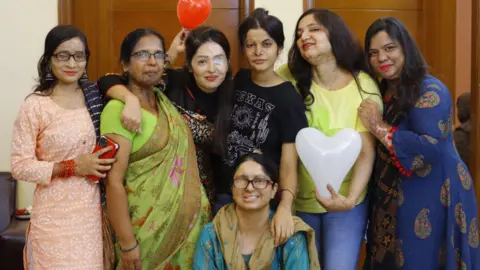
In 2021, Malik, along with Laxmi Agarwal, another acid attack survivor, set up the Brave Souls Foundation - a non-profit that offers legal and economic aid to acid attack survivors. The foundation acts as a lifeline for those who have been shunned by society and their families and have nowhere to go for help.
Around 50 survivors live in the foundation's shelter home in Delhi's Jangpura neighbourhood, where they are offered care and assistance. Ruman is among them as she does not want to be a burden on her parents, who are old and struggling to make ends meet, Malik says.
The foundation is also helping Ruman fight her case after her husband appealed against his conviction in a higher court and was released on bail last year.
Malik says she and Ruman are among hundreds of survivors who are fighting an uphill battle for justice. The conviction rate in acid attack cases is abysmally low with cases languishing in courts for years.
A 2024 report which analysed data from 2017-2021 found that from the 600 cases pending trial in 2021, only 15 were disposed off by courts.
This trend is confirmed by by the latest National Crime Records Bureau (NCRB) report, which shows that of the 703 cases pending trial in 2023, only 43 were disposed off, with convictions in 16.
Meanwhile, the number of acid attack cases in the country have been rising - NCRB recorded 176 in 2021, 202 in 2022 and 207 in 2023.
Last month, while hearing Malik's petition, the Supreme Court directed all states to furnish a yearly report of acid attacks, cases disposed off and those pending in courts, as well as rehabilitation schemes offered to victims. It also sought details of victims forcefully made to ingest acid.
Strongly condemning acid attacks, the judges called for "extraordinary punitive measures", including auctioning the assets of attackers to compensate their victims.
The court also asked the federal government to consider "legislative interventions", like shifting the burden of proof on to the accused from the victim.
While Malik welcomes the top court's observations and directions, she says that along with sprucing up laws, there's an urgent need to ensure their proper implementation.
 Shaheen Malik
She points out that acid attack survivors still struggle to get affordable medical care even though private and public hospitals are legally mandated to provide free treatment to them, including reconstructive surgeries.
"Many private hospitals refuse to admit acid attack survivors until they are furnished with a court order, delaying life-saving treatment to victims," she says.
"And even after they are admitted, hospitals make the patient wait for long hours to receive treatment and often, discontinue it mid-way by making excuses," she adds.
She also questions why it remains so easy to buy acid despite the increase in cases and existing regulations around over-the-counter sale of the substance.
"A single incident alters our whole life. We are treated like outcasts by society and face so many difficulties. Shouldn't the government do more to prevent more people from suffering the same fate as us?" Malik says.
Malik is intimately acquainted with the stigma and social isolation she talks about.
A few months back, Malik says, she was told to move her foundations's office without being given any reason. She says she has been searching for a new place for weeks, but hasn't been able to find one.
"Many people feel that we [acid attack survivors] may bring them back luck. Some feel uncomfortable seeing our faces. So, many people don't want to rent to us," she says.
But Malik says she won't give up and will continue fighting for a space for people like herself in society.
*Survivors have shared only one name.
