Night-time staff trained to spot sex offences

 BBC
BBCStaff working in Jersey's night-time economy have been taking part in a special training session about non-contact sexual offences.
Situations they were educated about included indecent exposure, up-skirting, drink-spiking, harassment, stalking and sending unsolicited photos, organisers said.
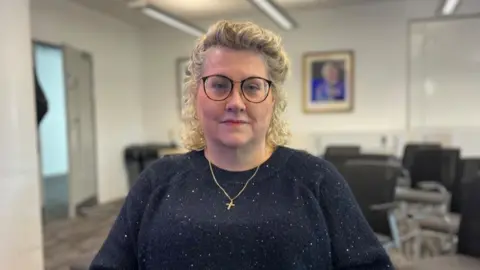
Lisa Squire, who delivered the training, said the education was important because "lots of people who commit these offences will go on to commit more serious sexual offences".
Community police officer David Bowler, of Jersey Police, said: "It's about spotting the signs of predatory behaviour and vulnerability and [knowing] how to report them."
'Escalation red flags'
Since then, she has campaigned for police to "listen and believe" women who reported sexual offences.
Squire said non-contact sexual offences were often "red flags for escalation".
She said: "It's really important to raise awareness and encourage women and girls to come forward and report them... Hopefully, by reporting, we can apprehend these people."
Speaking about her daughter's case, she said Libby was sent home alone on a night out, and she wanted door staff to have the confidence to spot and stop that from happening in future.
She said: "It's so important for people at pubs and clubs to realise that sending an intoxicated young person home alone is not a good idea, whether they are male or female".
She said that the majority of staff did a "good job" but that "we all need to be more mindful" in such instances.
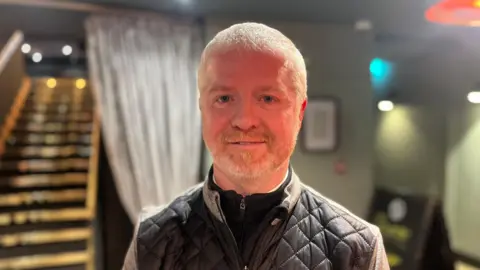
Among those trained was Keith O'Connor, general manager of the Liberation Group pub chain.
He said the training was helping him to empower his team to act on people's behaviour and spot things that "sometimes they miss".
"It will allow staff to open up more" and make people "more confident to open up and say something," he said.
He added that Lisa Squire's story resonated with him as a father of two daughters.
He said: "It's very sad, but she's such a powerful person... and I think it'll go a long way towards saving people's lives."
In Jersey, 25% of all crime is violence against women and girls (VAWG).
Last year, police recorded 153 non-contact VAWG offences, which is about 20% of the total.
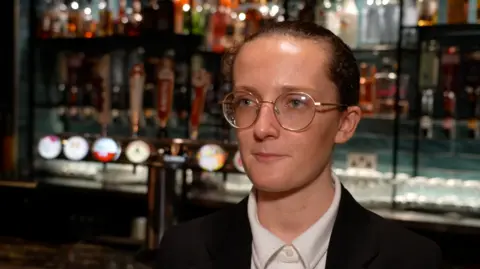
Delivering the training, DC Chloe Jones, of Jersey Police, said people incorrectly thought of such incidents as "low-level", but added they could often paint a bigger picture.
"These are quite often the stepping stones into further offending," she said.
As a sexual offences liaison officer, Jones said it was a subject she felt "really passionate about".
She said: "I want to make sure these sorts of things don't happen.
"As a young person that's also out in the night-time economy quite a lot, I'm here to champion keeping the island safe.
"Lisa shares Libby's story really well, and she expresses the fact that these lower-level offences are important and it does matter."
Jones added that she hoped the training would encourage people to speak up.
She said: "They'll see things and know things, and it's important they do pass it on.
"The message is: if it gives you a feeling in your stomach that it's wrong, it probably is."
Follow BBC Jersey on X and Facebook. Send your story ideas to [email protected].
