Thames sees biggest boat clean-up in years

 BBC
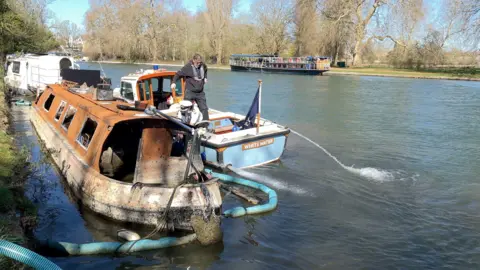
BBCThe Environment Agency (EA) has said it plans to remove more than 100 sunk and abandoned boats from the River Thames in what it has called its biggest clean-up operation in a decade.
It has already removed 53 abandoned vessels that were mostly left on riverbanks on the lower part of the river.
The owners are responsible for removing sunken wrecks and the agency has said it will look to recover costs from them when they are identified.
Bill Jephson, EA navigation operations deputy director, said: "Irresponsible boat owners have caused a blight on the Thames for far too long."
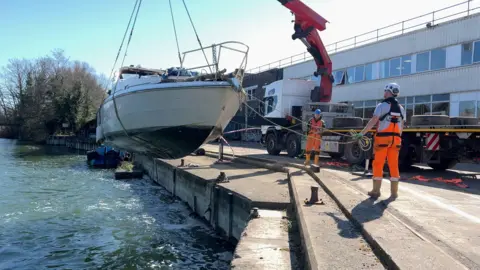
The operation began in July last year and the latest phase focuses on boats across the non-tidal Thames.
Jephson has called it "a clean slate" and said they are working with Oxford City Council, landowners and other key stakeholders to make sure the river was "a pleasant place" to visit.
He believes rubbish is left behind by people who do not realise how "harsh" it can be living on the river.
"We've got to tidy up the river, we've got to start somewhere and someone's got to take that step," he said.
Boats on the river need to be registered and comply with the agency's requirements including insurance and a valid boat safety certificate.
Jephson said they will continue to prosecute those offenders who do not follow the rules and have even began confiscating boats.
"Where people have been prosecuted in the past and still not learnt their lesson, we can seize their boats and we have," he said.
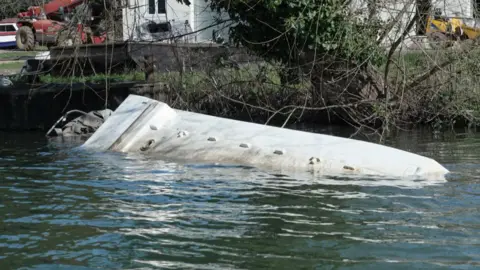
John Dutson, senior specialist in waterways department, says once an old vessel is removed it is taken to a compound for assessment where they will decide whether it has any value.
"From there it will go to sale, where we try to recover costs or it will go to destruction," he said.
Oxford resident Miles Carter said it was "good to see some of the abandoned boats being removed".
He said he had seen one outside a nearby pub for close to two years.
Seeing it removed made it "a much nicer and pleasant place for residents to use", he added.
