Fears for loss of tiny puffin colony

 Pete Christie
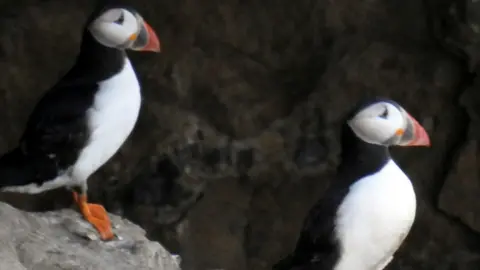
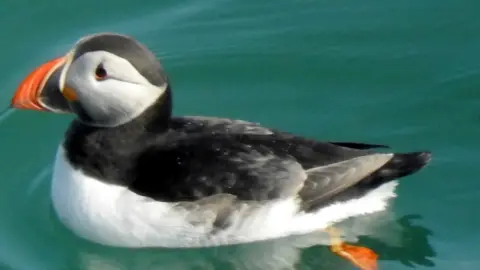
The last remaining colony of puffins on the Dorset coast is in danger of being lost altogether, conservationists have warned.
Home to about 40 pairs of puffins around 80 years ago, the colony near Dancing Ledge in Purbeck has dwindled to just three pairs in recent times.
Although these birds have engaged in courtship behaviour, mating, and nest building in each of the last three years, and even feeding chicks in 2023, they have not raised any fledges in recent years.
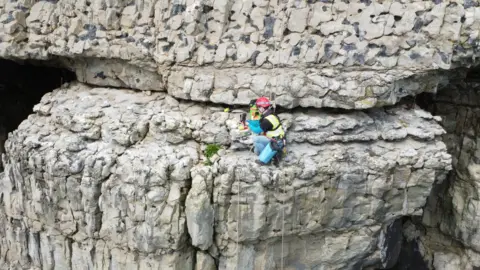
The National Trust is stepping up its investigation into the decline of the last colony, with motion-sensor trail cameras trying to establish why no chicks are surviving to fledge.
 James Preston
Already vulnerable, the trust said there was even greater concern for the future of the colony this season following reports of thousands of dead puffins washing up on European beaches during this winter's storms.
Predation of eggs and chicks is thought to be the most likely cause of puffins' breeding failure.
The National Trust said if it can identify the culprits, counter measures could be taken.
Having learned lessons from a similar venture in 2024, the trust is using the latest solar-powered cameras housed in secure boxes on the cliff and angled to give better views into the nesting crevice.
The project is being led by marine ornithologist, Dr Richard Caldow, who has been monitoring the colony since 2023, helped by a team of volunteers from the Purbeck Natural History Forum.
 Pete Christie
Ben Cooke, rivers and coast project officer for the National Trust in Purbeck, said: "With the colony being so small we fear that even if just one of the Purbeck birds were lost to the storms this winter, it would be another step closer to the loss of the whole colony.
"The puffins spend the winter far out at sea, returning to their nesting sites in late March.
"So far we've had reports that four of the puffins have made it back - we are waiting with some trepidation to see if the other two make it."
