Mum's plea for plasma donors after child's illness

 NHS Blood and Transplant
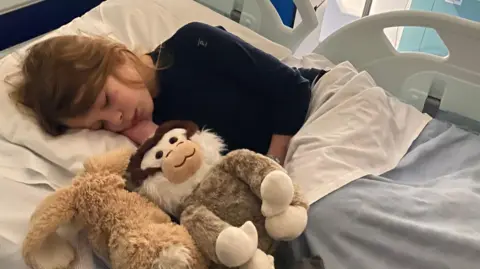
A London mum is urging people to donate plasma after her daughter needed urgent treatment for a rare childhood illness that can affect the heart.
Rebecca's daughter was seven when she was diagnosed with Kawasaki disease, a condition she had "only ever heard of" from a Grey's Anatomy episode.
Winifred received intravenous immunoglobulin which was made from donated plasma. Now aged nine, she has recovered and only needs regular check-ups.
NHS Blood and Transplant said plasma donors played a "vital role" in making sure treatments like immunoglobulin were available for children who need them, and Rebecca said she wanted to help ensure other families can access the life-saving care.
Rebecca's daughter became unwell in December 2023 with a fever that lasted several days.
"At first it just seemed like a normal illness," Rebecca said.
"She wasn't extremely unwell. She just had a temperature and didn't feel herself."
After checks at hospital, the family were reassured and sent home but she later developed an unexplained rash across her body.
Rebecca shared photos of the rash with a friend who is a paediatric A&E consultant. He advised her to return to hospital so doctors could rule out Kawasaki disease.
"At that point, I'd only ever heard of it from a Grey's Anatomy episode," Rebecca said.
"I never imagined it could be something that would affect my own child."
 NHS Blood and Transplant
Winifred was taken to the Royal Free Hospital in London, where she was diagnosed with Kawasaki disease, which causes inflammation in blood vessels and can damage the heart if left untreated.
Because the condition was picked up quickly, Winifred was given urgent intravenous immunoglobulin, a treatment made from donated plasma.
Early treatment is known to significantly reduce the risk of long-term heart problems.
Rebecca said her daughter "was discharged quickly and was back at school within days".
Now aged nine, she is fit and well and no longer needs medication, although she continues to attend routine follow-up appointments, her mother said.
Kawasaki disease can be difficult to diagnose, as its symptoms often resemble more common childhood illnesses.
Delays in treatment can increase the risk of serious heart complications.
'Lifelong heart complications'
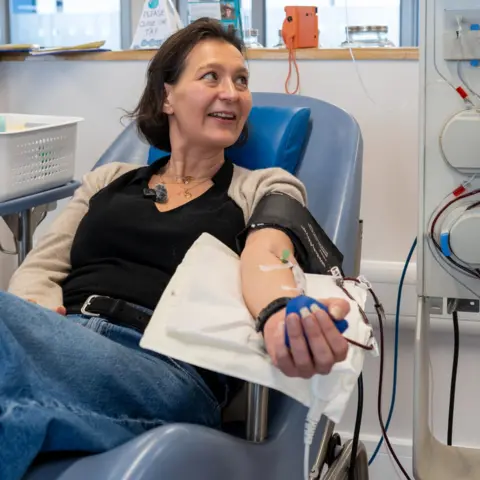
After learning more about how plasma donation is used to produce immunoglobulin medicines, Rebecca decided to donate plasma herself at a dedicated plasma centre in Twickenham.
She said she wanted to help ensure other children can access the same life-saving treatment her daughter received.
Pamela Antoinette, an operations manager with NHS Blood and Transplant, and former Great Ormond Street Hospital nurse said she had seen "first-hand how devastating Kawasaki disease can be for children and families".
"Some children recover well, but others face serious, lifelong heart complications."
"Plasma donors play a vital role in making sure treatments like immunoglobulin are available when children need them most," she added.
What is the difference between a plasma and blood donation?
Plasma makes up 55% of our blood and contains antibodies which strengthen or stabilise the immune system.
These antibodies can be made into medicine and treatments, such as the one Rebecca's daughter received.
When a blood donation is made, all the components, including plasma are taken.
During a plasma donation, your blood goes through a machine which separates the plasma from the other blood components.
When only plasma is collected, the other components - such as red blood cells are instantly returned to your body.
This means you can donate more plasma in a session, but donate more often too, on average every two weeks compared to a blood donation, which is generally every 12 weeks.
Source: NHS Blood and Transplant website
Signs of Kawasaki disease can include:
- A high fever lasting five days or more, often not responding to paracetamol or ibuprofen
- A rash that can vary in appearance
- Red or swollen hands and feet, sometimes painful
- Red eyes without discharge
- Red, cracked or swollen lips, a sore mouth or a red "strawberry" tongue
- Swollen glands in the neck
- Extreme irritability or tiredness
Parents are advised to seek urgent medical advice if a child has a persistent fever alongside any of these symptoms.
Listen to the best of BBC Radio London on Sounds and follow BBC London on Facebook, X and Instagram. Send your story ideas to hello.bbclondon@bbc.co.uk
