Wet winter may be behind 'devastating' bee losses

 BBC
BBCBeekeepers in the South West say they have lost an unusual number of bees this winter, with one describing it as "devastating".
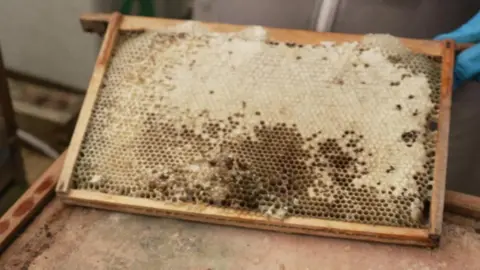
Dennis Kennedy has lost 10 of his 11 hives at Lukesland Gardens in Ivybridge, with the bees having either died or "absconded", meaning they have flown away.
A survey conducted last year by the British Beekeeping Association (BBKA) found most consider acceptable losses to be 15%.
Ashley Tod, who runs Dartmoor Beekeeping said: "The wet, mild winters that we get in the South West have been particularly bad this year."

According to data from the BBKA, average losses nationwide last winter sat at just under 25%, with the South West number very similar.
The worst region for losses was the South East, which experienced nearly 30% loss.
Data for this winter will not be released until August, but the South West's number is expected to be far higher than in 2024/25.
"It's been an absolutely devastating year for me personally," said Kennedy, who keeps bees as a hobby.
"This is definitely the worst year [I've had] and speaking to other hobbyists in the local environment they've had similar losses, if not potentially worse than myself."
Tod, who has been in the industry for 13 years and taught Kennedy how to keep bees, has called the situation "unusual".
"There's a lot more losses this year than any other year that I've been a beekeeper," he said.
'Drastic drop'
Chair of the East Devon Beekeepers Association, Alasdair Bruce, said he does not remember ever losing so many bees, in 30 years. He estimates his losses this winter as 80%.
"As a result, I sort of reached out to some of the members that I know quite well and within fairly short order, an enormous amount of information came back in to say that there has been a drastic drop in numbers that have come through the winter in our part of East Devon," he said.
"And I suspect that is mirrored across the South West."
It is thought recent wet weather could be one of several factors responsible, with illness and nearby farming practices also possible factors.
Cornwall experienced its wettest ever winter this season, while North Wyke in Devon logged 40 consecutive wet days from 31 December to 8 February, according to the Met Office.
"That is time the bees can't go out and cleanse on a cleansing flight, they can't go out and forage and that's denying the brood nest really important spring protein to allow them to get through the winter months," Tod said.
Follow BBC Devon on X, Facebook and Instagram. Send your story ideas to spotlight@bbc.co.uk.
