Time ticking to save council from going bust

 BBC
BBCBorrowing from the government has become a growing reality for a number of councils - but doing so twice in the same year suggests a deeper crisis.
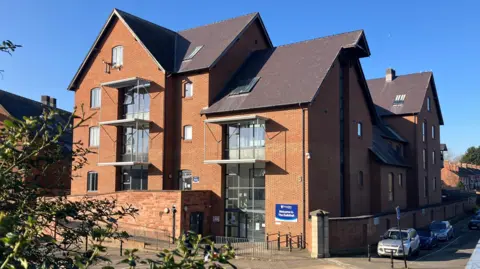
Shropshire Council is awaiting the result of a request for Exceptional Financial Support, hoping to avoid a section 114 notice – an official declaration that a council is unable to meet its spending requirements.
Without government help, the council said it would need to consider its position, and could not rule out the issue of a section 114 until it hears.
The Liberal Democrat leader of the council has described its financial situation as "really serious".
"I would think that the government would be sensible," said Councillor Heather Kidd of the request for a £60m loan.
"I think they are acutely aware that councils are struggling all over the place and they will allow us to continue to deliver our priorities for Shropshire."
The financial emergency declared by the council last month has united all parties at the authority behind a single cause - to survive - but it has not stopped the finger-pointing.
The Lib Dems, who took control in May, lay much of the blame at the feet of the previous Conservative administration for its "unrealistic" budget for 2025-26.
They claim the Tories did not meet the savings target for successive financial years, with £37m of undelivered cuts rolled over into this year putting additional strain on current spending.
The Conservative group on the council hit back at the claim, pointing to £47m worth of savings last year alone, almost a fifth of its budget, and a higher percentage spending cut than any other local authority in England.
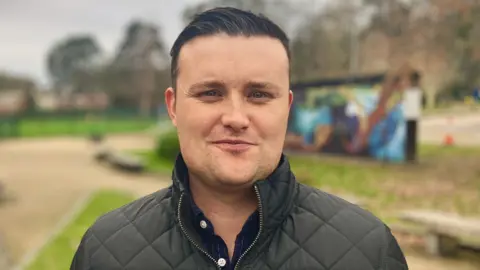
"We have a really good track record of making significant savings," said Dan Thomas, the new leader of the council's Conservative group.
"The big problem, and it does cover our previous [Conservative] governments as well as Labour, is that the essential government funding formula for local councils has consistently disadvantaged large, sparsely populated rural counties like Shropshire where it costs more to deliver services.
"And the Labour government has come in and not been a friend of Shropshire."
Ministers are in the middle of a review of council funding ahead of the next financial year, and have said they want to fix the "broken" funding system they inherited.
The government said its "fairer funding" reforms would take into account "the additional costs in delivering services in rural places".
But with government spending already under pressure, all eyes will be on November's Budget and next year's local government grants to see how much will change.
Thomas's concerns regarding central government funding are shared by the leader of the main opposition Reform UK group on the council.
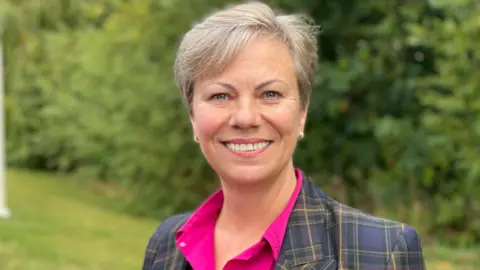
Dawn Husemann said governments had underfunded local authorities since 2010, and unless more funding was granted, further councils would collapse.
When asked if she thought a Reform UK government would give councils more money, she said she "certainly hoped so".
"Staff at the council have been under so much pressure for so long," she said.
"When you talk about £156m of savings over a period of eight years, you imagine working under that kind of pressure continuously."
The council's interim chief executive, Tanya Miles, has emailed staff to reassure them about further job cuts
In the message, seen by the BBC, she said "I know you're tired", but stated that no more mass redundancies would be made.
If Shropshire Council is successful in its government loan application, then it will have borrowed in excess of £87m this year, after the previous Conservative administration was granted £26.9m of Exceptional Financial Support in February for the 2024/25 financial year.
The Liberal Democrat administration said the funding would stabilise its financial situation and allow the organisation to reform the services it delivers.
Follow BBC Shropshire on BBC Sounds, Facebook, X and Instagram.
