Hat-mad town celebrates 150-year milestone

 Martin Giles/BBC
A place well-known for making hats and cars, and having a football team championed by comedy legend Eric Morecambe, is celebrating 150 years of being a borough.
Luton was given its borough status on 25 February 1876, which meant it could be locally governed.
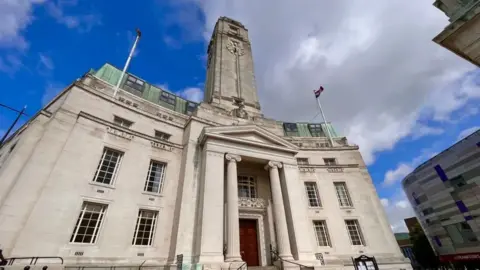
The council survived the destruction of its town hall during a riot in 1919 and the new building being targeted by the Luftwaffe during World War Two.
The celebrations include a tree planting on 27 February.
When the Municipal Borough of Luton made its debut 150 years ago, its first mayor was a bank manager called William Bigg.
His daughter Louisa was a reasonably well-known poet (Luton has also produced the modern writer and performer of humorous verse, Jon Hegley, who has been a regular on BBC radio) and Bigg himself wrote tourist guides.
With a team of aldermen and burgesses, the mayor oversaw Luton's streets, water supply, sewers and slaughterhouses.
In 1904, the borough spent £16,250 buying Wardown House and its 11-acre (4.5 hectare) park.
A year later, Luton changed forever with the arrival of the Vauxhall car plant which eventually employed 36,000 people and eclipsed hat-making as the town's dominant industry.
 LUTON CULTURE/LUTON NEWS
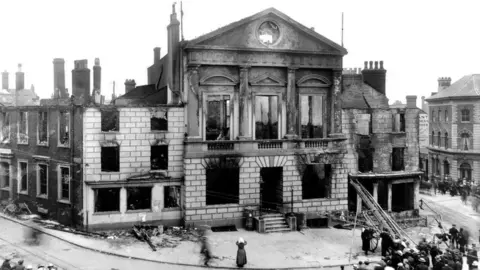
In 1919, the Town Hall that had been the borough council's home since its inception was almost completely destroyed during the so-called Peace Riots.
Ex-servicemen, who had returned to Luton after World War One, found there were few jobs available and felt forgotten.
To add to their dismay, the council refused to allow a drumhead service at Wardown Park on Peace Day.
As members of the council gathered to read a Peace Proclamation, the crowd of soldiers and others became restless and the situation soon developed into a full-blown riot.
When calm was restored, the Town Hall had been ravaged by fire.

Steve Goodman, whose grandfather was sentenced to six weeks of hard labour for his part in the riot, told the BBC in 2019: "In the afternoon, he was one of the leaders banging on the door of the Town Hall, trying to get in."
By the evening, he was outside the civic building playing a piano that had been removed from a nearby music shop.
The remains of the hall were demolished, and the council met at the Carnegie Library until a new hall was built on the site of the old one in 1936.
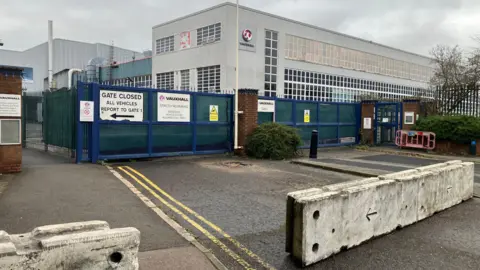
The clock tower of the hall had to be camouflaged during World War Two as the Luftwaffe targeted the nearby car factory.
The years after the war saw Luton expanding, creating new housing areas like Marsh Farm and taking in villages like Leagrave, Limbury and Stopsley.
In 1974, the borough lost some of its powers to Bedfordshire County Council during local government reorganisation, but it got them back again in 1997 when Luton became a unitary authority.
 Sam Read/BBC
The anniversary will be marked with a tree planting by the Lord-Lieutenant of Bedfordshire at 11:30 GMT in St Mary's churchyard, and there are further events over the next few months.
The council leader, Hazel Simmons, said: "It's a big achievement having borough status for 150 years.
"It's an important part of the democratic process of our town."
Follow Beds, Herts and Bucks news on BBC Sounds, Facebook, Instagram and X.
