Volunteers clear sour fig to protect sand dunes

 Alderney Wildlife Trust
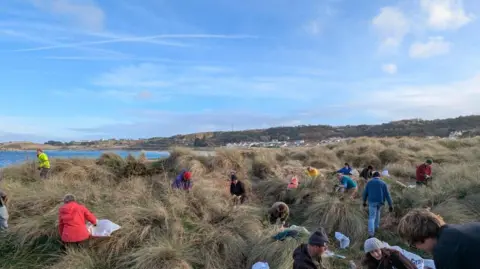
A team from Guernsey Conservation Volunteers has been helping restore sand dunes in Alderney.
The 15-strong team joined the Alderney Wildlife Trust to remove sour fig, which is thought to have been introduced after World War Two to cover wartime bunkers, but posed "a significant threat to the island's delicate dune systems", the trust said.
The volunteers removed an estimated 13m-cubed of the heavy fast-spreading invasive plant which carpets and weakens marram grass if left unchecked.
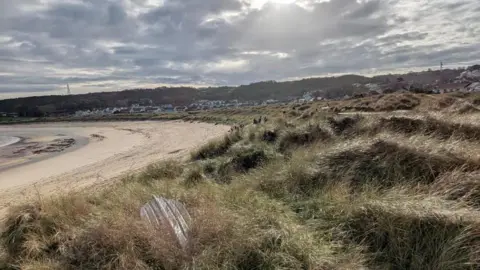
The trust said the dunes relied on marram grass as its 4m (13ft) deep roots bound the sand together and formed a natural barrier against storm surges.
 Alderney Wildlife Trust
Alderney Wildlife Trust CEO Roland Gauvin said the volunteers' commitment "makes a real and lasting difference" at Braye Beach and more than 30 people cleared the dune between 14 and 16 November.
The team carried out its latest work, fresh from celebrating receiving the King's Award for Voluntary Service.
The Alderney clearance work was part of the Natural Barriers Project, which looked at nature-based solutions to tackle challenges facing Alderney, including restoring the islands Atlantic woodland, organisers said.
Researcher Sophie Mowbray has also created a detailed map of Alderney's sand dunes this year to track changes over time and assess dune health.
Wildlife trust staff were also using drone technology to build high resolution 3D models of key habitats to detect early signs of decline, bosses said.
Follow BBC Guernsey on X and Facebook and Instagram. Send your story ideas to channel.islands@bbc.co.uk.
