'We won't be able to use our phones if we have a power cut'

 BBC
BBCVillagers in a remote part of southern Scotland say the rollout of digital-only systems to replace analogue landlines will cut off their communications during emergencies.
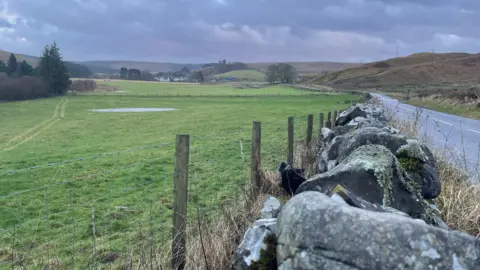
Eskdalemuir has little or no mobile phone reception and can suffer regular and lengthy power outages.
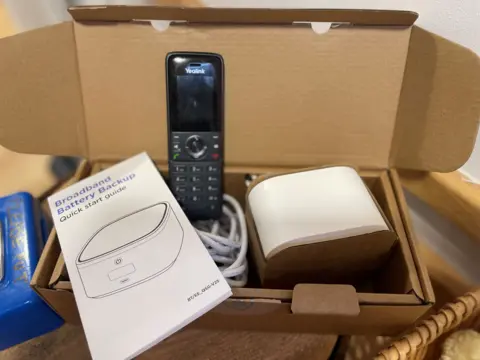
Residents say it means they will be unable to call for help when traditional landlines are switched off and say BT's backup battery units are wholly inadequate.
BT said the old technology was no longer fit for purpose and that, in addition to the units, it offered hybrid phones and in-home assistance for people with additional needs and had advanced options for prolonged outages.
Landline operators are switching every home phone in the UK to an internet-based connection instead of traditional, copper-wire cables.
The work is scheduled to be completed by January 2027.
However, there have been concerns about its impact in more remote and rural settings with poorer broadband or mobile phone connections.
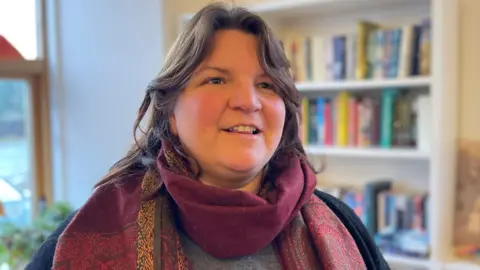
Lara Porter, development manager at the Eskdalemuir Resilience Hub, said the small backup battery units being offered were of little use to the 250 or so residents when power cuts could last for days.
"I would like them to take much more responsibility, I would like them to engage more with the communities they are affecting negatively," she said.
"There needs to be a strategic and well thought-out plan about where they are going to put mobile masts to make sure we get full coverage.
"We shouldn't be making people more vulnerable in this day and age because we've changed our telecommunications systems."
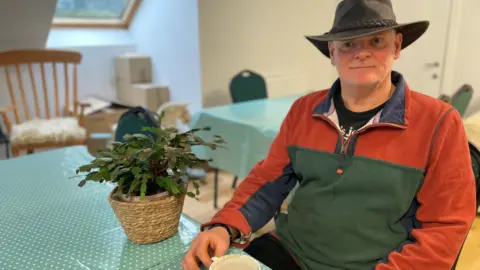
Martin Towers is severely visually-impaired and has a heart condition which puts him on a priority list but he said he had not been given any information about the options available.
He lives with his wife Helen and has no mobile reception in their home which still has its copper landline which is due for upgrade soon.
"We don't have any choice," he said.
"I'm scared of having fibre in case the power goes off and how will we communicate with anybody?
"If something happens to me or Helen, what will we do then?"
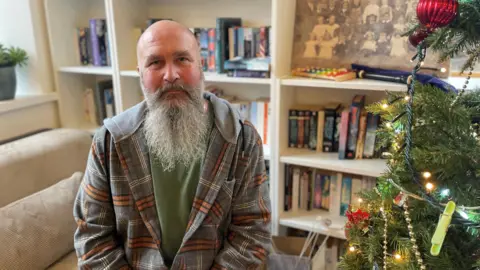
Other residents who are not eligible for free backup assistance on medical grounds are choosing to invest hundreds of pounds to upgrade their own systems
Retired electrician Graham Wilkinson has hit-and-miss mobile reception, and recently upgraded to the new fibre service which requires a power supply to operate.
He said there was no real advice from BT and has since spent £650 on a backup battery unit which could last six or seven days.
Ernie Buck, 78, also spent almost £200 on a backup battery which should give him power to the phone for seven to eight hours.
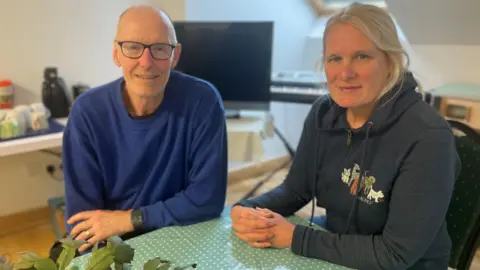
Retired couple Lisa and Ian Warden also have no mobile signal in their home and said power outages were common - even in the middle of summer.
"Some people don't even realise if they pick up the landline it's not going to work in a power cut - they haven't quite twigged that it's going to be an issue," said Lisa.
"The root cause of the problem is not being able to call for help if you need it if you haven't got a landline in a power cut.
"If there's technology that exists that would allow people to have phone signals in their house then that would be a good investment I think."
Dumfries and Galloway Council said it was aware of the issue but it was the responsibility of national providers and regulators.
Watchdog Ofcom stressed that it had set clear expectations of phone companies and customers should be offered a "free solution that meets their circumstances in case of an emergency".
Scottish Business Minister Richard Lochhead said he would continue to work with the UK government and operators to ensure digital migration worked for everyone.
Meanwhile, the UK department of Science Innovation and Technology stressed that phone companies were legally required to ensure their networks were resilient.
BT said it offered a range of options to suit individual needs in the event of a loss of electricity.
It also said backup power generators were being added to more sites, and it was working with the energy industry to restore power quickly, where possible.
