Citizen scientists help stave off invasive seaweed

 Scottish Power
A project to learn about marine wildlife along the coast of south-west Scotland ended up discovering and dealing with an invasive seaweed species.
Thousands of people took to the shorelines of the Rhins of Galloway - a double-headed peninsula - as part of the scheme to tackle environmental challenges.
The Galloway Seaweed Search (GSS) recorded the non-native species Wakame, a large brown seaweed used in the food industry in Asia, for the first time in the area.
However, thanks to the efforts of the project, there was no evidence of its presence last year after being detected for two years in a row.
 Scottish Power
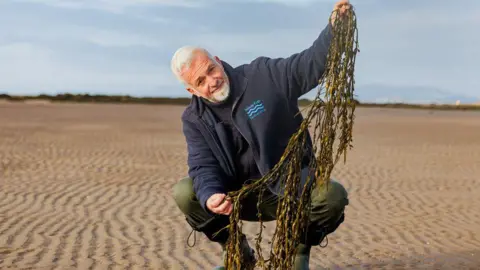
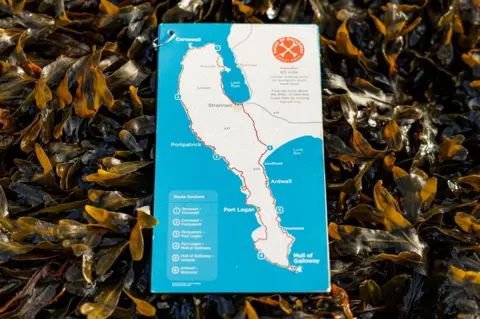
Led by local charity the Solway Firth Partnership (SFP) with funding from Scottish Power Renewables' Kilgallioch Wind Farm community benefit fund, the scheme helped the public become "citizen scientists" to monitor seaweed in the area.
Using a specially-designed identification guidebook, more than 4,000 people had been exploring and monitoring seaweed, when they uncovered the invasive species.
SPF project officer Nic Coombey said: "GSS has been one of our most impactful projects to date.
"Not only have we been able to successfully discover and monitor an invasive species, but we've also been able to get many locals involved to discover the wonderful world of seaweed.
"Protecting and celebrating our beautiful beaches is at the heart of what we do, and thanks to ScottishPower's funding we went even further than we had initially hoped to.
"This will have a lasting impact on the shoreline for years to come."
 Scottish Power
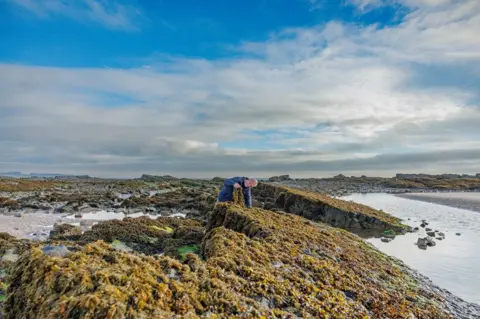
The non-native seaweed was recorded for two years in a row but thanks to the work of the GSS it appears to have gone.
The latest monitoring found that the threat from the Wakame had lifted and that marine life had returned to normal.
Gillian Arnot, of ScottishPower Renewables, said supporting community projects was important to the company.
"GSS shows how volunteers and experts can work together to tackle the issues facing our region," she said.
"We're proud to support their work to understand and improve our shorelines for future generations."
