What does delaying elections mean for Norfolk?

 BBC
BBCThe government said it would postpone 29 local elections in England that were due to take place in May - Two of those were supposed to happen in Norfolk.
It said the delay was necessary to help carry out a major shake-up of local councils.
But those against the decision say it's anti-democratic and have accused council leaders of running scared.
Why is this happening?
At the end of 2024, the government said it wanted to make huge changes to councils by reorganising local government in several parts of the country.
The pledge from ministers was that more power and money would be moved away from Westminster.
It would mean Norfolk's county council and seven district councils – including Norwich, Great Yarmouth and Breckland - would be scrapped.
They would be replaced by either one, two or three large "unitary authorities", depending on what the government decides.
Why would changes get in the way of elections?
Different councils have different responsibilities.
The county council covers services like children's and adult social care, education and transport. Meanwhile, the districts handle things like rubbish and recycling collections, housing and planning.
Coming up with a new system where those services are all under one roof is a big job.
So the government told the authorities involved that if they were planning elections in 2025, they would need to put them off for 12 months to focus on reorganising.
Norfolk County Council, which has 84 councillors, agreed to a postponement last January.
There is precedent for similar postponements, most recently in 2021 when local elections were delayed in Cumbria, Somerset and North Yorkshire so councils could be reorganised.
 Jo Thewlis/BBC
Why are some elections postponed this year as well?
The government said that with reorganisation under way, lots of councils had raised concerns that they would not be able to continue the workload and hold elections at the same time.
Leaders of 63 councils due to go to the polls in May were asked if they wanted to go ahead with them - 28 requested a delay, 35 did not.
What did councils in Norfolk say?
Voting was only scheduled for two of Norfolk's councils this year.
Norwich City Council's Labour leader Mike Stonard asked for a postponement, warning that "the council's capacity to participate in decision making" would be affected by elections.
Referring to how voting had been postponed in similar circumstances elsewhere, he said it was "perfectly normal".
Norfolk County Council's Conservative leader, Kay Mason Billig, did not ask for a delay in her letter to the government but warned the reorganisation plan could collapse if elections took place.
Afterwards, the government said it would postpone elections at both the city council and – for a second year running – the county council.
This year's elections have also been called off at 27 other councils.
How did that go down?
Opposition parties at both authorities accused the leaders of running scared.
With both Labour and the Conservatives struggling in the polls, they pointed out that postponements were convenient.
The Liberal Democrats' leader at County Hall, Brian Watkins, said it was "a bad look" and "a bad day for local democracy".
Norwich's Green Party leader Lucy Galvin said "elections are a right, not a logistical option" and that the city council was capable of working on reorganisation whilst opening polls.
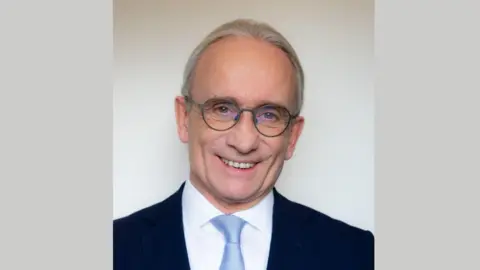
Reform UK county councillor David Bick echoed her comments and added the Conservatives and Labour were "clearly subverting democracy".
However, members of those parties have also criticised the postponements.
Broadland Conservative MP Jerome Mayhew said "it was a mess entirely of the government's making".
Labour's South West Norfolk Terry Jermy said Norfolk County Council's leader had "completely fudged it" – and whilst he was less critical of the city council, he insisted "democracy is important".
 Reform UK
What happens now?
Reform is looking to challenge the postponement decisions in the courts, with a hearing scheduled for 19 February.
If that is unsuccessful, work to create the new unitary authorities will continue, and the government has said elections for those areas will take place next year.
Of course, that is dependent on the schedule for reorganisation going as planned.
Sitting councillors could also choose to resign their seats, which would trigger by-elections.
Follow Norfolk news on BBC Sounds, Facebook, Instagram and X.
