Patients raise concerns as health board set for major changes

 Getty Images
A health board has supported making changes to a number of its services, including a reduction in the number of specialist stroke units in its hospitals from four to one.
Hywel Dda health board has approved changes to nine services, including stopping emergency general surgery at one hospital, and changing an intensive care unit at another to an enhanced care unit, providing a lower level of care.
The move has left some patients feeling concerned, with one treated at a hospital after a stroke saying it was a "frankly irresponsible decision".
The health board said the changes were not about saving money, but strengthening vulnerable services and making them sustainable.
The proposed changes, which were decided at a two-day meeting in Carmarthen, will not come into place straight away, and patients are advised to carry on as normal for now.
In a consultation last summer, a number of options were put to the public over how nine clinical services would run in the future.
Critical care, stroke services and eye care are among those in need of attention in the health board area which covers Carmarthenshire, Ceredigion and Pembrokeshire.
The board discussed these as well as 22 further options put forward by the more than 4,000 respondents.
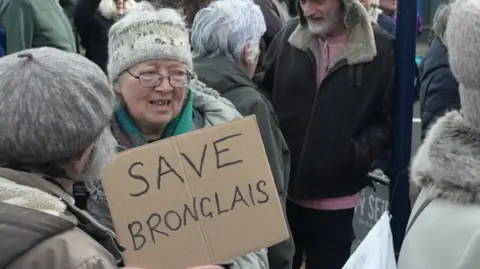
Changes to stroke services had been under particular scrutiny, and the meeting heard that those changes "had attracted the strongest opposition".
There are currently stroke units in Carmarthen, Llanelli, Aberystwyth and Haverfordwest.
If the plans agreed at the meeting are put in place following a consultation, in future there will be only one located at Glangwili Hospital in Carmarthen, while a "treat and transfer service" will be available at Bronglais Hospital in Aberystwyth, as well as in Llanelli and Haverfordwest.
Brendan Somers, who was treated at Bronglais two years ago following a stroke, said he was concerned about the options being considered.
"It would be a tragic and, quite frankly, irresponsible decision," he said.
Somers questioned the rationale behind the proposals, arguing that Bronglais sits at the "geographic centre of the Hywel Dda area".
"Is there a more logical place to have a top quality service than in the centre of the catchment area it's got to deal with?" he said.
Lisa Francis, chairwoman of Protect Bronglais Services, said she was "really disappointed" that Bronglais will not have a stroke unit, saying that if people were to be moved between services in the area then access to ambulances was crucial.
"If you're moving people a distance of two hours away by road, we need to know how they're going to get there and how they're going to get back," she said.
The changes for acute services – other than strokes – will see an end to emergency general surgery at Withybush Hospital in Haverfordwest, and the hospital's same day emergency care will instead be strengthened. Emergency general surgery will continue at Aberystwyth and Glangwili in Carmarthen.
For critical care, all four hospitals currently have an intensive care unit (ICU), and the board decided to approve the option that would see intensive care units remain at Aberystwyth, Carmarthen and Haverfordwest.
Meanwhile the service at Llanelli would change to an enhanced care unit, which can provide services for stable patients rather than the higher level of care provided at an ICU.
The health board also agreed changes to six other services – ophthalmology, orthopaedics, dermatology, urology, endoscopy and radiology.
At the start of the meeting Huw Thomas, the health board's finance director, said the decisions being considered were not about making money, but around "vulnerability" of services, as well as "creating sustainable services and clinical standards".
"But we also have a duty to the taxpayer," he added.
Lee Davies, also from the health board, said changes were needed because "our population do not currently benefit from the advancements in standards that we have seen across the rest of the UK and the world".
"We need to think about how our future configuration will set the foundations for us to be in a position to deliver those standards in the future," he added.
Board members were told earlier that public trust in the consultation process was fragile, with some feeling it was "complex and at times pre-decided".
Responding, Neil Wooding, the health board's chair, described it as "an honest process", and said feedback had been "enormously useful". He added that the board had faced "a series of tensions" in reaching a decision.
Analysis by Jenny Rees, BBC Wales health correspondent
While there will be specific communities affected by these decisions, Hywel Dda is not alone in having services facing crisis point when faced with staff sickness or annual leave, based in buildings in need of care.
So when services are fragile, and resources finite, centralising them can mean more can be done with less.
Health boards have made similar moves to strengthen rotas and allow for a more robust service – often increasing the amount of appointments available at the same time.
The particular challenges for a health board covering such a vast expanse of Wales is that care closer to home is sacrificed.
For a number of years politicians across the spectrum have talked of needing to do things differently.
Those within the service have argued that the NHS simply cannot continue with the volume of work expected of it, with the existing model of funding.
The changes in Hywel Dda have been on the cards for some time - such are the pressures on services that doing nothing is no longer an option, and the challenge comes in reassuring communities that care will not be compromised as a result.
