Airport staff blindfolded to understand sight loss

 BBC
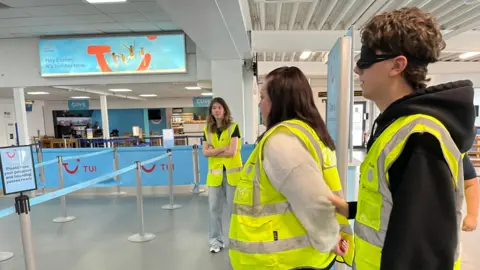
BBCThe charity Guide Dogs has been training the staff at Exeter Airport to be "sighted guides" to make it more accessible for visually-impaired passengers.
Staff have been learning how different sight conditions can change how much a customer can see and how to offer assistance if someone requests it.
Working in pairs, the training involves one person wearing a blindfold, while the other guides them around check-in desks, through security and onto a flight all the time describing where they are going and what is around them.
It was hoped the training would allow staff to help those with sight loss navigate the busy airport environment.
Check-in, security, getting to the gate and boarding the plane; airports are busy, bright, noisy places that many of us find stressful.
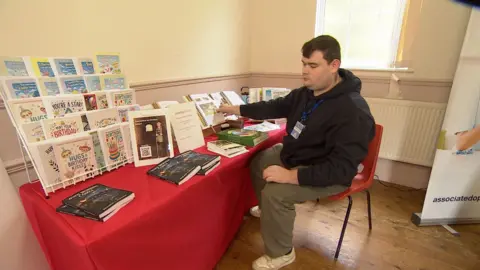
Brandon Hulcoop says it is worse if you are blind.
He travels independently by bus and train, but finds airports a particularly intimidating experience.
"Getting members of staff to blindfold themselves and try to navigate an airport, it makes people feel exactly the way we feel and to be honest thats absolutely blinking terrified!"
He added he was pleased the airport was taking up this challenge and training its staff to help.
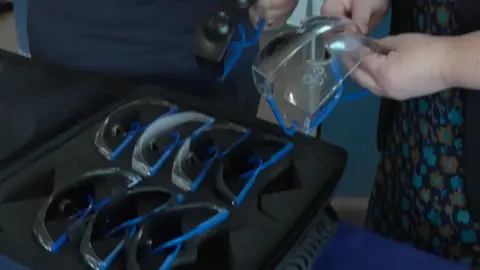
At the start of the course the airport staff are taught by the trainer about the different visual impairments customers might have so they get a better understanding of someone's needs .
Carol Butler from Guide Dogs said: "One of the myths we try and bust is that people with sight loss can't see anything at all."
She added, that the "'sim specs' show what people can do with their functional vision.
"So you get central or peripheral vision and different sight conditions can affect the ways people see."
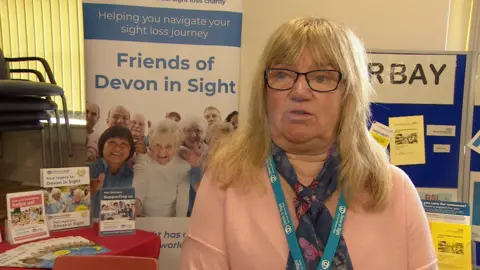
Mandy Darling works for the charity Devon in Sight which said there were 51,000 people living in the county with a level of sight loss that seriously impacts on their lives.
She sits on the airport's Passengers with Reduced Mobility group and has been advising them on what it is like to travel with a sight impairment.
She said their passenger assistance programme had been "a real asset, a real support to people with disabilities who are able to travel."
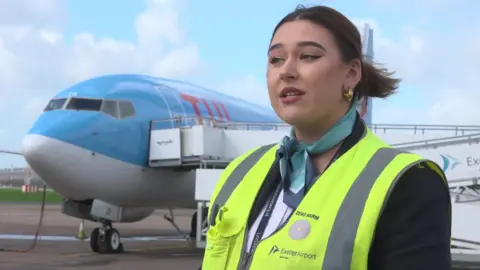
Mariia Gorbacheva from Exeter Airport said: "It's very important to educate us as staff members to ensure that all passengers travelling from our airport are able to have the best possible experience, make sure everyone is included, make sure we are aware of the best way to support them."
