Power station remembered at town exhibition

 Ronald Searle
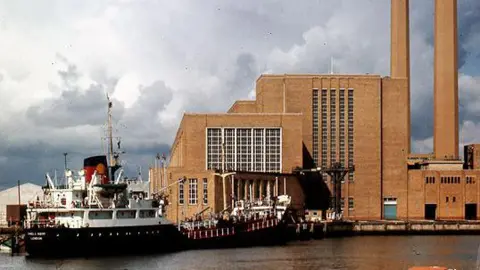
A museum has dedicated an exhibition to a power station whose twin towers were a coastal landmark for more than 40 years.
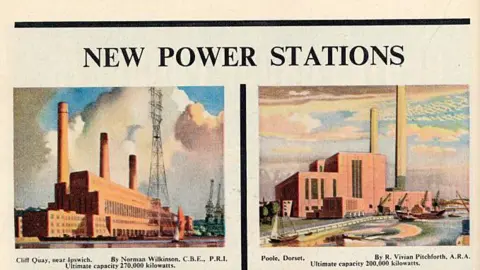
Poole Power Station in Dorset, built between 1946 and 1950, was part of Britain's post-war drive to ease electricity shortages and meet rising demand.
The 40-acre site at Hamworthy has been empty since it was demolished in the 1990s. It was bought by Bournemouth, Christchurch and Poole Council in 2020.
Poole Museum's exhibition includes paintings, plans and a clock which stopped when power to the site was cut for the final time.
 Getty Images
Museum project manager Alison Gudgeon said she had relatively few artefacts from the station, despite its iconic status.
She said: "It was pushing forward technology. This was the stage when Britain's National Grid was forming.
"Electricity was absolutely transforming people's lives. So that whole post-war Britain which is an incredible, captivating moment... was kind of all happening here in Poole in a very visible way."
Gudgeon said the station was built on reclaimed land, using aggregate from near Sturminster Marshall.
Accounts describe local roads being covered in chalk from the aggregate lorries, she added.
Ash from the power station, which burned coal and then oil, was mostly pumped out to sea, she said, although some was used to create Turlin Moor playing field.

She said some museum visitors had brought in power station memorabilia which would be digitised to form a historical archive.
The exhibition, which opened in February and runs until August, has also reunited former workers and their families, she added.
She said she was tempted to organise a reunion meal, recreating the power station's farewell workers' dinner of chilled melon, plaice bonne femme and roast turkey.
"You're able to make connections and build up that rich social history," she said.
"I'm struck by the complexity and the intricacy of the building... That it's not here any more feels really sad."
