The Comet: Britain's pioneering jet airliner

 Getty Images
The story of Britain's de Havilland Comet, the world's first jet airliner, which heralded a new age of flying.
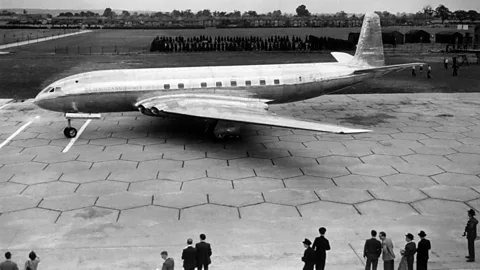
Getty ImagesThe Comet, which was first unveiled to the public in 1949, heralded a new age in flying. (Credit: Getty Images)
 Getty Images
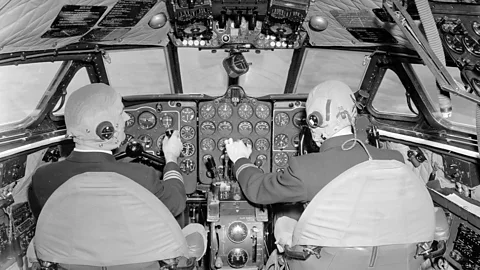
Thanks to the pressurised cabin, the plane could fly over adverse weather rather than having to fly around it, meaning much shorter flight times. (Credit: Getty Images)
- Read more about how the de Havilland Comet changed air travel
 Getty Images
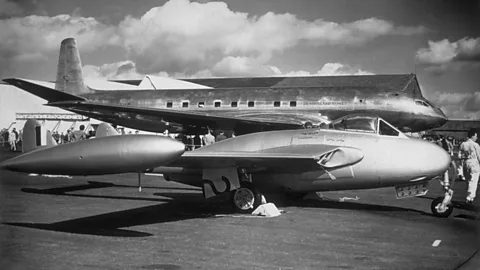
The Comet, capable of flying as fast as fighter planes of the day – like de Havilland’s Vampire, seen here – was an enormous technical achievement. (Credit: Getty Images)
 Getty Images
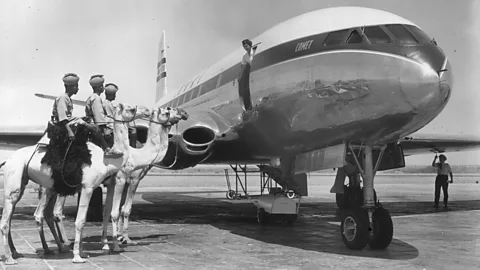
Britain saw enormous kudos in being the first nation to bring a jet-propelled airliner in to service, and the futuristic Comet was photographed on its flights across the Empire and beyond. (Credit: Getty Images)
 Getty Images
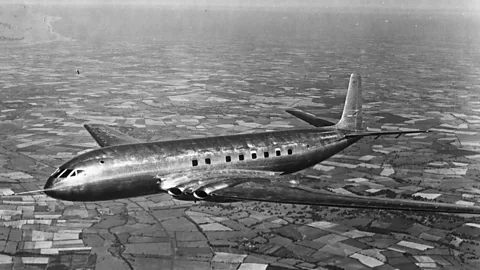
The Comet’s top speed was an extraordinary 500mph, far faster than designs based on lumbering World War Two bombers could achieve.
But in order to fly so fast, weight was an issue – and the thinness of the metal skin was to ultimately lead to deadly crashes that sullied the Comet’s early career. (Credit: Getty Images)
 Stephen Dowling
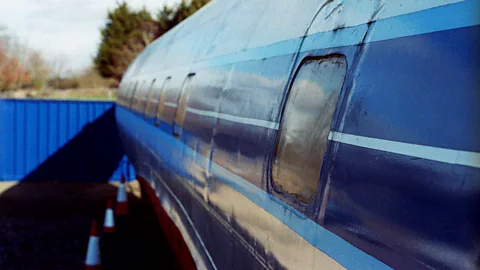
One of the culprits in these early crashes was the square windows in the cabin.
The corners of the windows were some of the first parts of the fuselage skin to weaken from the constant stresses of pressurising. When they cracked at high altitude, the explosive depressurisation ripped the aircraft apart.
 Stephen Dowling
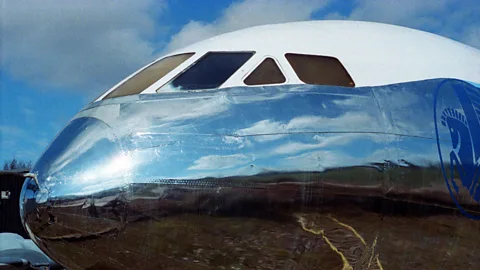
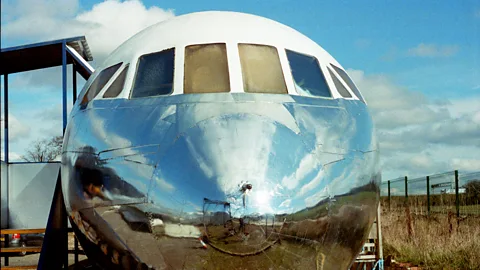
Just outside of Hatfield, north-west of London, a Comet airframe is being painstakingly renovated by a team of volunteers at the de Havilland Museum.
When finished, it will look just like the Comets that thundered into the air in the 1950s.
 Stephen Dowling
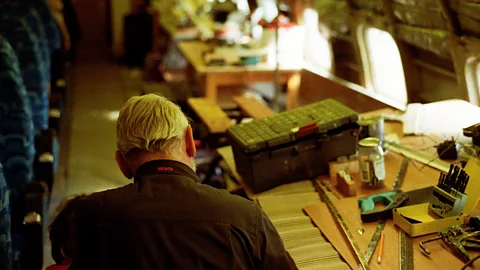
A team are restoring the cabin to make it look as it would for passengers six decades ago.
Original fittings are being used – and if they can’t be found, then replacements are made, using materials as close as possible to the originals.
 Stephen Dowling
Volunteer Peter Kay, who used to make airline seats for long-haul aircraft, is helping restore the cabin – when BBC Future visited, he was working on the ladies’ toilet.
“It’s the only one in the world," he says of the Comet. "That’s why it’s so important to make sure it survives and people can see it."
 Stephen Dowling
The last Comet flight took place 20 years ago – later modified versions of the aircraft had a much better safety record, though by the time they came into service Boeing’s airliners had stolen the limelight.
But long after the fleet was grounded, aviation fans will be able to experience what it was like to fly in a more luxurious jet-set age.
