The ghost town that was abandoned when the diamonds ran out


 Getty Images
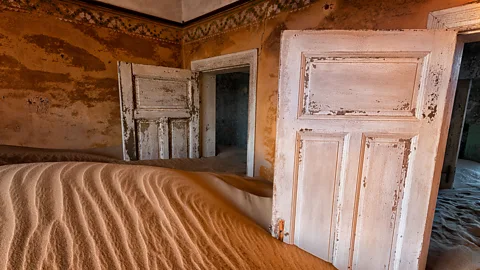
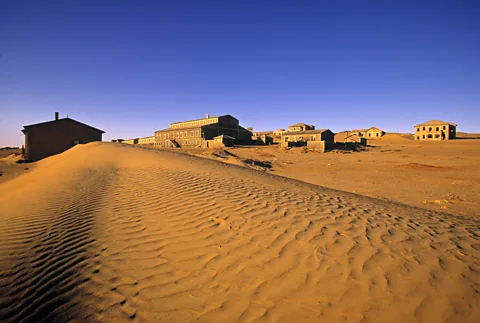
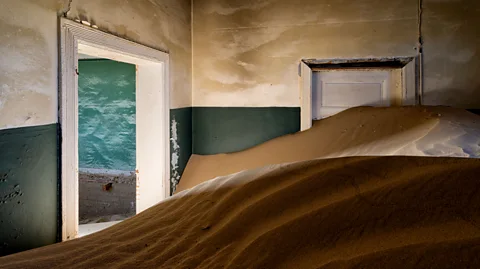
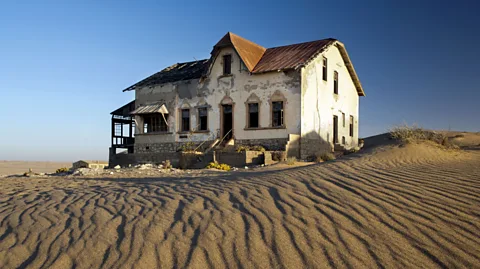
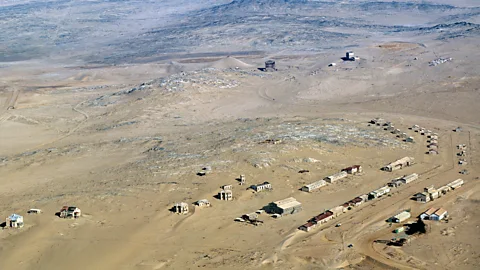
The town of Kolmanskop in Namibia was once one of the wealthiest in the world - its hospital had the first X-ray unit in the southern hemisphere. Now it is buried in the desert.
 Getty Images
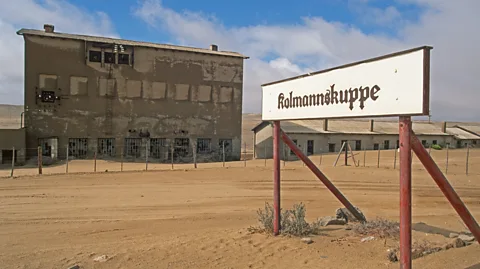
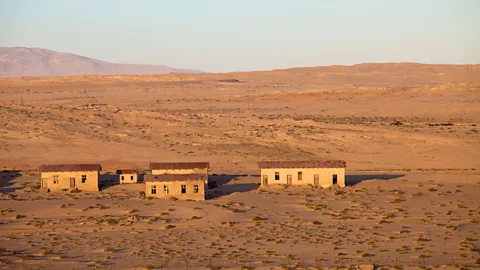
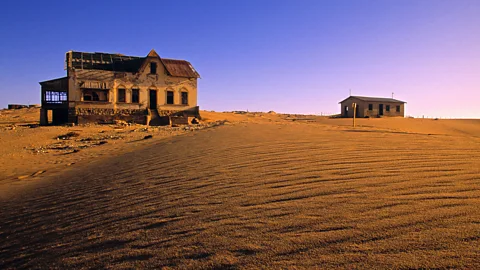
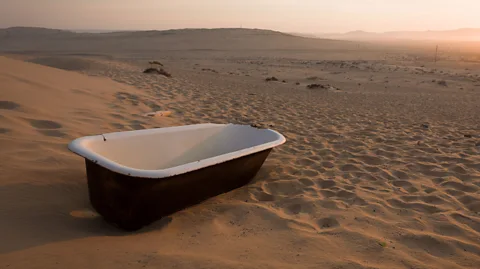
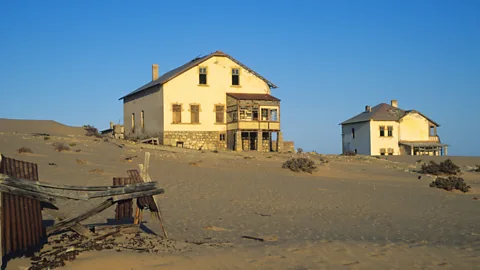
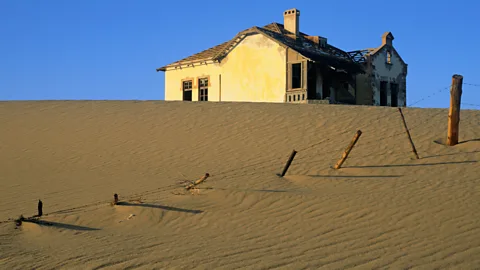
Looking at it now, it is hard to believe this ramshackle collection of derelict buildings was once one of the wealthiest communities in the world. Situated on the southern flank of West Africa’s sprawling Namib Desert, the small town of Kolmanskop has been reclaimed by the sand. But 100 years ago it was home to a busy diamond mine.
In the town’s heyday, the precious stones were so easy to find that they could be picked out of the sand. Workers armed with jam jars would crawl on hands and knees, filling them with diamonds.
But as resources are used up, people move on. Today Kolmanskop sits in a restricted zone controlled by the Namdeb Diamond Corporation, a joint venture owned by De Beers and the Namibian government. But with the right permit, people are welcome to visit. The sun-bleached ghost town is now a tourist destination and draw for photographers – the striking images a reminder of how changing industries and economies leave their mark on the landscape.
(All photos from Getty Images.)
 Getty Images
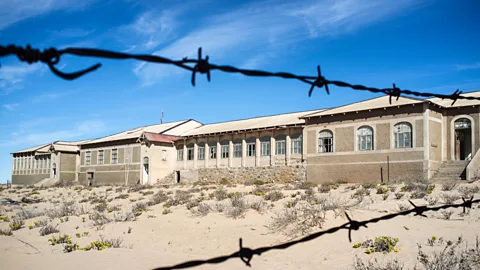
Kolmanskop is named after an ox-cart driver called Johnny Coleman, who abandoned his wagon near the site during a sandstorm. The town eventually boasted a butchers, a bakers, an ice factory, a post office, several bars, a bowling alley, a well-equipped hospital and a concert hall, where opera companies from Europe would come to perform.
In 1912 Kolmanskop produced one million carats of diamonds - nearly 12% of the world’s total. The desert floor was systematically scraped clean when new machinery was introduced to recover the precious stones. Giant electric shovels allowed the sand to be shifted a truck-load at a time.
Yet by the 1930s the town’s riches were largely depleted. When diamond deposits were found 270km (168 miles) to the south, close to Namibia’s border with South Africa, many of Kolmanskop’s miners moved on. The last families abandoned the town to the desert in 1956.
 Getty Images
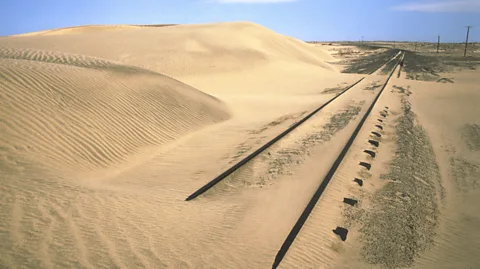
According to local stories, a railway worker called Zacherias Lewala was the first to stumble on the riches hidden in the sand in 1908, when clearing train tracks running through the area from the nearby coastal town of Lüderitz. He showed the strange stones he had found to his supervisor, August Stauch, who was a former employee of the diamond company De Beers.
The discovery of these first diamonds sparked a rush that saw almost every available patch of desert pegged off, as labourers sifted the sand. Kolmanskop sprang up quickly among the rolling sand dunes, home to several hundred European and Namibian miners.
 Getty Images
 Getty Images
 Getty Images
 Getty Images
 Getty Images
This was the home of the mine's book-keeper. Most buildings were built in a German style
 Getty Images
 Getty Images
 Getty Images
The well-funded hospital had the first X-ray unit in the southern hemisphere
 Getty Images
Diamond mining continues in the region but has mostly moved offshore, with deposits now extracted from the seabed just off the coast a few kilometres away.
Mining ships known as crawlers drag dredging equipment behind them that sucks up gravel from 140m (460ft) down. One ship can cover 1,000 square metres (10,760 square feet) in an hour and produce 350,000 carats of diamonds a year.
