The bold plan to give Chernobyl a new life

 Anton Skyba
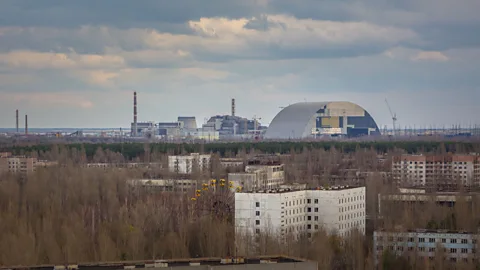
Photographer Anton Skyba visited Chernobyl to document how the site is slowly being renewed after 30 years of desolation
 Anton Skyba
On 26 April 1986, the fourth reactor at the Chernobyl nuclear power plant exploded during a routine stress test. A fire raged for nine days. The steel and concrete containment shell collapsed and the super-heated fuel melted through the floors into the basement beneath. The exposed, burning reactor spewed radioactive isotopes into the atmosphere. A 30km-wide exclusion zone was set up and homes, shops and offices were abandoned.
For years afterwards, teams of people - known as liquidators - worked non-stop to clean up the disaster site. A concrete and metal containment structure was built over the damaged reactor. But over the last 30 years this has crumbled and risked collapse, exposing the area to material that is still dangerously radioactive. Last November, the site was sealed inside a new sarcophagus - a vast shed that will encase both the reactor and the original containment structure for 100 years. (Read our feature for the full story.)
Chernobyl already attracts thousands of tourists every year. With the damaged reactor now newly confined, the site of the worst nuclear disaster in history faces a better future. Ukrainian photographer Anton Skyba visited Chernobyl to document the gradual renewal of a site that has remained desolate for 30 years.
(All photos by Anton Skyba.)
 Anton Skyba
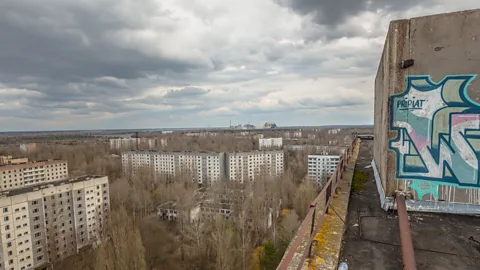
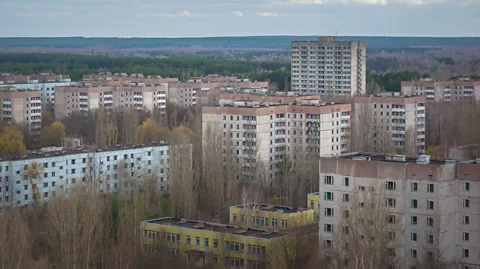
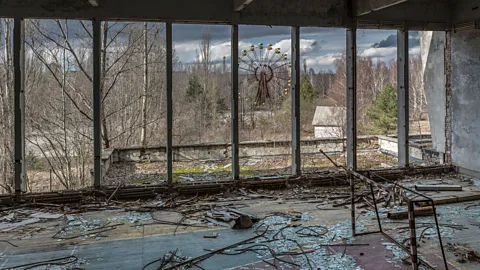
After the accident, the Soviet government resettled 116,000 people
 Anton Skyba
 Anton Skyba
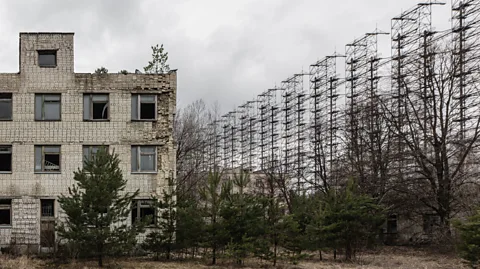
Chernobyl was also home to a Soviet early-warning radar station, known in the West as the Russian Woodpecker because of its non-stop clicking
 Anton Skyba
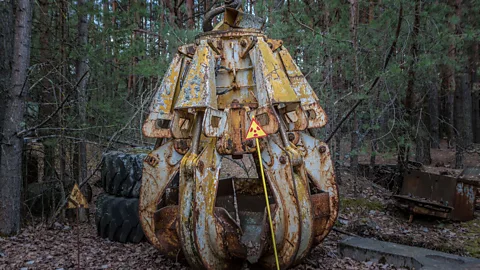
The area is littered with contaminated machinery used in the clean-up
 Anton Skyba
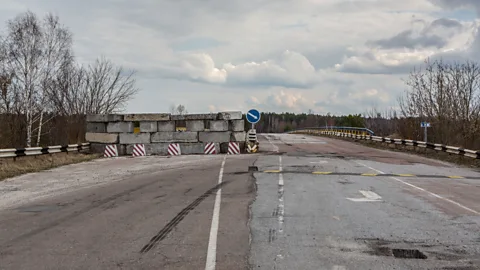
Roads into the exclusion zone are dotted with security checkpoints
 Anton Skyba
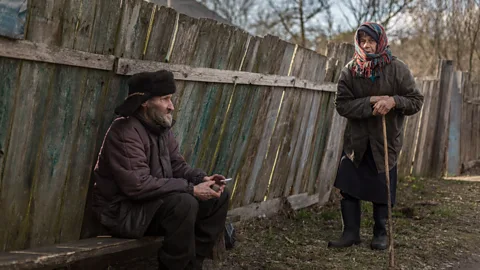
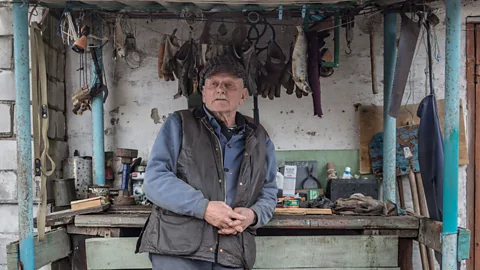
The site is not entirely devoid of human life, however. Around 1,200 people chose to return to their homes in the years following the emergency government evacuation, despite the high risks of radiation-related diseases such as thyroid cancer.
Today, some 230 of these "self-settlers" remain, scattered in ghostly villages across the exclusion zone. Most of the survivors are older women.
 Anton Skyba
 Anton Skyba
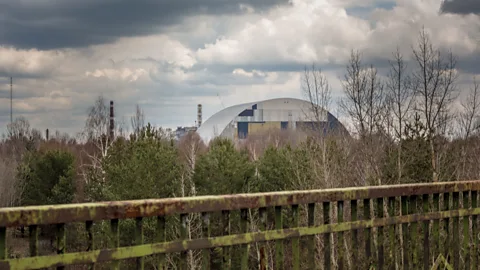
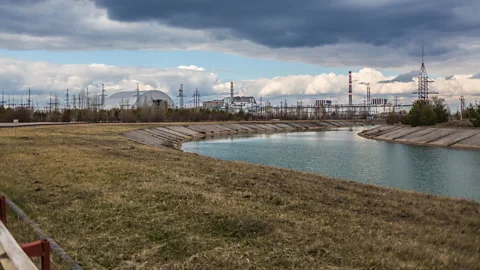
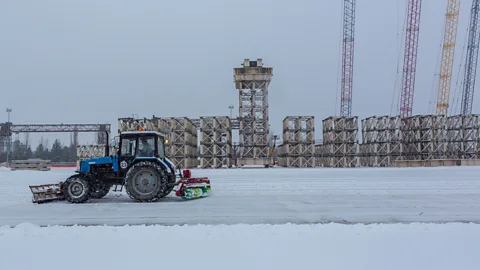
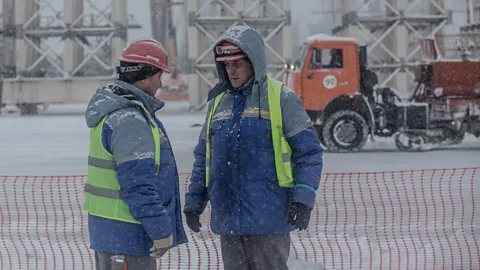
The exclusion zone has also been occupied by workers, who have been busy cleaning up the site and constructing the New Safe Confinement - a sarcophagus that will seal in the damaged reactor for 100 years.
The vast structure, which is bigger than Wembley Stadium and taller than the Statue of Liberty, towers over the landscape.
 Anton Skyba
 Anton Skyba
 Anton Skyba
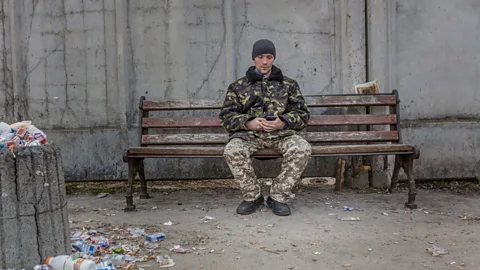
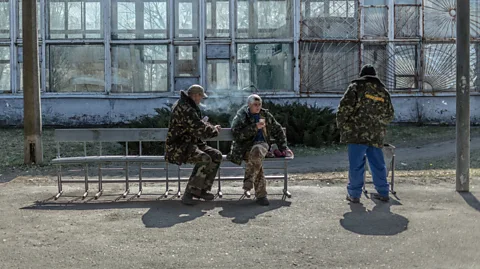
A worker takes a lunch break
 Anton Skyba
 Anton Skyba
 Anton Skyba
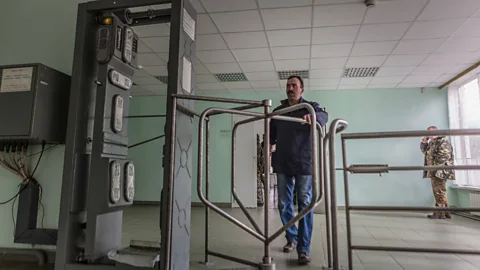
Everyone must pass through radiation detectors at the entrance to buildings
 Anton Skyba
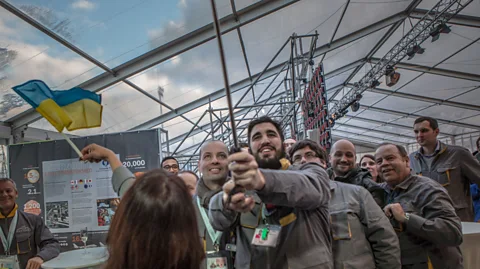
The construction team celebrates the end of a 20-year project
 Anton Skyba
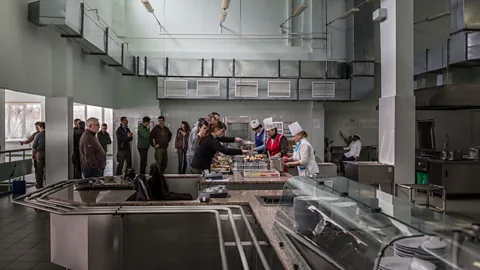
In 2002, Chernobyl opened up to visitors and has since become a popular tourist destination. Thousands of people now come to see the site every year. Here a group from Poland are being served lunch at an on-site cafeteria.
With the new sarcophagus now in place, the exclusion zone faces a brighter future and could become the site of renewed development.
