The gold mine at the end of the world

 Elena Chernyshova
Photographer Elena Chernyshova spent 10 days at the Kupol gold mine in northeast Russia to see the extremes workers endure to feed our demand for precious metals
Elena ChernyshovaGold is still one of our most precious resources. It is an essential component in everything from smartphones to the latest diagnostic kits for malaria and HIV. Which means we need to go to great extremes to keep up with demand. Isolated in the frozen wastes of eastern Siberia, where temperatures can plummet to -50°C (-45F), the Kupol gold mine is one of the toughest places in the world to extract the ore.
The seams of gold buried beneath the ice in this remote part of Russia were once mined by prisoners of the hellish gulags established under Soviet leader Josef Stalin during the 1930s. Now the region of Chukotka in northeast Russia - not far from Alaska - boasts the most advanced mine in the world. Workers extract around 21 tonnes of gold a year.
Photographer Elena Chernyshova spent 10 days at Kupol to document how the miners cope in such an extreme environment. Around 1,200 people spend two months at a time on site, doing alternate 12-hour shifts in the mine and in the mill where the ore is processed. “They were surprisingly happy despite the long and hard days of work they do,” she says.
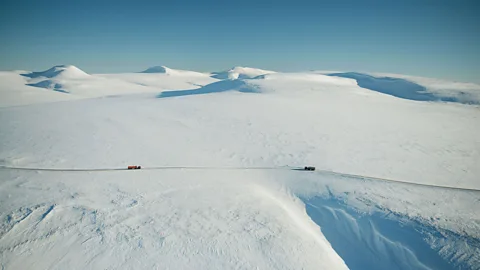
More than 200 kilometres (125 miles) from the nearest city, the mine is only accessible by air for half of the year. But between November and April a road is hewn out of the ice to link the site to the port town of Pevek 350 kilometres to the north. Supplies have to be ordered up to two years in advance so they can be brought in by boat and driven along this ice road.
Roving teams drive up and down the road each day, filling holes with snow and water to keep the surface smooth for the trucks that pass back and forth along it.
 Elena Chernyshova
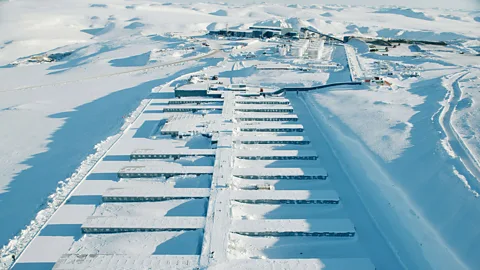
“The whole complex is like a lunar base amidst the lifeless landscape,” says Chernyshova
 Elena Chernyshova
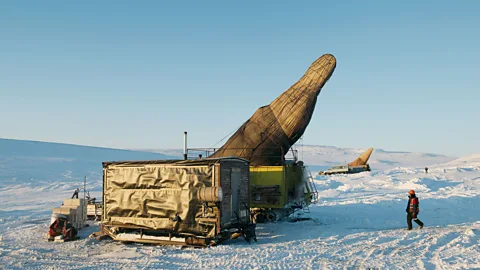
Wrapped up against the cold, these drills can be operated remotely from the surface
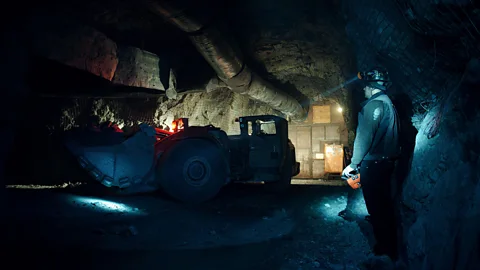 Elena Chernyshova
Work continues around the clock but only a few miners ever need to go below ground to load ore and reinforce walls
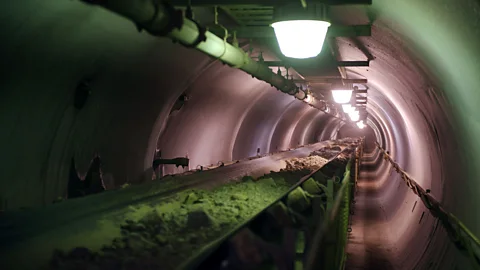 Elena Chernyshova
The process of crushing and smelting the ore is semi-automated
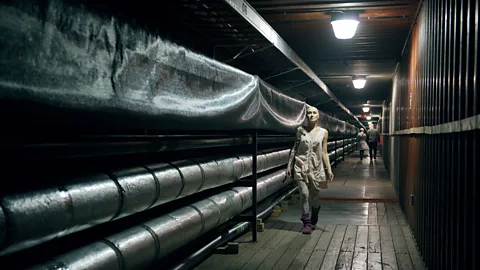 Elena Chernyshova
Chernyshova joined workers on their commute each day. Waste heat from the mine warms the tunnel to the living quarters
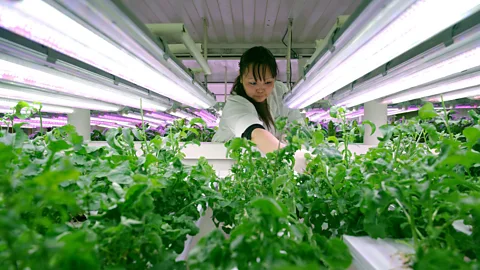 Elena Chernyshova
The rocket salad grown on site tastes fantastic, says Chernyshova. They hope soon to start growing dill and mint
 Elena Chernyshova
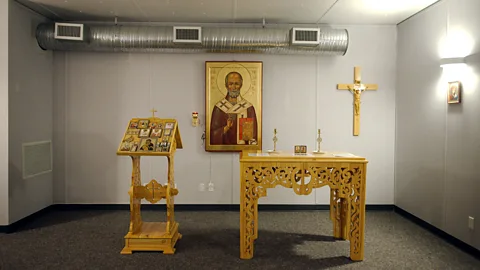
When off duty, miners divide their time between the gym, TV rooms, library and chapel
 Elena Chernyshova
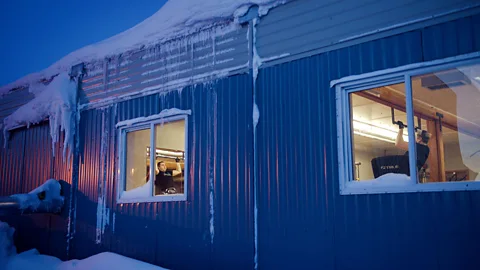
As well as providing heat, waste oil from mine machinery also powers flushing toilets
 Elena Chernyshova
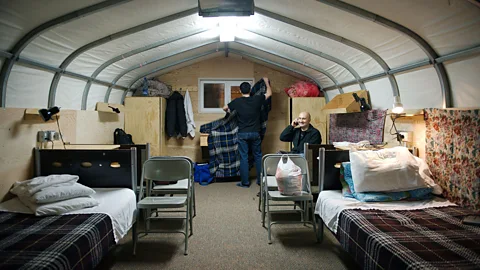
Bedrooms are sound-proofed against the din of the mine
