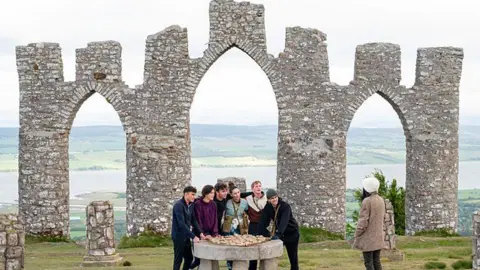
The revealing junk of abandoned Soviet nuclear bases

 Grzegorz Kiarszys
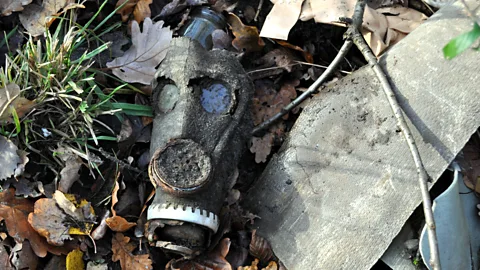
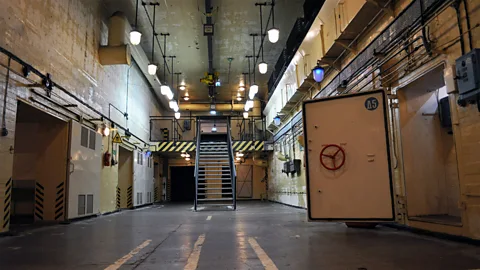
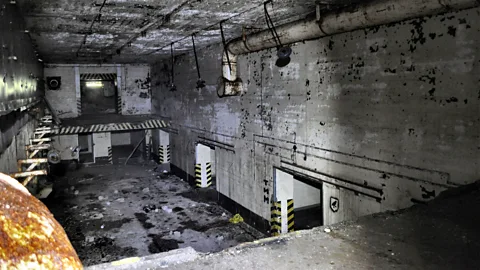
From toys to toothpaste, the forgotten possessions left behind on former nuclear weapons bases in Poland reveal fascinating insights about the Soviet officers and families who once lived there.
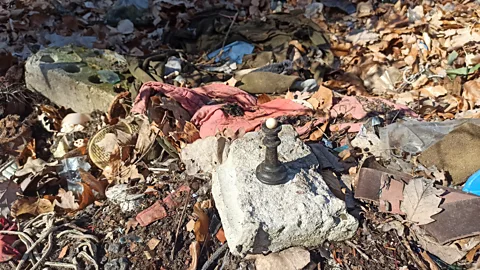
At a Soviet military base deep in the Polish forest, miles from the nearest village, an officer's family was whiling away another Saturday morning. The children brushed their teeth hurriedly after breakfast, then rushed outside to play soldiers with plastic pistols. Their father laid out his uniform, the hammer and sickle button sparkling, while their mother sat down for a game of chess.
But they knew that beneath their feet, stored in utmost secrecy, were nuclear warheads, likely many times more powerful than the bombs dropped on Hiroshima and Nagasaki in 1945.
"Commanding officers knew very well that, for their psychological health, it is very important to create an illusion of everyday peaceful life," says Grzegorz Kiarszys, an archaeologist at Szczecin University who has studied the ruins and rubbish piles at three long-abandoned Soviet nuclear weapons bases in north-western Poland.
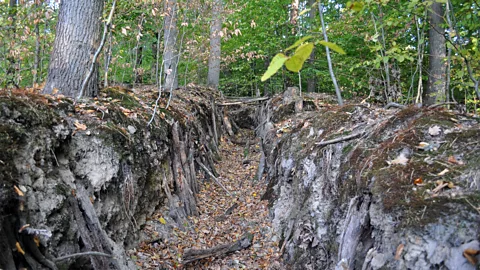
Each of the three bases – Podborsko, Templewo and Brzeźnica Kolonia – was once home to around 140 people, mostly soldiers but also some officers whose immediate families were allowed to live there too. Kiarszys has seen photographic evidence confirming the presence of these families, but it was the ephemera and waste they left behind that revealed the most striking insights about how they lived while stationed there.
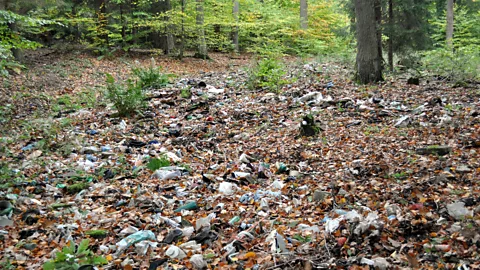
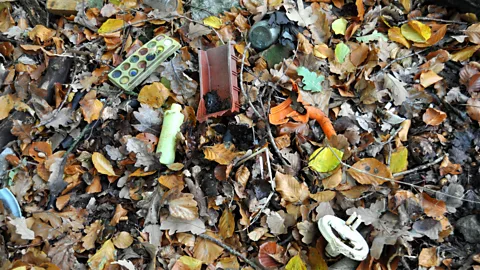
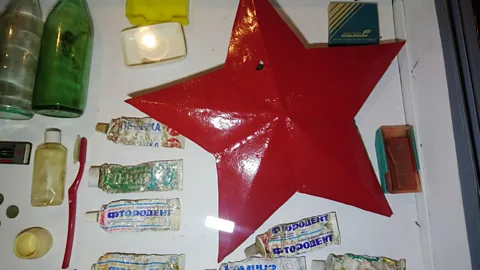
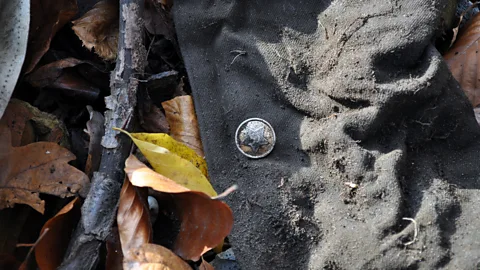
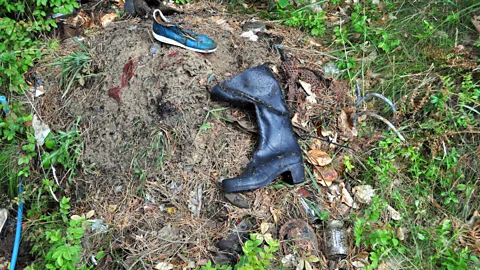
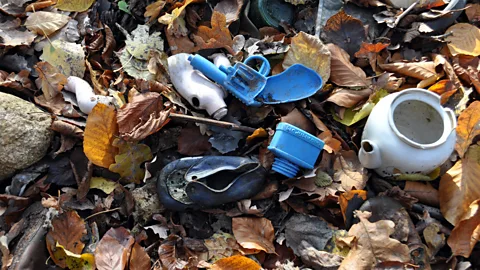
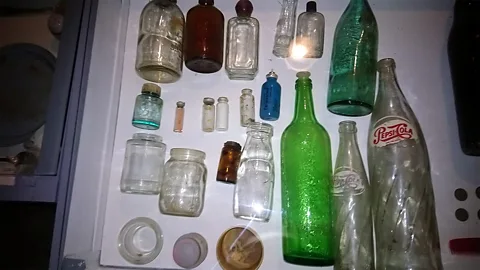
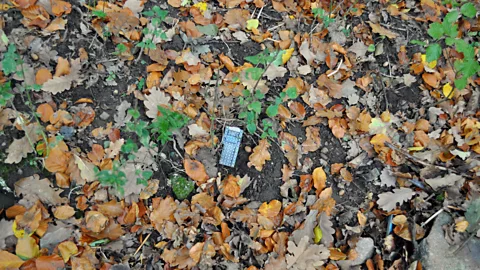
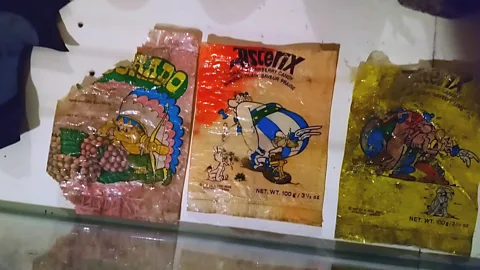
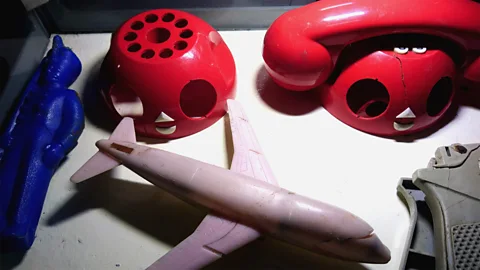
Rubbish can tell you a lot about a person or community, a phenomenon called garbology. (Read more: Garbology: How to spot patterns in people's waste.) At these isolated former bases, old pieces of uniform lie decaying in the leaf litter next to sweet wrappers, rubber ducks and toy telephones. Text on some of the items confirms their date and origin in the Soviet Union.
Kiarszys says the waste is "completely different" from what you'd find in an ordinary Polish rubbish dump from the same era. There are branded shoes from the West, for instance, and what could be Lego bricks – things that only a few people, such as Soviet officers with access to foreign currency, could buy under communist rule in the Eastern Bloc.
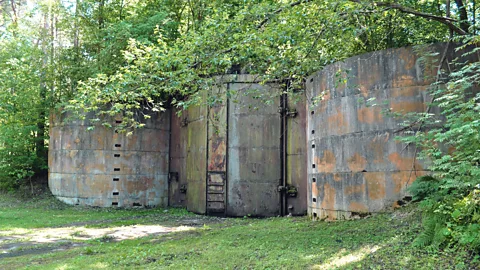
Local people in western Poland were aware that the Soviet military operated numerous facilities in their part of the country during the Cold War, but it was only after the fall of the Soviet Union in 1991 that Poles learned how some of these bases were used to store nuclear weapons.
"For many years we have been told that there are no nuclear weapons in the territory of Poland," says Kiarszys. These hidden bases harboured an awesome destructive power that could have been deployed during a war in Europe. "The idea itself was crazy," says Kiarszys. "But that's how the Soviet generals believed war in Europe would go."
Scroll down to explore what Kiarszys discovered:
 Grzegorz Kiarszys
 Grzegorz Kiarszys
 Grzegorz Kiarszys
 Grzegorz Kiarszys
 Mieczyslaw Zuk
 Grzegorz Kiarszys
 Grzegorz Kiarszys
 Grzegorz Kiarszys
 Grzegorz Kiarszys
 Mieczyslaw ZukGrzegorz Kiarszys
 Grzegorz Kiarszys
 Grzegorz Kiarszys
 Grzegorz Kiarszys
 Grzegorz Kiarszys
 Mieczyslaw Zuk
 Grzegorz Kiarszys
 Mieczyslaw Zuk
 Grzegorz Kiarszys
--
Join one million Future fans by liking us on Facebook, or follow us on Twitter or Instagram.
If you liked this story, sign up for the weekly bbc.com features newsletter, called "The Essential List" – a handpicked selection of stories from BBC Future, Culture, Worklife, Travel and Reel delivered to your inbox every Friday.