How a just transition can make India's coal history

 Getty Images
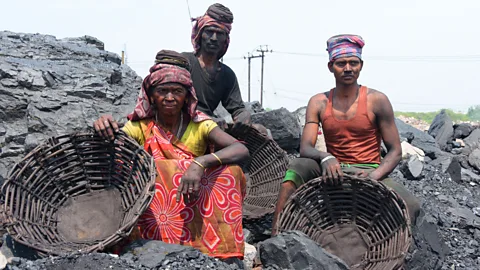
Coal supplies most of India's energy, but that is set to change. What will the decline of the country's coal industry mean for its workers?
In the dusty coal town of Jharia in the eastern Indian state of Jharkhand, the ground has been on fire for more than 100 years. Fires that began accidentally early in the 20th Century are still steadily burning their way through the town's underground coal reserves, releasing toxic fumes and destroying homes. Efforts to put out the fires have so far failed.
Jharia is perhaps the worst casualty of coal in Jharkhand, which has the largest known coal reserves in India. Despite its coal resources, Jharkhand is one of the poorest states in India, with around half its population living in poverty.
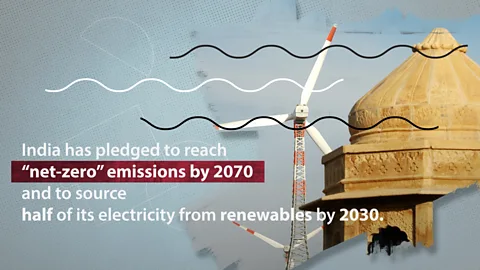
This small eastern state can be considered a microcosm of the many challenges India will face if it is to ensure a just transition away from coal. India has promised that renewables will provide 50% of its electricity by 2030. This figure could rise further as India pursues its target of net zero emissions by 2070.
Jharkhand’s decades-old coal sector is therefore ultimately set to decline, and by extension India’s too. The next challenge will be to diversify the coal-dependent economy – and to find alternative livelihoods for the many thousands of people currently employed in the coal sector.
The deep coal dependence in Jharkhand has drawn researchers to try to understand the challenges likely to be faced by some of the country's most coal-dependent communities in the clean-energy transition. One of them is Sandeep Pai, a senior researcher at the Centre for Strategic and International Studies in Washington DC.
According a recent study co-authored by Pai about how to implement a just transition in coal-dependent communities in India and South Africa, the coal sector provides more than 300,000 direct jobs and nearly one million indirect jobs in coal supply chains and service sectors in Jharkhand. But several million additional people work as illegal coal miners, mostly local villagers who scavenge coal from abandoned mines. Together, these jobs constitute nearly 10% of employment in the state.
Coal mining taxes and royalties make up nearly 8% of state government revenue in Jharkhand. Most of the coal is transported to other states that have more facilities to burn it for power. Pai's research has found that without intervention, the decline of Jharkhand's coal industry could result in a loss of local jobs, falling local and state government revenues, and a decrease in corporate social responsibility funds from the industry. "There is also fear that unplanned closure would turn coal-dependent districts into ghost towns, with severe consequences for people and communities," warns Pai's study.
 Adam Proctor/BBC
It is hard to overstate how entrenched coal is in India's power supply. Only China consumes more coal. And in the past year or so, the country's ambitions have tilted towards producing more, not less, coal, with a push to auction licenses for commercial mining for the first time since the 1970s. Many Indian states have also faced power cuts due to lack of coal supply to thermal power plants, revealing the country’s ongoing dependency upon coal.
More than 70% of all power produced in India comes from coal-fired power plants. Coal is also a source of considerable taxes and royalties to governments at all levels and, of course, provides many people with jobs and livelihoods.
For instance, in 2019, Coal India, the main federal government-owned company that mines more than 80% of total coal in the country, paid approximately 500bn rupees ($6.7bn/£4.9bn) in taxes and royalties in 2019 to federal, state and local governments. For perspective, this is nearly 3% of the federal government's total annual revenue collection. The company also employs 270,000 people. Add to that the other coal mining companies in the public and private sectors, and the industries directly and indirectly dependent upon coal, such as steel, and the extent of India’s coal dependency starts to come into focus.
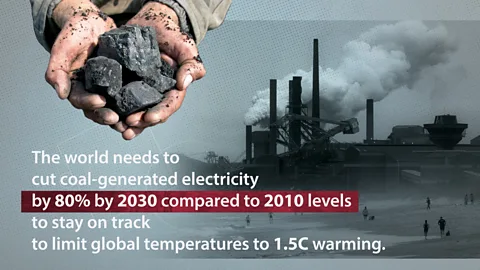
The problem with this is, of course, the immense quantities of the greenhouse gas carbon dioxide that coal releases when burned. India contributes significantly to global emissions, ranking third in total emissions, although its per capita emissions continue to be among the lowest in the world. Coal power plants also generate huge amounts of air pollution in India, which in turn kills over a million people a year in the country.
Despite the international pressure to move away from coal, in October 2021 the Indian government announced a target to produce one billion tonnes of coal by 2024 to secure the country's energy requirements. For India, coal is here to stay for the near future.
At the same time, India is pursuing renewable energy, with a new pledge at COP26 to install 500 gigawatts of renewable power capacity by 2030. For perspective, India reached 100 gigawatts of renewable capacity in August 2021, double the UK’s renewable capacity. India also said it aims to source 50% of its electricity from renewable resources by 2030.
Evidently, India is undergoing a massive energy transition. But for a country whose energy demands are expected to grow more than any other country in the near future, ensuring a well planned and just transition away from coal is a critical challenge. The government has prepared a coal mine closure framework on the principles of just transition, but its details in public domain are limited. So far, no comprehensive official initiative has been launched.
"We have learnt from just transition work globally that implementing just transition policies takes decades," says Pai. "For a country like India, which has limited resources, and given the massive scale of just transition planning required, governments need to start planning now."
There are signs such plans could begin to get off the ground, following India's new targets for 2030. “It's not just coal," says Srestha Banerjee, director of Just Transitions at Delhi-based think tank iForest. “We now have a net zero target, which meant that there will be industrial transitions as well.” This huge shift will definitely trigger just transition planning much earlier.” The urgency was there before, she says. “It was just not explicit.”
 Adam Proctor/BBC
There is some local movement towards a just transition happening on the ground in India. Not least, in the heart of Jharkhand itself, the nation's capital of coal.
A few relatively small-scale attempts to transition away from coal in Jharkhand could serve as potential blueprints to emulate, says Pai, whose research in the region cites examples of successful ecological restoration of closed mines. One abandoned open-cast coal mine in Ramgarh was turned into a fishery through an initiative from Central Coalfields, an arm of the state-owned coal mining corporation. "An abandoned mine was cleaned up and suitable fish varieties introduced, which has created livelihoods for many local villagers," Pai notes.
Another instance is the ecological restoration work on the overburden dump in the Khas Kusunda area of Jharkhand, where waste from coal mines was previously discarded. Following an ecological restoration project in Khas Kusunda, nine different plant species were found here in 2018 on the previously barren land. The project was spread only over two hectares, but was one of many such small-scale projects.
"This work started in 2011 when the Forest Research Institute in Dehradun took up ecological restoration work and showed us how it is done. After that, we started doing it ourselves. Every year we added about 10 projects," says Raju EVR, former lead of the environment management division of Bharat Coking Coal, a federal government owned company.
Raju EVR, who retired in 2019 from the company, explains that the company used its workforce, which was previously employed at functional mines, to carry out ecological restoration of sites standing on former coal mines. The company financed ecological restoration activities – planting grass, shrubs and plants suitable to the local soil and climate.
Local people who were previously dependent on the mine for their livelihood also benefited, says Raju EVR. The company allowed them to farm food crops on the ecologically restored land. This way, about 1,000 workers and some local people restored roughly 300 hectares spread across 60 sites, he says.
Promoting fisheries, planting trees and creating forests in abandoned mines and setting up renewable energy projects are all initiatives that can work for a just transition, says Pai, but the efforts so far have been small in scale. "While such projects have the potential to further just transitions for local communities, they need to be scaled up to cover all existing mines that will be shut down and legacy mines that have been left abandoned," he says.
There are also barriers to replicating these projects. Regulatory bodies need funding and powers to enforce rehabilitation of coal mines, says Pai, while adequate laws are needed to govern the process, and mine closure plans require transparency.
Pai advises diversifying the state's economy by facilitating growth of six potential sectors in consultation with local people: agriculture, tourism, non-coal mining, manufacturing, renewable energy production and non-timber forest products.
Other countries where a just transition has been attempted could also provide a model for India, says Ulka Kelkar, director of climate at the World Resources Institute's India chapter.
"In Ethiopia, for example, the public electricity utility said, 'We will have 50% of electricity coming from renewables by 2030'," says Kelkar. “They also said that 'we will want 30% of the new workforce, when we add renewable energy, to be women'.”
But when the utility tried to hire more women, it found there weren't enough women electrical engineers available and trained up, she says. "So [the utility] entered into an agreement with their higher education authority to offer scholarships, fellowships, internships to young women to get into the science and engineering fields." This shows a willingness on the utility's part to understand why women were not adequately represented and what could be done about it, says Kelkar.
Another useful example comes from South Africa, where, since 2017, the national government has given just transition an important place in its national policy. This, Kelkar says, is an example of a national policy that recognises the social implications of moving towards clean energy. Other countries, such as Spain, are also making this a priority.
But before trying to scale up experiments that worked elsewhere, India must understand its own unique requirements for a just transition, says Swati D' Souza, research lead on climate action at the nonprofit National Foundation for India. One urgent issue is to clearly define a coal transition worker, she notes. "The share of contract workers in India's coal and allied sectors is very high in comparison to developed countries," she says. "This is partly due to the informal market that persists in the Indian economy."
If India were to follow examples of just transition plans in more developed countries, a large swathe of contract and informal sector workers would be ignored. Coal workers may also work in multiple industries at different times of year, making the picture of the workforce more complex. "Defining a coal transition worker will ensure that such workers also come within the ambit of policy decisions and no one is left behind," says D' Souza.
In an upcoming study about the impact of energy transition on coal sector jobs in India, D' Souza recommends carrying out more research at the district level, in particular through recording indicators specific to women. "The participation of women in the labour force has been decreasing for more than a decade now," says D' Souza. "Research suggests that increasing renewable energy will enable greater participation from women in what has traditionally been a male-dominated sector."
A better understanding of who these women are, their socio-economic status and their willingness to migrate for other opportunities could all help boost numbers of women in the workforce, says D' Souza.
The concerns of forest dwelling and indigenous communities also need a special focus, says Archana Soreng, a member of the United Nations’ Security General’s Youth Advisory Group on Climate Change. In particular, their rights over their land, forest and territories and informed consent over projects must be prioritised.
However, any possibility of policymakers drafting such specific plans still seems a long way off. India still has no comprehensive plan in place for a just transition from coal, although initial steps have been taken to seek funding for a coal mine closure framework from the World Bank.
This also points towards the importance of substantial and timely financial assistance from developed countries. “Just transition financing is going to be a huge thing. There is no doubt about it," says Banerjee of iForest. "It is not just about transitioning fossil fuel workers, it is about redesigning the economy."
This is particularly important, she says, in light of the current pattern of investments in renewable energy. “Where we have coal, we do not have renewable investments there." Instead, renewable investments tend to be in the western and southern India, while coal tends to be found in the east and central regions. “It should not be a situation where we have one region that has renewable energy and another region is spiralling into poverty and underdevelopment," she says. "That's where the just transition question is to be really addressed.”
--
Data research and visualisation by Kajsa Rosenblad
Animation by Adam Proctor
--
Towards Net Zero
Since signing the Paris Agreement, how are countries performing on their climate pledges? Towards Net Zero analyses nine countries on their progress, major climate challenges and their lessons for the rest of the world in cutting emissions.
--
The emissions from travel it took to report this story were 0kg CO2. The digital emissions from this story are an estimated 1.2g to 3.6g CO2 per page view. Find out more about how we calculated this figure here.
--
Join one million Future fans by liking us on Facebook, or follow us on Twitter orInstagram.
If you liked this story, sign up for the weekly bbc.com features newsletter, called "The Essential List". A handpicked selection of stories from BBC Future, Culture, Worklife, Travel and Reel delivered to your inbox every Friday.
