The performance-enhancing trick to being a better athlete

 Getty Images
The placebo effect is well known for its medical benefits, but there is evidence it could give athletes an edge, too.
The Pico Simón Bolívar is one of the highest mountains in Colombia. Near the top, there is only half as much oxygen as at sea level, a dizzying 5,500m (18,000 feet) below. The air up there makes it hard to walk and causes fatigue and headaches, so the body tries to adapt: breathing rate increases, the heart beats faster and blood vessels expand to get more oxygen to tissues.
As you might expect, giving someone an oxygen tank to breathe from will reverse these changes. They’ll quickly feel less tired and their head will stop pounding as their heart rate and breathing return to normal. What you wouldn’t expect is that you can achieve exactly the same thing if the oxygen tank is a fake – it’s empty.
Fabrizio Benedetti is the scientist behind these experiments. Based in Italy at the University of Turin, he has given people placebo oxygen on mountains in Colombia, Alaska and his laboratory in the Alps and observed the same thing –fake oxygen tanks can mimic the effects of the real thing.
The effect only works if an actual oxygen tank is given to the subject a few times first, before it’s switched for a sham one without them knowing. That way, their bodies are expecting to receive an oxygen hit. Remarkably, although the tank is now empty, it can still boost physical performance on a lab-based high altitude walking exercise. The question is – how?
You might also like:
- How a doctor’s words can make you ill
- Death: can our final moment be euphoric?
- The medications that change who we are
“This is the one-billion [dollar] question,” says Benedetti. “There is no oxygen in the blood, there is no oxygen in the body, but you can get the very same effect as real oxygen. The real answer is we don’t know.”
Harder, faster, stronger
We normally hear about the placebo effect in a medical context. It’s the beneficial outcome from the belief that a treatment will work, rather than any other effect of the treatment itself, which often is nothing more than a sugar pill. Placebos have been shown to improve symptoms of everything from coughs and pain to depression and even Parkinson’s disease.
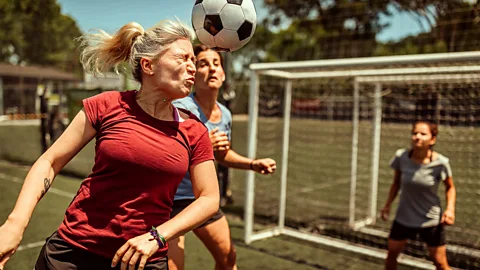
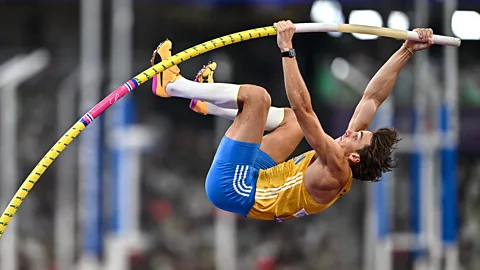
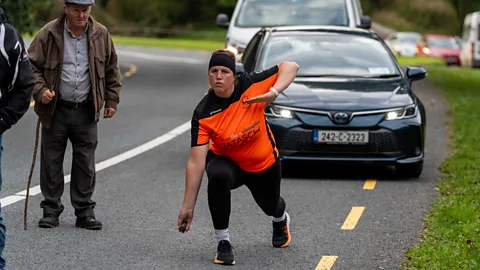
More recently, scientists like Benedetti have become interested in how placebos could work in the world of sport. Any professional athlete will tell you that their beliefs about winning play a huge role in success, and research suggests that by modifying their expectations, the placebo effect can have a powerful impact on how fast or how far they can go.
 Getty Images
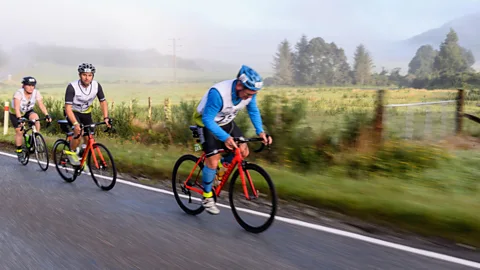
In one study, well-trained competitive cyclists were told they would receive a zero, low or high dose of caffeine before a time trial (but in reality, all of them were given a placebo – experiments in this field usually involve deception). The athletes who thought they were getting a small dose performed 1.5% better than baseline, while the high dose group showed an increase in power of 3% over a 10km (6.2 mile) race.
“Three percent doesn’t sound much,” says Chris Beedie from the School of Psychology at the University of Kent, who was lead author on the study. “But in elite terms, that’s the difference between winning an Olympic medal and not making the top ten. You work very hard to get those three percents.”
Scientists in this field are keen to understand how an inert pill can have such a dramatic effect on people who dedicate their lives to gruelling training regimes, trying to shave fractions of a second off their best time. Beedie says that the athletes themselves tend to report feeling “more up for it” or “more psyched”. So, surely there’s a simple explanation – doesn’t giving someone a placebo just make them try harder?
“It’s very hard to disentangle in experimental terms,” Beedie admits. “The data are not definitive, but what we have seen is 2-3% higher levels of performance, without seeing higher heart rate, higher blood lactate accumulate or higher ventilation, which we’d expect to see if the athlete was simply trying harder.” In other words, it’s as if athletes on a placebo are somehow getting more economy from their bodies, like a car getting more miles out of a gallon of fuel.
Experiments like these point to a more subconscious mechanism for how the placebo effect improves performance. Researchers are a long way from demonstrating what this might be, but there are some obvious candidates.
 Getty Images
One hypothesis is that the placebo effect reduces anxiety. If a cyclist thinks they’re receiving a substance that will boost their ability, they may be able to relax because they feel like they have a safety net. “Muscle tension is a fairly common component of an anxiety or stress response,” says Beedie. “And muscle tension costs energy, and energy is critical to athletes.”
No pain means gain
Another possibility is that the placebo effect taps into pathways that regulate pain and endurance. “One of the main limiting factors in performance and physical exercise is fatigue,” says Emma Cohen, who runs the Social Body Lab at the University of Oxford. “You can try to ignore it, but that throbbing feeling is very hard to ignore.”
Anyone who has ever pushed themselves a bit too far during a workout will be painfully aware of what this is like. But those sensations are there for a good reason – to protect the body from damage.
“They stop us before it’s actually really strictly necessary,” explains Cohen. “So in theory, we could go for a bit harder for a bit longer without stopping, but our body and our brain tend towards cautiously keeping something in reserve. You never know what you might need to do after the race finishes.”
Our brains are constantly calculating how much to keep in the tank based on all kinds of information, says Cohen – signals from our muscles, what the weather is like, how thirsty we are and how far we have left to go. “But they’ll also take cognitive and emotional inputs from past experiences. The brain then anticipates how much physical exertion it can continue with, that can be safely sustained under those conditions.”
 Getty Images
A placebo could act like a false signal which influences this calculation, so it “unlocks” access to resources that the brain allocates to muscles during exercise. The athlete’s conscious expectation about what they’re receiving ends up manifesting subconsciously, influencing processes they don’t have voluntary control over.
False friends
Cohen’s Social Body Lab is interested in another factor that could affect this computation in the brain – the behaviour of other people. They’ve coined the term “social placebo” to describe how bonding and support from others could help improve performance by reducing things like pain, fatigue and anxiety.
In experiments, they’ve shown that rowers who train in synchrony with other members of their team have higher pain thresholds than those who row alone. And they’ve demonstrated that rugby players who took part in a coordinated warm up with a teammate ran about six seconds faster in a sprint test.
“They did this for the same level of reported fatigue, so they didn’t feel any more tired, and there was no difference in their maximum heart rate,” Cohen says. “It seems that cues to cohesion and support enable the athletes to get more out of their bodies – more power, more output, higher performance – for the same level of fatigue.”
It’s easy to see how this might have evolved. Humans are a social species, and in our past, close bonding and relationships could have been an important signal for safety and security. “The hunter might get more out of his body if he knows that there are supportive individuals, part of his group, that are there running alongside him and able to help in his recovery process,” says Cohen.
Social factors may help to explain why the placebo effect exists at all. According to Benedetti, a placebo isn’t the fake treatment per se, it’s the whole ritual of the therapeutic act, within a complex psychological and social context – who gives it to you, what they say, how much you trust them, and so on. So perhaps the placebo effect – a modern phenomenon – could be activating pre-existing pathways that evolved thousands of years ago, like those that helped our ancestors make use of social bonds.
 Getty Images
Fake it to make it
Pain, fatigue and anxiety reductions are all logical explanations for how the placebo effect might work. But surely something as vital for life as oxygen to a mountaineer isn’t something you can trick the brain into believing is there?
“No, because in order to induce powerful, robust placebo responses, you first need conditioning with the oxygen,” says Benedetti. “Which means that probably, but this is just a speculation, oxygen leaves a trace in the brain.” These traces could mean that the brain anticipates the arrival of more oxygen when the placebo is administered, replicating the same physiological response even without any oxygen present.
This kind of procedure also has other important implications for sport. It means you can give an athlete a banned substance during training, and then swap it for a placebo before the competition. “The placebo can mimic the effect, but without any drug in the body,” Benedetti explains. “This is a problem for anti-doping tests.”
Anti-doping is also a big focus of Beedie’s research, a message he’s eager to share with athletes. “If you can go faster because of a placebo, how do you tap into that without using these drugs? How do you essentially try and capitalise on what your biology and evolution has given you?”
That’s the fascinating thing about the placebo effect. It proves that we have the ability to do better – we just have to believe it.
--
Anand Jagatia presents Crowdscience on the BBC World Service. Listen to the episode “Can a placebo boost my sports performance” here.
Join one million Future fans by liking us on Facebook, or follow us on Twitter or Instagram.
If you liked this story, sign up for the weekly bbc.com features newsletter, called “The Essential List”. A handpicked selection of stories from BBC Future, Culture, Worklife, and Travel, delivered to your inbox every Friday.