Why the world needs Unbreakable Kimmy Schmidt

 Netflix
Some years ago TV comedies found grim humour in ordinary domestic life. Now even sitcoms about murder and sex slavery are bright and bubbly. Nicholas Barber asks, “What changed?”
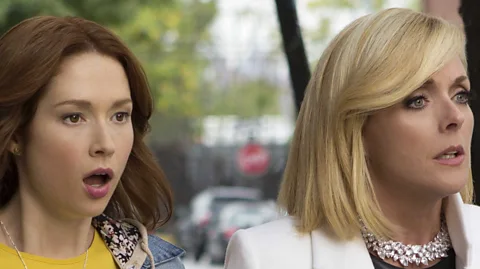
Did you hear the one about the woman who was locked in an underground bunker for 15 years by the leader of an apocalypse cult? True, it doesn’t sound particularly side-splitting, but that’s the set-up of Tina Fey’s acclaimed sitcom, Unbreakable Kimmy Schmidt, which is beginning its second series on Netflix. The programme has one of the darkest premises of any television comedy, and yet, miraculously, Unbreakable Kimmy Schmidt is as optimistic as its title suggests. Kimmy (Ellie Kemper) is released from captivity at the start of the first season, so the humour stems from her sunny naivety as she adjusts to life in the open air.
Watching each episode, you marvel at the way it balances such intense darkness and such twinkly light – but Unbreakable Kimmy Schmidt isn’t unique. In sitcoms, the most joyous comedy is often associated with the most horrific scenarios. Stranger still, the most depressing comedy tends to be set in places that don’t seem too bad at all.
A typical sitcom revolves around fairly cheerful people in largely comfortable surroundings: a taxi firm, a family home, a bar where everybody knows your name. But sometimes a series will look beyond these convivial environments to examine the characters’ misery, whether it’s the frustrations of Harold in Steptoe and Son, or Al Bundy in Married with Children, or – best of all – Reggie in The Fall and Rise of Reginald Perrin. This gloomy sitcom strain reached its pitch-black extreme in the late 1990s and early 2000s, a time when any British comedy associated with Chris Morris, Julia Davis, Mark Gatiss or Armando Iannucci was unwatchable without strong nerves and a stronger stomach.
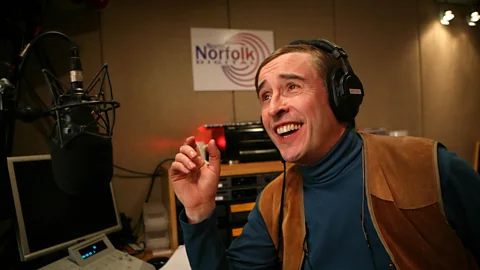
The trendsetter was Steve Coogan’s I’m Alan Partridge, which debuted on BBC2 in 1997, and subjected its eponymous radio DJ to ever more excruciating humiliations. Then came BBC2’s The League of Gentlemen, which ran from 1999 to 2002. Located in Royston Vasey, a fictional rural village populated by insanely cruel grotesques, it was really a gothic horror anthology with a laugh track.
Also in 1999, BBC1’s Mrs Merton and Malcolm starred Caroline Aherne as a little old lady whose chirpy demeanour belied her contempt for her mute, bedridden, chronically ill husband. Bleaker still was Human Remains (2000), a series of six half-hour short films in which Julia Davis and Rob Brydon played a variety of unhappy couples. Davis also appeared in Chris Morris’s woozily macabre Jam (2000), a deeply disturbing avant-garde sketch show/art installation. Finally, there was Davis’s own traumatising sitcom, Nighty Night, which was broadcast on BBC2 in 2004 and 2005. Davis played the psychopathic Jill, whose obsessive pursuit of her neighbour Don was in no way inhibited by her knowledge that Don’s wife was in a wheelchair or that her own husband had terminal cancer.
Darkness and light
All of these sado-comedies had pretty ordinary, innocuous settings compared to the bunker where Kimmy Schmidt was kept as a brainwashed sex slave: a motel, a village, a suburban home. But they were all preoccupied with evil, pain, despair, disability and murder. And they all refused to put any light at the end of the tunnel. As funny as they could be, the characters’ suffering was portrayed as being as real and unremitting as it would have been in a tragedy.
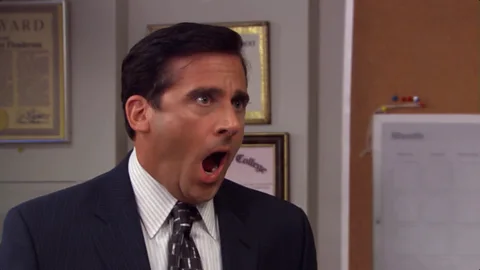
Nothing on US television was quite as grim, but there were traces of this skin-crawling humour in the early seasons of The Office, with Steve Carell, and in the self-destructive misjudgments of Hank Kingsley in The Larry Sanders Show. Nowadays, it’s harder to find such cynical sitcoms on either side of the Atlantic. Davis recently told The Independent that the sado-comedies she and Morris were making in the early 2000s wouldn’t be commissioned today, and that “things have moved towards the mainstream”.
 NBC
NBCBut, as the premise of Unbreakable Kimmy Schmidt proves, the shift isn’t as simple as that. These days, television’s edgiest comedies can hardly be called “mainstream”. It’s just that the awfulness they depict comes from outside the characters, not from within. Again and again in the past few years, there have been sitcoms in which, as in Unbreakable Kimmy Schmidt, the situations are harrowing, but the people in those situations stay upliftingly positive.
In Fox’s The Last Man on Earth, for instance, nearly all of the planet’s population has been wiped out by a virus. But this ghastly catastrophe is treated as an opportunity for self-improvement and fulfilment. “Here’s a guy,” said one of the series’ creators, Phil Lord, “who maybe wasn’t the best guy in the regular world, but if you took the regular world away, could he eventually get back to being the person that all of us hope that we can be?”
 Fox
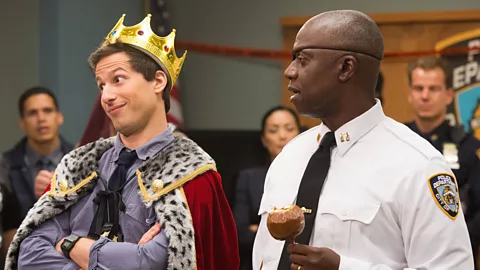
FoxThe police in Brooklyn Nine-Nine, meanwhile, are dealing with murders and drug deals. BBC3’s Bluestone 42 features a bomb-disposal unit in Afghanistan. Getting On centres on a nurse (Jo Brand) in a struggling hospital’s geriatric ward. And Nurse follows a community mental-health specialist (Esther Coles) as she checks up on her roster of unstable patients (almost all played by Coles’ chameleonic co-writer, Paul Whitehouse).
Each sitcom spotlights a different, crushingly difficult job, and yet the characters all soldier valiantly on. They are the polar opposites of the people in, say, Human Remains, who didn’t have much to complain about, but who were intent on making themselves and each other wretched, all the same.
Even Chris Morris and Steve Coogan have moved with the times. Morris’s 2010 film, Four Lions, was about a group of Islamic fundamentalist suicide bombers, but its tone was far perkier and more humane than Jam’s ever was. And in Coogan’s 2013 film, Alan Partridge: Alpha Papa, Alan is taken hostage after a conglomerate buys his radio station, but he is happier and more heroic than he was in his sitcom.
If it bends, it’s funny…
Why the change? Partly, it’s a matter of each new trend in comedy reacting against the one that came before. But it’s also a reflection of the times in which these programmes are made. Back when Davis, Morris and co were devising their taboo-smashing creepshows, the Berlin Wall had fallen, the Cold War was over, and the general public was still only dimly aware of the dangers of climate change and the War on Terror. In those circumstances, it seemed both politically important and thrillingly transgressive for a sitcom to shock viewers out of their complacency – to remind us that there were all sorts of nightmarish goings-on beneath the relatively serene surface of western life.
Since then, the world has become a scarier place. Between the frequent reports of terrorist attacks, mass shootings and ecological disasters, not to mention the effects of a global economic crash, we hear about horror in the wider world on a daily basis. Sitcoms that unearth the horror in suburbia start to seem irrelevant and self-indulgent. What we crave instead is comedy that visualises the things we fear – religious madness (Unbreakable Kimmy Schmidt), war (Bluestone 42), the end of civilisation as we know it (The Last Man on Earth) – but reassures us that decent people and laughter will prevail.
It’s happened before. When America was embroiled in the Vietnam War, M*A*S*H was set in a military hospital, and Hogan’s Heroes was set in a German prisoner-of-war camp. But as distressing as those settings were, both sitcoms were jovial paeans to fortitude and teamwork.
There are moments, it seems, when we don’t need comedy to tell us how broken we are. We need it to tell us that we’re unbreakable.
If you would like to comment on this story or anything else you have seen on BBC Culture, head over to our Facebook page or message us onTwitter.
If you liked this story, sign up for the weekly bbc.com features newsletter, called “If You Only Read 6 Things This Week”. A handpicked selection of stories from BBC Future, Earth, Culture, Capital, Travel and Autos, delivered to your inbox every Friday.