'Simple but harmonious': Eight iconic Nordic homes throughout history

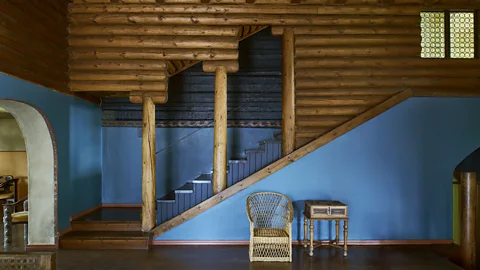
These Nordic "modern masterworks" emerged from a design vision that was unique to this northern corner of Europe. The region's distinctive "soft modernism" still impacts how we live now, says a new book.
A few generations of pioneering architects in a northern corner of Europe have disproportionately influenced how we live. "Nordic architects have had a profound and lasting influence on the evolution of modern ways of living and contemporary design right around the world," author Dominic Bradbury tells the BBC.
In his new book, The Iconic Nordic House: Modern Masterworks Since 1900, Bradbury explores groundbreaking homes in the region. From Arne Jacobsen, Finn Juhl and Alvar Aalto to Jørn Utzon, and Bjarke Ingels, the creative masterminds behind these remarkable homes have been hugely influential.
Respect for the natural world is the thread that ties Nordic architecture together. "Across Scandinavia, the mountains, islands, forests and fjords can be extreme, as can the weather. These are houses born of a particular place, climate and culture rather than alien interventions or impositions," says the author.
There are a handful of Nordic design characteristics that these homes share. Key is the use of natural materials, and the way these houses connect with and frame views of the landscape. Bradbury also cites their relative modesty of scale and subtlety. "These are sophisticated designs yet they sit gently and lightly upon the landscape," he says.
According to Bradbury, during the post-war period, these Nordic modern masters forged the ideal of "warm modernism", or "soft modernism". These ideals offered an enticing and more expressive alternative to the International Style – the movement characterised by minimalism and functionalism that dominated design and architecture from the 1920s to the 1970s.
And when it comes to interiors, soft modernism is expressed through the organic materials, the textures and tones, the wood burning stoves and playful notes. "The organic, pale textures and tones of Nordic interiors and furniture were definitely a huge influence around the world from the mid-century modern period onwards," he says.
More like this:
As for the influence beyond Scandinavia, any home with big, open-plan living spaces zoned for different activities, plenty of glazing framing views and weather, internal planting, building into the landscape, and timber walls or ceilings, is either knowingly or unknowingly giving a Nordic nod.
Here are eight Nordic masterworks that impacted global design:
 Richard Powers/ The Iconic Nordic House
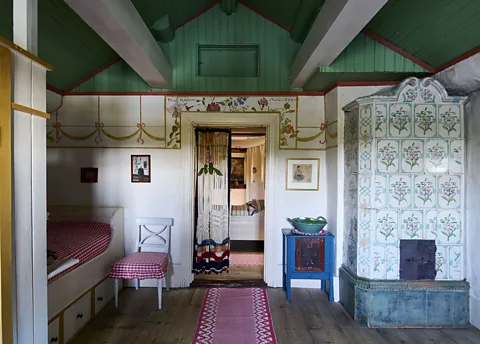
1. Lilla Hyttnäs (Little Cabin), Sweden (1889-1912) by Carl and Karin Larsson
It all started with a little cabin. "Carl and Karin Larsson could be described as two of the late 19th and early 20th Century's greatest influencers and taste-makers, as seen in their home, Lilla Hyttnås, and their landmark lifestyle guide, Ett Hem or At Home," Bradbury says. Originally published in 1899, the book helped make Lilla Hyttnäs world-famous. Carl said of his home: "No fancy furniture fits there… It is simple but harmonious, straightforward."
Colourful and multi-layered, the house is a combination of the Swedish vernacular, the Arts & Crafts movement and early modernism. On every surface is a colour or pattern, courtesy of artist Carl – who painted family portraits on door panels and decorated the furniture – and Karin, who designed the textiles. As well as using custom pieces of their own design, like lamp shades, they adapted and painted antique and salvaged furniture.
"The Larssons not only tied their home and their art to nature, but were also among the first to explicitly express a lifestyle philosophy that was truly Scandinavian and Nordic," according to Bradbury. "It took account of the landscape, the changing seasons and the importance of family and friends, yet also placed the idea of 'home' at the centre of all these themes."
 Richard Powers/ The Iconic Nordic House
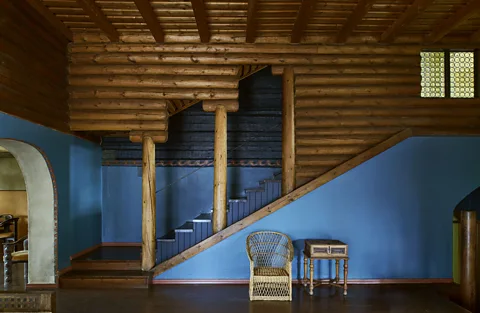
2. Hvitträsk, Finland (1903) by Eliel Saarinen
Eliel Saarinen's house west of Helsinki "stands on the cusp of tradition and modernity", according to Bradbury. Like the Larssons' home, it's a stylistic cocktail – this time combining the local vernacular with the Finnish National Romantic style, Arts & Crafts and Art Nouveau.
 Richard Powers/ The Iconic Nordic House
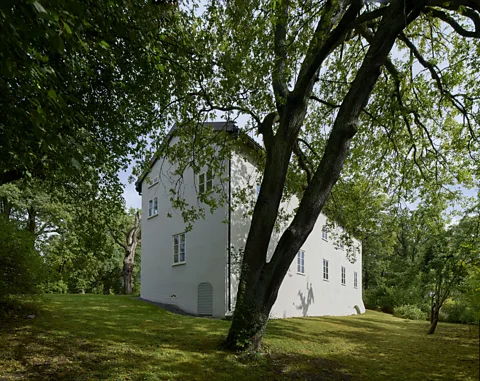
3. Villa Snellman, Sweden (1918) by Erik Gunnar Asplund
Erik Gunnar Asplund was a pioneering modernist, and the villa, which was commissioned by a banker, marries more than one style. "This highly original home references classicism and romanticism, yet is – at the same time – a modern house, rich in spatial shifts, illusions and surprises," Bradbury writes.
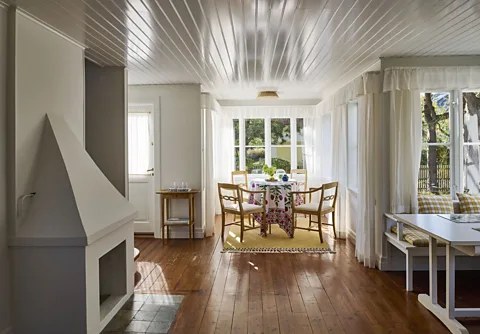 Richard Powers/ The Iconic Nordic House
4. Villa Carsten, Sweden (1927) by Josef Frank
Designer Josef Frank created interiors, furniture and botanical, brightly-patterned textures, and his designs influenced the world from the mid-century period onwards. Villa Carsten was a commissioned timber summer house of two storeys. The ground floor is another example of a big open-plan living room, with different ceiling heights, volume and scale. Awash with sunlight, the room has contemporary touches including wooden floors and ceilings, white walls and woodwork.
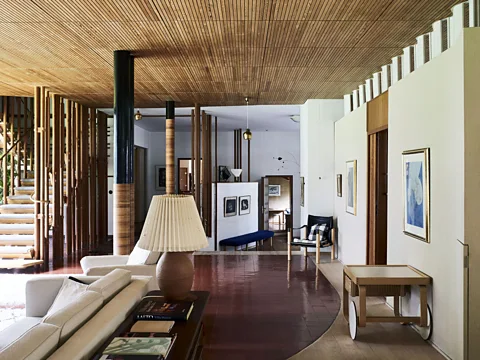 Richard Powers/ The Iconic Nordic House
5. Villa Mairea, Finland (1939) by Alvar Aalto
The forest setting of Villa Mairea provided a palette of natural materials, like the timber cladding, which tied the building to the landscape. Aalto "sought to bring the surroundings into the two-storey house through multiple means", according to the book. So there's a copse of slender tree-like pillars supporting the entrance canopy, and he wrapped the open-plan living room's steel columns in raffia. With its white brickwork, slatted timber ceilings and red tiled floors, the villa is a key masterwork of 20th-Century design.
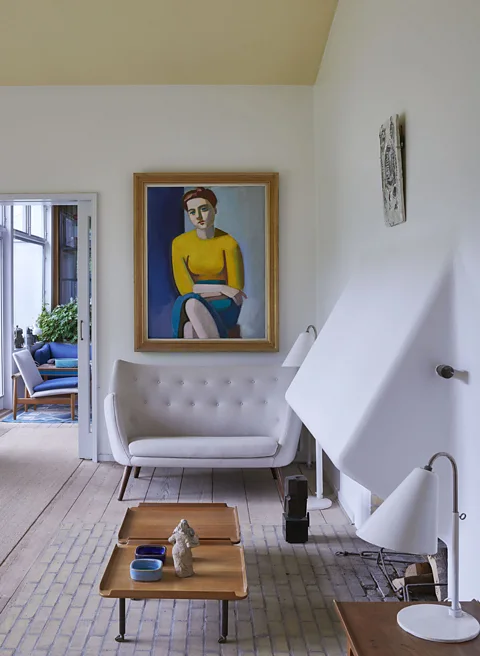 Richard Powers/ The Iconic Nordic House
6. Juhl House, Denmark (1942) by Finn Juhl
The architect and furniture designer Finn Juhl created the L-shaped building for himself in the mid-century modern style. There are banks of floor-to-ceiling windows looking into the garden, and a fluid and partially open-plan layout. A big lounge takes up one wing, and is configured with zones, including a banquette and table by the fireplace.
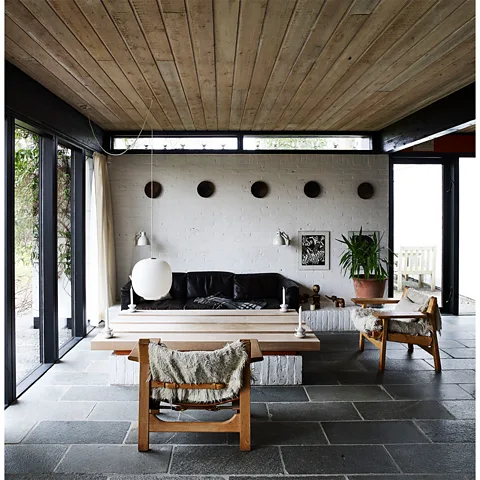 Richard Powers/ The Iconic Nordic House
7. Bigaard Sørenson House, Denmark (1963) by Friis & Moltke
The Danish duo's buildings forged strong links with their surroundings, while working around the landscape. This one sits in a woodland clearing. "Simplicity is our goal, not bragging shapes and facades," Knud Friis said. Here there are floor-to-ceiling windows aplenty, with views on to the garden and terraces. In the big open-plan pavilion, a central fireplace separates the lounge-study at one end from the kitchen-dining room at the other.
 Richard Powers/ The Iconic Nordic House
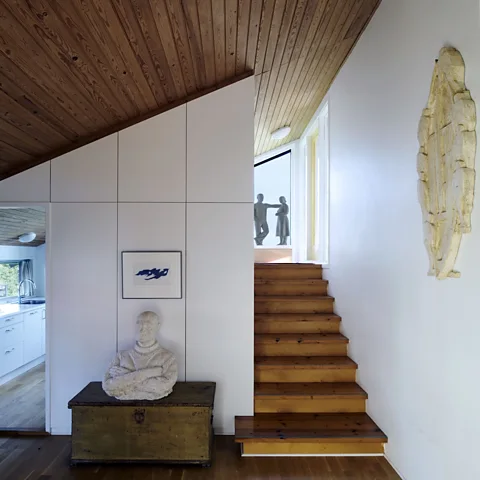
8. Kamban House, Faroe Islands (1966) by Jákup Pauli Gregoriussen & Janus Kamban
Sculptor Janus Kamban brought in architect Jákup Pauli Gregoriussen to design his home and studio on a site outside the capital, Tórshavn. Here, the Faroese vernacular, like the turf roof, is fused with a mid-century modern aesthetic, particularly the open-plan living room upstairs, whose large windows frame the view. This big space holds a lounge and library, an attention-grabbing fireplace and dining area – all under a pitched timber ceiling. As the author of The Iconic Nordic House puts it: "The entire building is gently pushed into the hillside."
The Iconic Nordic House: Modern MasterworksSince 1900 is published by Thames & Hudson on 17 February.
--
If you liked this story, sign up for the Essential List newsletter – a handpicked selection of features, videos and can't-miss news, delivered to your inbox twice a week.
