'A female gaze on a male body': The risqué '80s jeans ad that 'created shockwaves'

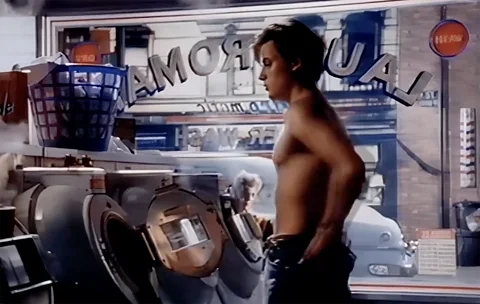 'Launderette' Levi's advertisement, Bartle Bogle Hegarty
TV's suggestive "Launderette" Levi's advert was first shown 40 years ago, and sales went through the roof. The ad marked a turning point – and its influence continues today.
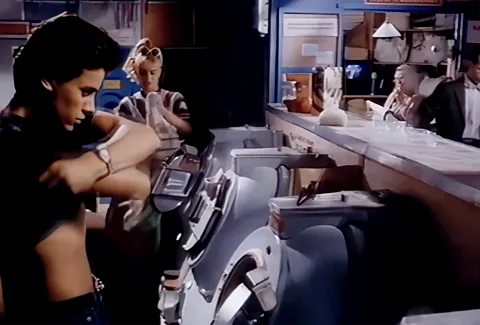
Families who turned on the TV for some festive viewing on Boxing Day 1985 may also have witnessed advertising history. It's been nearly 40 years since a largely unknown but up-and-coming British model first created shockwaves in a US launderette by stripping down to his underwear and putting on a wash containing nothing but a black T-shirt and his favourite Levi's 501 jeans. The retro soundtrack was a cover version of Marvin Gaye's I Heard it Through the Grapevine.
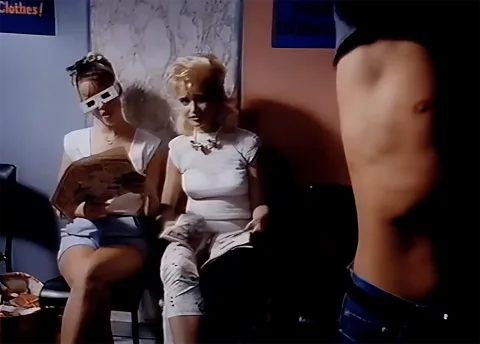
The women in the fictional 1950s launderette, giggling and gawping at the unexpected spectacle of the semi-naked, strikingly handsome Nick Kamen, were not the only ones to express delight. The 50-second commercial, directed by Roger Lyons – who had been recruited by British advertising agency BBH – proved a triumph for Levi's, with sales of 501s increasing by 800%. It was a huge achievement for a brand in crisis aiming to sell a product that was – at the time – going out of fashion.
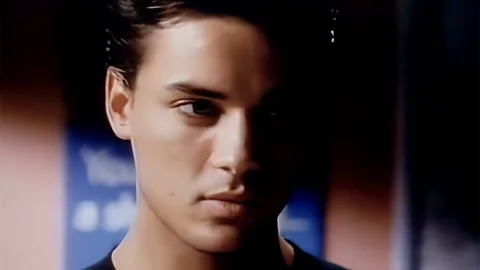 'Launderette' Levi's advertisement, Bartle Bogle Hegarty
The influence of "Launderette", as the commercial became known, endures. Along with various spoofs over the years, in 2024 Beyoncé riffed on the concept in a collaboration with Levi's set to the track Levii's Jeans from her Cowboy Carter album.
Cultural flashpoint
"The Levi's Launderette advert was a significant cultural flashpoint," Dr Hannah Hamad, reader in media and communication at Cardiff University, tells the BBC. Beyond its effect on our buying patterns, it was, she says, "symptomatic of cultural re-evaluations of masculinity… that placed emphasis on the sexual desire of women, via the sexual objectification of men".
Ali Hanan, founder of inclusive marketing consultancy Creative Equals, agrees. "It was such an iconic ad at the time and probably one of the first times the script had been flipped around to have a female gaze on a male body," she tells the BBC. The older, less progressive script was used everywhere, from the suggestive 1970s Cadbury's Flake commercials to the controversial Calvin Klein campaign featuring a 15-year-old Brooke Shields whispering the tagline, "You want to know what comes between me and my Calvins? Nothing." In the early '80s, women were still the object of the commercial, rather than shaping its viewpoint.
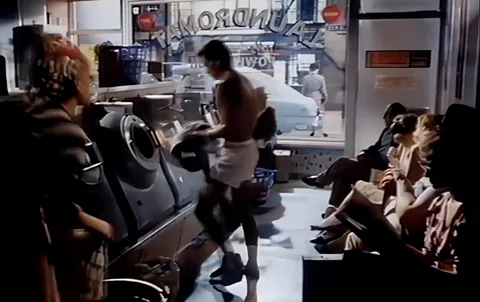 'Launderette' Levi's advertisement, Bartle Bogle Hegarty
The Launderette ad was different. "It came from a female perspective," says Hanan, and was written by Barbara Nokes, one of eight founding partners of global advertising agency Bartle Bogle Hegarty (BBH). Nokes's role, says Hanan, "has got quite lost in the story of that ad". The advert reflected a wider "rebellious culture", Hanan believes, that created the conditions for change. "In the '80s, it was all about innovation and creativity," she says. "There were a lot of old ways of thinking and working that were upended during that time."
In visual media, the glitzy, greedy zeitgeist of the 1980s found expression in series such as Dynasty and Dallas, and films such as Scarface (1983) and Wall Street (1987). Launderette, a nostalgic, anachronistic pastiche of a mythical America, was served up as an antidote to the excess. The styling took its lead from the 1950s, with Kamen's slick quiff and tight T-shirt admired by women with cat-eye glasses and roller-curled hair, while the soundtrack was from the '60s.
The rarity of the female gaze in commercials is perhaps explained by the industry's make-up. "One of the big challenges we've still got is that 75% of all our creative directors in the advertising and media sector are male, and therefore all the work that we see is produced generally through that lens," says Hanan. The impact of the advert went way beyond jean sales. Until 1985, boxer shorts were seen as "dodgy American underwear from the '40s", Sir John Hegarty, co-founder of BBH and the art director for Launderette, told BBC Radio's The Media Show in 2023. It was in order to overcome censorship issues that something "less indecent" replaced the original Y-fronts, he explained. "We put him into boxer shorts. He gets undressed, the commercial runs, the sales of 501s go through the roof, and the sales of boxer shorts go through the roof."
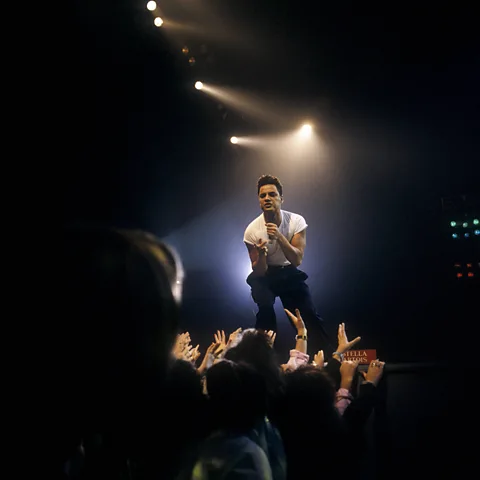 Getty Images
Musical tastes also changed as a result of the advert. I Heard it Through the Grapevine was re-released and made the top 10 in the UK, sparking a renewed interest in soul and R&B, while Kamen's own music career took off when the ad attracted the attention of Madonna, who made him her protégé, co-writing and producing his hit single, Each Time You Break My Heart.
Kamen, who died in 2021, was part of the influential Buffalo fashion movement in the 1980s. Just prior to being cast in the advert, he had appeared on the cover of forward-thinking style magazine The Face in a shoot styled by Buffalo founder Ray Petri. In 1986, Kamen was again the magazine's cover star.
The 'New Man'
Perhaps most importantly, the commercial marked a move away from the more aggressive, physically imposing notion of masculinity that had dominated Western culture. Kamen's good looks were boyish and unthreatening, while his semi-nude state, surrounded and scrutinised by clothed people, suggested vulnerability.
This reframing of masculinity had widespread appeal, and the female gaze soon became an accepted part of advertising. "Another prominent cultural example from the same period would be the extreme popularity of photographer Spencer Rowell's famous Man and Baby image in 1986," points out Hamad. Featuring a topless man cradling a baby, Athena's best-selling poster, officially titled L'Enfant, offered a more sensitive depiction of attractive masculinity. The poster dovetailed with the emergent concept of the "New Man": an emotionally available, more caring archetype operating outside defined gender roles.
 'Launderette' Levi's advertisement, Bartle Bogle Hegarty
This evolution, maintains Hamad, was indebted to Second Wave Feminism and the Women's Liberation Movement of the 1960s and '70s, which "gave rise to cultural re-evaluations and renegotiations of men's social roles as well as women's". The result was a re-imagining of "what constituted ideal masculinity", she says, placing value on "softer qualities" that had once been seen as emasculating. The way the commercial was edited not only showcased the jeans, but, in having Kamen unbutton them in front of voyeurs, commodified him, too. In his book Male Order: Unwrapping Masculinity (1988), Frank Mort notes how the camera shots suggested "the fracturing and sexualisation of the male body". The sequence of fast-cut close-ups on Kamen's body parts, he writes, "follows standard techniques of the sexual display of women in advertising over the last 40 years. But now the target is men."
More like this:
• How one surprising photo kick-started the 1990s
It was not just women whose viewpoint was finally represented in the Levi's ad. The journalist and commentator on queer culture Mark Simpson, who coined the term "metrosexual" (metropolitan and heterosexual) to describe a meticulously groomed man, saw the Levi's ad as bringing the gay gaze to a mainstream audience. In a 2008 blogpost, "How Eighties Advertising Made Everyone Gay", he notes that the advert "encouraged women to look at the male body with the same critical, impossibly demanding, carnivorous eye that gay men had used for years".
The ad's longterm impact
This framing of men as the subject of desire blazed a trail for future commercials. One was the hugely successful 1994 Diet Coke Break advert, where a brawny construction worker is ogled by female office workers during his daily break. Launderette has a "lasting legacy" says Hamad, citing the 2025 revival of the 1994 Coke campaign, this time featuring Jamie Dornan; and – in film – the sexualisation of Daniel Craig's body as he emerges from the sea in Casino Royale (2006), an echo of the iconic Ursula Andress scene in Dr No (1962), and a trope normally reserved for women.
Though Launderette was groundbreaking, it was far from liberating, stresses Hamad. "Reversing the gender dynamic of sexual objectification and gender-flipping the regimes of looking that come with media representation, is not inherently empowering for women or for anyone else," says Hamad. In 2024, a Calvin Klein advert featuring Jeremy Allen White working out on a rooftop in nothing but tight white underpants led to controversy about sexual objectification.
Rather than simply reversing the objectification, ongoing research by Getty Images suggests that rethinking the representation of gender roles is key to a successful campaign today. In a 2024 article on the site, creative insights researcher Carolina Sampaio Lechner identifies "an opportunity to widen depictions of masculinity to include 'softness' which, according to VisualGPS visual testing, resonates with all demographics". Similarly, the 2024 Inclusion = Income report, prepared by the Unstereotype Alliance, found that "more inclusive advertising has been shown to outperform in commercial performance and brand value on multiple fronts".
 'Launderette' Levi's advertisement, Bartle Bogle Hegarty
Launderette cannot be hailed for derailing stereotypes or depolarising men and women, but it did begin to interrogate what we are being shown and the lens through which we see it – creating space for new perspectives. Quoted in Campaign in 2021, Ben Middleton, now CCO of advertising and creative agency Modern Citizens, described the commercial as "a true moment in advertising history where an ad transcended the culture it was surrounded by".
Decades after its release, Hegarty still cites Launderette as some of BBH's best work. "Something happens with a piece of film: you get the music right, the pace of it right, a rhythm occurs and you just go 'wow'," he told Marketing Week in 2019. "It was a piece of magic."
--
If you liked this story, sign up for The Essential List newsletter – a handpicked selection of features, videos and can't-miss news, delivered to your inbox twice a week.
For more Culture stories from the BBC, follow us on Facebook and Instagram.
