The remarkable scent memories of perfumers

 Irene Baque
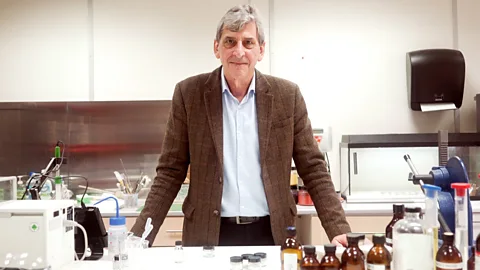
Francois Robert can tell fragrances apart with extraordinary precision. It’s a skill that taps into knowledge accumulated over four generations.
 Irene Baque
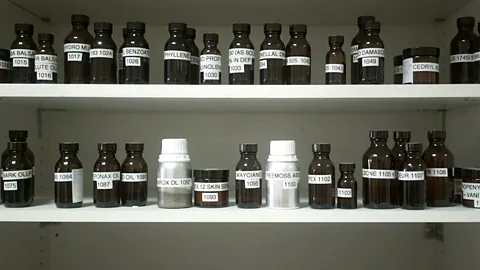
A fragrance is a very complex map. It’s a blend of 50-200 ingredients. Our job as a perfumer is to make this blend absolutely perfect.
Francois Robert
 Irene Baque
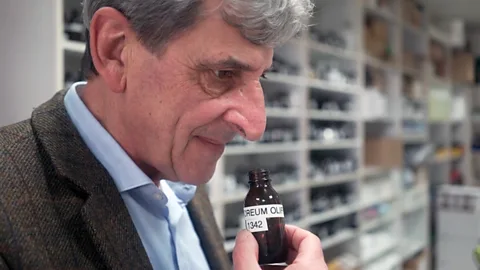
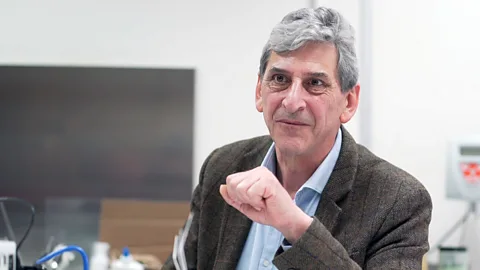
Francois Robert is a fourth-generation perfumer with 40 years of experience in the industry. The Frenchman started his trade in his home country at the age of 14, learning from his father.
“I was raised in a family where my father was a perfumer, my grandfather was a perfumer, my great-grandfather was a perfumer – I am passionate about it,” says Robert.
Robert manages the UK part of international fragrance brand Quintessence. It creates on average 400 fragrances per year, of which 30-40 will be used as fine fragrances and the rest in shampoos, shower gels, body lotions and other products. The factory in the UK produces 50-60 tonnes of fragrance with around 70% being exported to Europe.
“On the market today you have between 1,500 and 1,800 fine fragrances that are launched worldwide,” says Robert. “After three years you probably only have 200 left – but some might last 10 years. Development of those products is quite creative and that’s where our expertise is the best recognised on the market.”
 Irene Baque
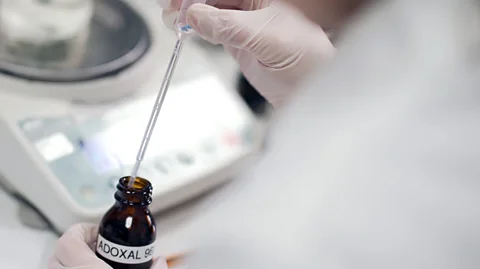
Each perfumer brings their own style to the job. Robert’s style, honed over his 40-year career, is influenced by his father. Robert never buys fragrances and exclusively wears a blend that is unique to his family – the same recipe has been handed down from generation to generation.
“Because I am of a certain age, I like very much the chypre fragrances, which are a very specific type of fragrance which smell beautiful when you wear them,” says Robert. Chypre refers to a lesser-known family of fragrances which are held in high regard for their subtle warm, dry and woody scents.
“They are fragrances that are very exciting, they have a lot of mystery in them. It’s not a floral fragrance, which I find a little bit boring. They contain a lot of woody notes, animalic notes, a lot of dark notes that will last and give a beautiful trail to the fragrance. That is my style.”
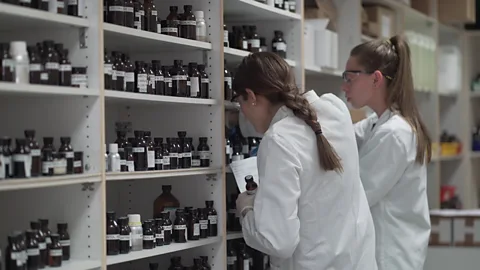 Irene Baque
"Even after 30 years, Francois tells me that he can be surprised by some results,” says Elodie Durande, a junior creative perfumer at Quintessence. Robert describes Durande as his protégée.
"For fine fragrances, it really is important to test them on skin," says Durande. "They have completely different scents when sprayed on skin compared to how they smell from the bottle. It’s important also to see how they change throughout the day; after two hours, four hours, in the evening.”
Robert says he and Durande make good partners, because they have a similar way of interpreting scents. However, it is also important to challenge each other’s opinions and to test with someone who has a different way of working.
"It’s really hard to know when to say a fragrance is finished," says Durande. "If you have met the client's brief then really it’s up to your own taste to decide if the fragrance is complete. It’s not an exact science. It’s a mixture of science and art."
 Irene Baque
I am always conscious about the smell that’s around me... a lot of people don’t pay attention to this.
Francois Robert
 Alamy
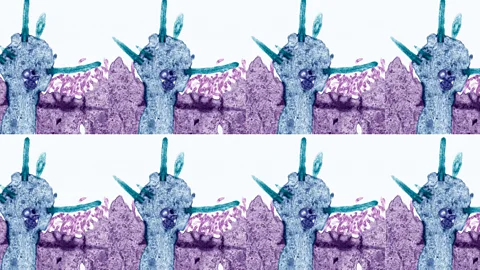
AlamyHaving an extremely sensitive sense of smell is not necessarily beneficial if you work as a perfumer, but having an exhaustive olfactory memory and vocabulary for smells is essential.
There are genetic conditions that make some people’s smell perception more sensitive. At the extreme end is hyperosmia. However, this is largely seen as a difficult condition to live with. Sufferers tend to find strong scents (like coffee) overwhelming. So this condition would make working with fragrances very difficult.
For people with less sensitive senses of smell, simply exposing yourself to strong smells like phenethyl alcohol (which has a pleasant floral odour) regularly is enough to improve your olfactory function. This kind of training tends to be done in Parkinson’s patients, who lose their senses of smell.
It improved the patients’ abilities to detect the strong smells they were exposed to, as well as their general sense of smell. So training yourself on a few smells will improve your general ability to detect many others.
 Alamy
AlamyHow to train your olfactory memory, according to a perfumer:
1) Start by smelling scents you are familiar with. Practice describing them to commit them to memory. You will be able to recognise them anywhere in the world, even years after you last smelled them.
2) Look for variations in familiar smells. We all recognise the scent of an orange, but different varieties have unique smells. Become familiar with the variations, and try to be more descriptive when articulating a smell: “This reminds me of the Seville oranges I picked in Spain.”
Associating smells with places or times helps to commit them to memory. A meal or walk on a holiday can become a synonym for that place. Francois describes sitting on a terrace among fig trees as emotive of a particular trip to Greece, and uses that whole memory as inspiration for his fragrances.
 Irene Baque
Each perfumer has his own palette of preferred material... If you have two or three perfumers they will come with three different ideas. They will have their own interpretation even though they are using the same ingredients. It’s a question of proportion, balance… and each perfumers style.
