As greenwashing soars, some people are questioning B Corp certification

 Alamy
AlamyB Corp designations are meant to signal companies are socially and environmentally conscious. Yet experts and other businesses alike say the certification process needs a closer look.
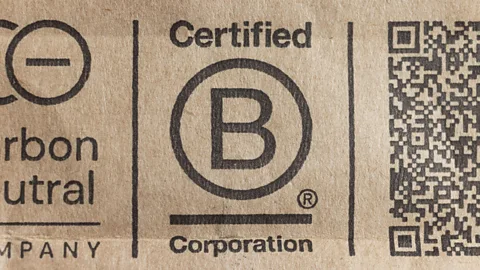
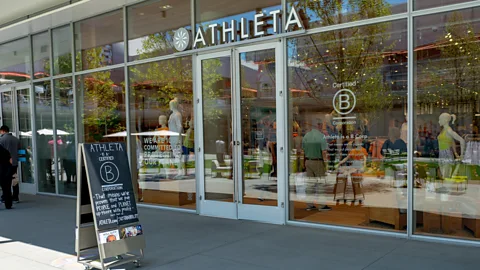
In more than 80 countries, consumers can find products emblazoned with a large "B" – the marker of B Corporation.
For-profit companies – mostly small and privately-owned – must clear a high bar to receive the certification from US-based non-profit B Lab Global, which signals businesses have met certain social and environmental standards. Multinational heavy hitters including Ben & Jerry's, Patagonia, Aesop, Allbirds and The Body Shop carry the designation, along with more than 8,000 other companies.
Yet increasingly, B Corp certification doesn't seem so shiny and definitive – and some consumers and companies alike are wondering if the label is greenwashing, or just another fading buzzword, like "ESG".
In late January, B Lab made headlines when they announced they would launch a formal investigation into the B Corp status of four Havas media agencies following the company's controversial multi-million-dollar account with fossil-fuel giant Shell in September. Twenty-six B Corp advertising firms from Clean Creatives, a collective of media companies cutting ties with fossil-fuel clients, have put pressure on the organisation to strip the subsidiary companies of accreditation
This isn't the first time the legitimacy of the certification has been called into question. Yet the issue has intensified since the introduction of B Lab's B Movement Builders initiative in 2020 – a certification programme specifically for publicly-traded companies with at least $1bn (£790,000) in revenue, which has led to more multinational companies gaining certification.
The backlash hit fever pitch in 2022, when a group of B Corp-certified coffee companies alongside Portland, Oregon-based non-profit Fair World Project, wrote an open letter to B Lab Global as Nestlé-owned coffee company Nespresso received its B Corp designation in April that year. Calling out Nespresso's "abysmal track record on human rights" and "extractive business model", they asked for stricter standards across B Lab Global. Later that year, the certification came under fire again when another open letter from workers at British beer B Corp Brewdog alleged a "culture of fear", in which workers were bullied and "treated like objects", despite Brewdog achieving its highest scores in the worker-assessment areas. Brewdog subsequently lost its certification.
 Getty Images
Beyond the B Corp designation, other certifications have arisen – which Matthew Cotton, professor of public policy at Teesside University, UK, says has muddied the water for consumers who want to purchase ethically. "The sheer volume of different certification schemes means that consumers are becoming confused about which of these schemes is legitimate."
Now, as misinformation and growing consumer awareness around greenwashing spreads, the role of certifications is shifting – in many cases, diminishing. "Certification is increasingly viewed as one part of a broader strategic approach to sustainability rather than the endpoint," says Robert Strand, the executive director of the Center for Responsible Business at the Berkeley Haas School of Business, California.
A flawed process?
One issue these controversies has exposed is the questionable nature of qualifying for B Corp status in the first place.
At present, to become B Corp certified, for-profit companies must complete a B Impact Assessment and obtain a score of at least 80 points out of 200 across several categories that look at the positive impact of the company in relation to its workers, community, consumers and the environment. It can take up to a year to complete; must be renewed every three years; and costs between $1,000 and $45,000 (£789 to £35,483), the fee relative to the company's annual revenue.
Yet whether they get certified is contingent on self-reporting – and some critics of the B Corp designation say this approach to assessment is opaque, even flawed. "Academics and ethical consumer action organisations have argued that it makes it relatively easy to manipulate internal reporting procedures or misrepresent findings," says Cotton.
Beyond this, the model puts the choice of sustainable goals in the hands of businesses. Cotton says companies may prioritise what is easier to implement versus what is better for the environment: "for example, prioritising single-use plastic reduction to show their environmental credentials, at the expense of a more urgent need to decarbonise their supply chain". This can mislead consumers in some cases, he says. "They are persuaded by the B Corp stamp of approval to buy products that wouldn't meet their personal ethical standards."
Not only might this undermine a company's B Corp status – hurting both businesses and consumers – on a wider scale, Cotton also believes this process adds to a growing climate of greenwashing. "This may mean that certain companies greenwash their businesses by receiving accolades for their social and environmental performance without actually providing strong benefits to society and the natural environment," he says.
Despite expert doubt, B Lab says they stand by the process. Chris Turner, executive director of B Lab UK, highlights how companies must re-certify every three years by completing the B Impact Assessment and verification process from scratch. (Post-publication, a representative from B Lab UK reached out to the BBC to note they take steps to verify companies' data.)
He is also aware of the challenges B Lab faces, and points to how the company is seeking public feedback as part of their second consultation process (following the first in 2021) as well as prioritising accessibility. For instance, a recent UK campaign offered free B Corp Certification to businesses led by people of colour, women, people with disabilities and members of the LGBTQ+ community. He says that small-to-medium enterprises still make up 96% of their B Corp community.
 Alamy
AlamyWorking in tandem
Looking to the future, Strand believes the B Corp status is still relevant, but only when seen as one part of the puzzle.
Moving forward, he thinks companies should approach B Corp certification as a foundational step in a larger sustainability strategy. "The example set by Patagonia [in which its billionaire founder gave away his company to a charitable trust] suggests a trend where companies will seek to compliment certification with additional measures, such as changes in corporate governance or ownership structures, to ensure long-term adherence to their mission and values," he says.
Cotton is more sceptical, and thinks the process needs to go further. "For such certification schemes to be more than just greenwashing and to achieve the necessary changes to halt climate emergencies, there needs to be stronger government-backed regulatory schemes that demand better environmental performance from industry."
Settling on a certification system that works for everyone will never be simple. Any signal to a consumer can be good – including B Corp – but it's more complicated than a label on a package.
Updated 7 Feb 2023: This piece has been updated to include a comment from B Lab clarifying their process around data verification