How the Iran war is affecting global travel

 Getty Images
As the conflict quickly escalates, here's what travellers in the Middle East and those considering a trip there need to know.
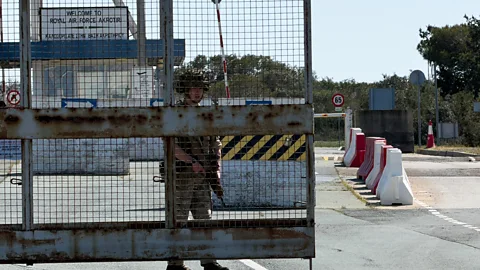
On 28 February, a coordinated US-Israeli military offensive deemed "Operation Epic Fury" struck Iran, killing the country's ruler Ayatollah Ali Khamenei. Since the initial strike, the conflict has rapidly expanded to affect a dozen countries – including drone attacks on the Royal Air Force (RAF) Base in Cyprus, an EU nation and all the countries in the Gulf Cooperation Council (GCC).
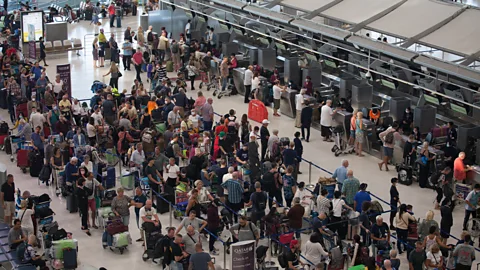
There have also been attacks on airports and civilian areas, especially in the economic and tourist hubs of Dubai and Abu Dhabi in United Arab Emirates (UAE) and Doha in Qatar. The Dubai Airport, the busiest in the world for international travel, was damaged by drone debris in the counter-strikes, leading it to be closed for three days in a row, stranding hundreds of thousands of passengers. A projectile also hit the luxury Fairmont The Palm hotel in Dubai, causing a fire that was filmed and widely shared across social media.
"The retaliation, especially against areas like the UAE, surprised me and a lot of others," said Dr John Rose, Chief Risk Advisor at corporate travel management firm ALTOUR. While it was widely expected that nations like Israel might be hit in retaliation, the UAE has largely been considered a safe place to travel in the region, with Dubai alone attracting nearly 20 million travellers in 2025. He notes that safety for travellers remains paramount for the region; noting that no airport will reopen if it's under realistic threat.
 Getty Images
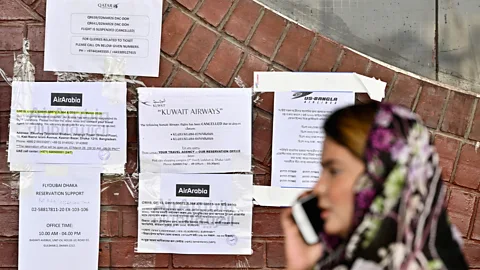
US President Trump has said he expects the strikes to continue for several weeks. As the situation unfolds in real-time, many travellers are wondering if or when it will be safe to travel to the region. Countries around the world have issued increasingly escalating travel advisories – including a sweeping directive from the US State Department on social media site X for American nationals to "depart now" from 14 nations across the Middle East (including Egypt, which hasn't been directly impacted in the strikes or the offensive) as the conflict escalates.
The situation on the ground in each country is nuanced, changing rapidly (sometimes by the hour), and travellers should assess their own risk profile and reasons for going. Here's where things stand across the impacted countries at the time of publishing.
Most recent updates:
The US is now sending charter flights to evacuate Americans from the UAE, Jordan and Saudi Arabia. The US State Department is encouraging Americans in the nations listed below to register here to receive the latest update from the nearest US embassy or consulate. The UK government has begun flying British nationals out of Oman, with additional flights to help citizens leave the UAE starting 4 March.
Iran
All civilian travel to and from Iran is closed. Airspace shut immediately after strikes began and remains closed. The US, UK, Canada and Australia all have their highest-level advisories in place, and Canada has warned its ability to assist citizens is "extremely limited". Overland border crossings into Turkey and Armenia remain open for those trying to leave.
United Arab Emirates
While Iranian strikes have hit both Dubai International Airport and Abu Dhabi's Zayed International Airport, the airports are both slowly starting to restart operations – with Etihad Airways resuming the first flights out of Abu Dhabi and Emirates resuming the first out of Dubai. Airlines are offering free rebooking for travellers, and the UAE government has said it will cover food and accommodation for the 20,200 travellers stuck in the country.
 Getty Images
Qatar
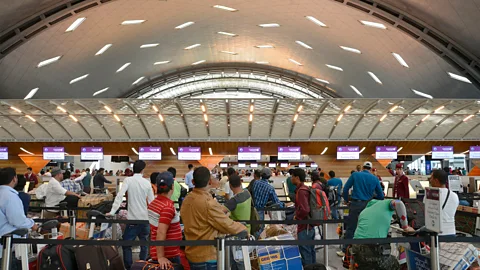
The Qatari foreign ministry has said that it has intercepted numerous Iranian attacks targeting civilians, including at the Doha Hamad International Airport – which remains closed due to the closure of Qatari airspace. The US and UK have both ordered a shelter-in-place advisory to US citizens as of 2 March, and Australia and Canada have issued "do-not-travel" warnings.
Oman
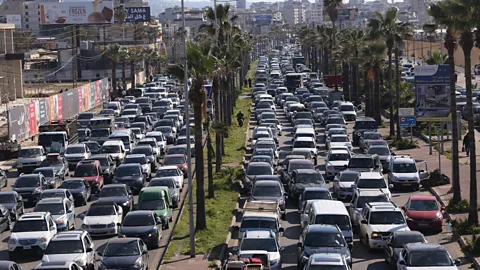
Many travellers are driving from the UAE to Oman, where flights are still operating and the risk of attacks is slightly lower than other countries in the region, according to Rose. Oman's Duqm commercial port was hit by Iranian drones, which came as a surprise to many, as the country was helping to facilitate peace talks between the US and Iran.
Compared to other countries in the region, Oman has slightly lighter travel advisories. The UK is advising nationals in Duqm to shelter in place, while advising those visiting Salalah or those within 100km (62 miles) of the city to leave by commercial means. Canada advises to avoid non-essential travel, while Australia suggests to "reconsider your need to travel". The US State Department has urged its citizens to depart from Oman immediately.
Israel
As part of the initial offensive, Israel continues to trade strikes with Iran and Hezbollah in Lebanon. Air raid sirens have sounded repeatedly across the country, including in Tel Aviv. The country's main international airport, Ben Gurion Airport near Tel Aviv, has been shut down due to Israeli airspace closures, but is expected to resume shortly with limited flights by Israeli carriers. The US, UK, Canada and Australia all have their highest-level warnings in place.
 Getty Images
Lebanon
Lebanon was already at the US's highest advisory level before the current escalation, and the US State Department ordered departure of non-emergency embassy personnel days before strikes began citing threats from Hezbollah, whose leadership has publicly stated it will not remain neutral in a US attack on Iran.
The embassy is urging all Americans to depart "while commercial flight options remain available". Australia has raised its advisory to "do not travel", as has Canada, though the UK has regional-specific "advise against all travel" and "advise against all but essential travel" warnings. Rose says he doesn't see these advisories lifting "for a considerable period of time". The US State Department has urged its citizens to depart from Lebanon immediately.
Kuwait and Bahrain
Airspace in both these countries remains closed as both were hit by Iranian strikes. The UK has a shelter- in-place advisory for both countries while advising avoiding all non-essential travel, while Canada and Australia all say to avoid all travel to both countries. The US State Department has urged its citizens to depart from both nations immediately.
Saudi Arabia
Saudi Arabia has been hit by retaliatory strikes, including two drone attacks at the US Embassy in Riyadh, leading the US to issue a shelter-in-place advisory to all US citizens, as well as urging all visitors to leave immediately. Riyadh's King Khalid International Airport is one of the few in the region still operating, so some travellers stranded in other Gulf countries have been making their way here over the past few days.
Australia has issued a "reconsider-your-need-to-travel" advisory, Canada has the country at "avoid non-essential travel" and the UK is advising to "stay inside" due to the threat of missile and drone activity.
 Getty Images
Jordan
The US Embassy in Amman has been evacuated due to an "unspecified" security threat. The country has partially closed its airspace from 18:00 to 09:00. Australia has issued a "reconsider-your-need-to-travel" warning, while Canada and the UK advise to "avoid non-essential travel". The US State Department has urged its citizens and those visiting to depart from Jordan immediately.
Iraq
Iraq's airspace is closed. The US has a Level 4 (Do Not Travel) advisory in place and had already ordered the departure of non-emergency embassy personnel before the current strikes began. The UK, Canada and Australia all advise against any travel, while the US is urging its citizens to depart immediately.
Cyprus
A drone struck the UK's RAF Akrotiri base early on 2 March, causing minor damage and no casualties but marking the first impact of the conflict in Europe. Paphos International Airport (a joint civil and military public airport) was evacuated after a suspect object appeared on radar, and around 60 flights were cancelled across the island. EasyJet suspended their UK-Cyprus services until 5 March.
While the UK doesn’t have a travel warning in place for Cyprus, it is instructing British nationals near the base to follow local instructions.
Egypt
Egypt has not been directly targeted by retaliatory strikes, though the US State Department included the country on the list it shared on X, advising citizens to "depart now via commercial means". Australia and Canada both advise travellers to exercise a high degree of caution, and the UK has regional-specific advice.
Rose, who is planning his own family trip to Egypt this summer, sees no reason to postpone a trip here in particular. "I'm not going to take my daughters somewhere I feel is high risk," he says. At the moment, he believes, "It's not."
--
This story was originally published on 3 March but is being updated as the situation develops.
If you liked this story, sign up for The Essential List newsletter – a handpicked selection of features, videos and can't-miss news, delivered to your inbox twice a week.
