Miraj: Inside the musical city of India

 BBC/ Sharad Badhe
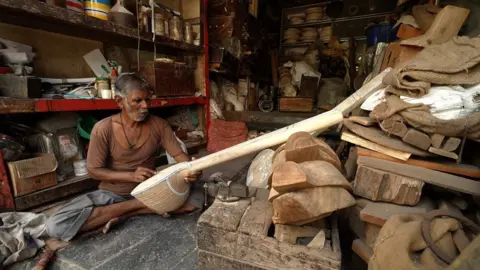
Miraj, a small city in the western Indian state of Maharashtra, has been a reputed centre of classical music for over 150 years.
Located 400 km (248.5 miles) west of Mumbai city, Miraj was part of the erstwhile princely state of Patwardhan and is home to several famous classical musicians.
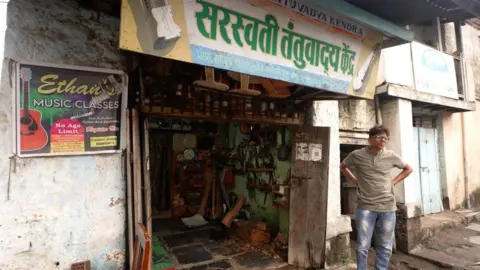
It is also the hub of string instruments in the country.
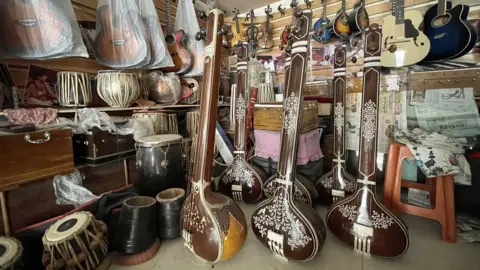
Thousands of instruments - particularly the tanpura, the sitar, the sarangi and the veena - made in Miraj are used in every corner of the country.
Many of India's top musicians get their musical instruments specially designed by the legendary craftsmen of this historic city.
 BBC/Sharad Badhe
 BBC/Sharad Badhe
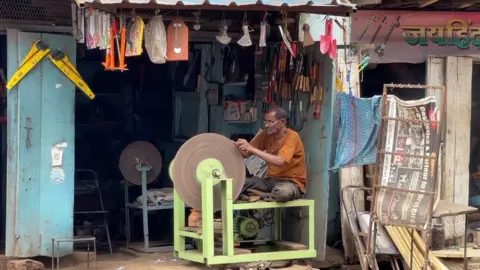
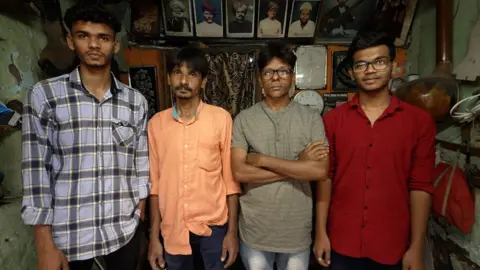
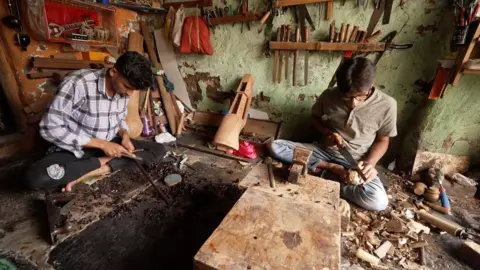
The industry is run by over 300 artisans spread over 50 families of the Shikalgars, who've been in the business for over seven generations.
Their fascinating story dates back to the 18th Century.
Historically, the Shikalgars were a community of metalsmiths who specialised in making swords and other military equipment during the rule of the Maratha Empire.
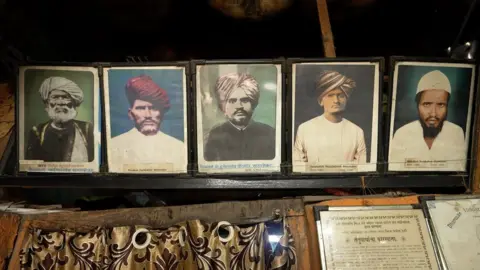
"But in 1818 - after the fall of the Maratha empire and introduction of modern weaponry by the British - the Shikalgar community began drifting away from their traditional vocation due to a declining market," says Mansingh Kumthekar, a historian based in the city.
 BBC/ Sharad Badhe
 BBC/ Sharad Badhe
The city's cultural history underwent further change in the coming years.
Shrimant Balasaheb Patwardhan II, the king of Miraj, was a great lover of music and he invited several musicians from across the subcontinent to perform during his reign.
But there was no one to repair the musical instruments the artists brought with them, Mr Kumthekar says.
So the king turned to the Shikalgar community for help.
 BBC/ Sharad Badhe
 BBC/Sharad Badhe
"He asked two brothers Faridsaheb and Moeuddin if they could help making the repairs."
The brothers - who were deep lovers of music themselves - learnt the craft so well that everyone started to call them the "sitar makers", Mr Kumthekar says.
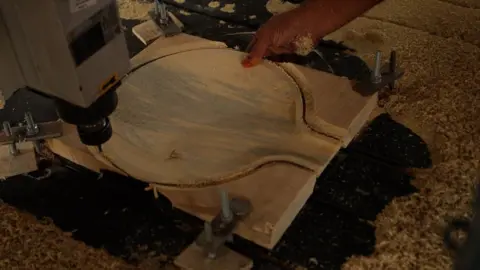
Soon, other families from the Shikalgar community too joined the business, giving birth to a thriving industry.
 BBC/ Sharad Badhe
 BBC/ Sharad Badhe
But Miraj's century-old music tradition is now facing an existential crisis.
The industry which once employed thousands has only a few hundred left.
Artisans say the arrival of electronic instruments and music apps has made it challenging to preserve the craft and has led to a loss of their livelihoods.
Some have shifted to new technology, but others are resistant to the idea and insist on preserving their traditional ways.
They say they are worried about their future.
Photos by Sharad Badhe

Read more India stories from the BBC:
- The Bollywood actress caught up in a 'gifts scandal'
- Can this Indian city withstand another urban flood?
- India officer’s speech with child in arms sparks debate
- The 'nomad' flower scientist who India forgot
- India court orders release of Rajiv Gandhi killers
- Film on India women in Islamic State sparks row
- Can India really adopt a climate-friendly lifestyle?
- India shocked as men sentenced to death for rape freed
- India's 'Florence Nightingale' saves life mid-air
