Bird Aid: Hailsham gull sanctuary saved after fundraising

 Bird Aid
The only gull-specific charity in the country has raised £170,000, and says its birds "are all safe now".
Bird Aid's sanctuary in Hailsham, East Sussex, houses 250 attacked or injured birds at any one time, including 100 permanent residents.
In August it was told it had seven months to buy the land it's on, after an investor pulled out, or risk closure.
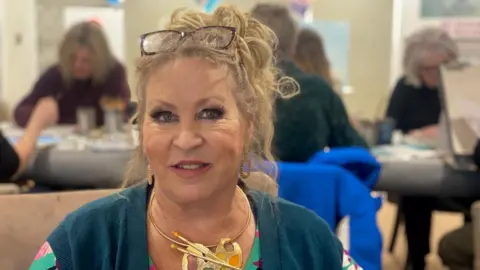
Owner Julia Gould said: "I'm thrilled, overwhelmed."
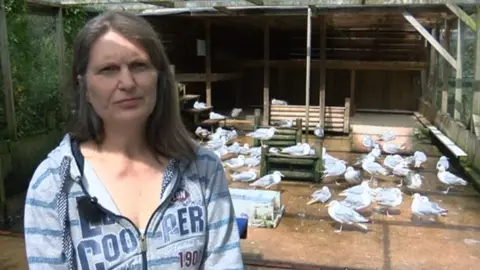
She said people across the world had been "rooting for us" and supported the cause from as far as Australia, as well as America and Norway.
Mrs Gould said: "It's been incredible really.
"The birds are all safe now, forever. There won't be anybody threatening them again. We can now get this set up so the charity can carry on, even after we've gone."
She set up the charity after noticing that gulls "always seemed to come last" behind other wildlife, and are sometimes seen by the public as food-thieves or pests.
 Bird Aid
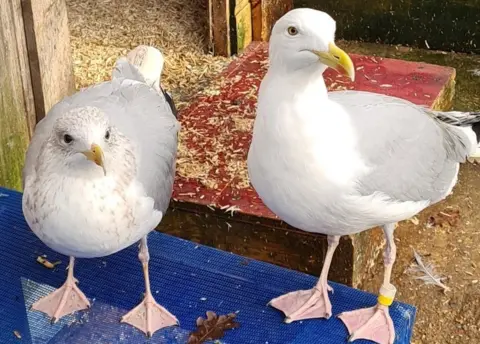
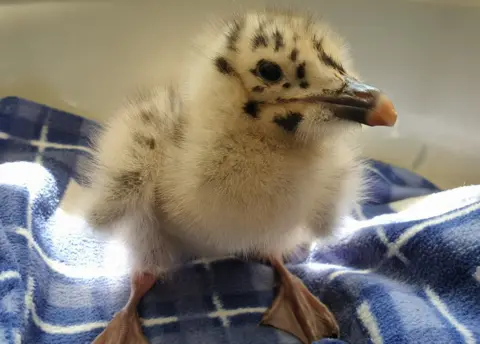
The monogamous birds are "incredibly friendly", she said, and just "needed to live somewhere" after their habitat was invaded by people building houses and hotels along beachfronts.
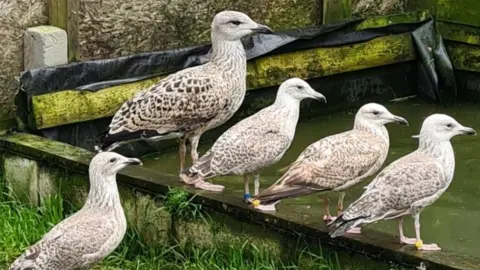
Herring gulls are on the RSBPs red list for threatened birds. The species has seen a sharp decrease in population over last 25 years.
 Bird Aid
Mrs Gould has been operating the centre for eight years and says she has seen some horrific injuries to the seaside birds.
One came in with a broken leg, wing and ribs after being "beaten to near death" by a man in Eastbourne, she said.
It recovered, but due to neurological damage can never be released back into the wild, Mrs Gould added.

Follow BBC South East on Facebook, on Twitter, and on Instagram. Send your story ideas to southeasttoday@bbc.co.uk