Jack Adcock manslaughter: Convicted doctor 'fit to practise'

 PA
PAA doctor convicted of the manslaughter of a six-year-old boy is now fit to practise without any restrictions, a medical tribunal has ruled.
Dr Hadiza Bawa-Garba was previously found guilty of gross negligence manslaughter over the death of Jack Adcock at Leicester Royal Infirmary.
She was struck off the medical register but reinstated following an appeal.
She has been working under close supervision, with several conditions imposed, since November 2020.
However, the Medical Practitioners Tribunal Service (MPTS) said the conditions should be revoked with immediate effect, after finding her fitness to practise is no longer impaired.
The MPTS panel said in its written decision: "While Dr Bawa-Garba had only resumed clinical practice in November 2020, the tribunal was struck by the volume of evidence she has been able to produce detailing all aspects of her clinical practice and the steps she has taken to ensure her skills and knowledge are now fully up to date."
After looking at written evidence, including positive testimonials from Dr Bawa Garba's current colleagues, the panel decided she was a "competent, safe and reliable clinician about whom no further concerns had been raised".
One testimonial, from a consultant paediatrician, said: "On a personal note I have been truly impressed by her resilience and commitment to paediatrics. I am uncertain that I would have the strength of character to restart my training after such a long and difficult break."
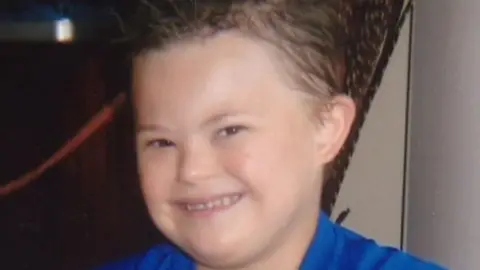 Adcock family
Nicky Adcock, Jack's mother, had opposed Dr Bawa-Garba being allowed to practise again, and has described the decision as "appalling".
She said: "To be perfectly honest... I can't believe she has actually been reinstated, I think it's absolutely disgusting."
"This doctor has been given a second chance to go and do her medicine again. We've not been given a second chance. She took my son away and I've not been given a second chance," she added.
Jack Adcock died on 18 February 2011 after being referred to Leicester Royal Infirmary by his GP.
Dr Bawa-Garba was the most senior doctor present that day in the Children's Assessment Unit.
She made an incorrect diagnosis of gastroenteritis with moderate dehydration, when he actually had sepsis.
Her trial heard that as a result she failed to give antibiotics "in a timely fashion". Jack died of cardiac arrest.
At the time, she was a specialist registrar in the sixth year of her postgraduate training. A more senior doctor was meant to be in charge that day, but he had double-booked himself with teaching commitments and not arrived at work.
During Dr Bawa-Garba's trial, her defence said she had worked a 12-hour shift with no break and there was miscommunication on the ward.
Doctors at the hospital also told the BBC's Panorama programme they had raised concerns about staffing before Jack's death.
After being convicted, Dr Bawa-Garba was sentenced to 24 months imprisonment, but this was suspended for 24 months.
In 2017. the MPTS suspended her from the medical register for a year, but the General Medical Council appealed against the decision because they felt it was too lenient. She was then struck off the medical register following a decision by the High Court.
Dr Bawa-Garba subsequently took her case to the Court of Appeal and won her bid to be reinstated.
The case provoked anger among medics who suggested "honest mistakes" could mean they are struck off, while wider pressures had been ignored.
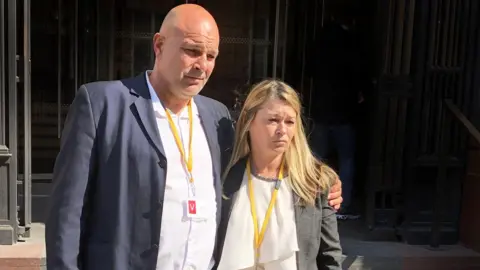 PA
PAAndrew Colman, who represented Dr Bawa-Garba at the hearing, told the panel she deeply regretted what had happened.
"She will continue to think about that boy and his tragic, avoidable death for the rest of her life," he said.

Analysis: Amara Sophia Elahi, BBC health correspondent
The case of Dr Hadiza Bawa-Garba rocked the medical profession, and sparked a debate about whether doctors working in highly pressurised environments should face criminal charges for honest mistakes.
On the day Jack Adcock died, Dr Bawa-Garba had worked a 12-hour shift without a break, and was treating a number of other very sick children at Leicester Royal Infirmary. She was the most senior doctor on site that day, and had just returned from maternity leave. Added to this, the hospital's electronic system had failed, leading to delays in patient care.
Following Dr Bawa-Garba's conviction, subsequent suspension and striking-off, a number of medical associations expressed concern about the way in which the GMC handles cases involving Black, Asian and Minority Ethnic (BAME) doctors.
Figures show that medics from BAME backgrounds are more than twice as likely to be referred to the GMC for fitness to practise concerns than white doctors, and that they are more likely to be sanctioned after an investigation.
This led the GMC to announce a review into why BAME doctors are more likely to be referred to them.
Dr Bawa-Garba's case drew such media attention that the former Health Secretary Jeremy Hunt ordered a review into the application of gross negligence manslaughter charges in medicine. This concluded that the regulator should no longer be able to appeal decisions made by its own tribunal, a decision that the GMC rejected.

A doctor struck off for honest mistakes

Follow BBC East Midlands on Facebook, Twitter, or Instagram. Send your story ideas to eastmidsnews@bbc.co.uk.
