Students map locations bombs fell in Leeds WWII raid

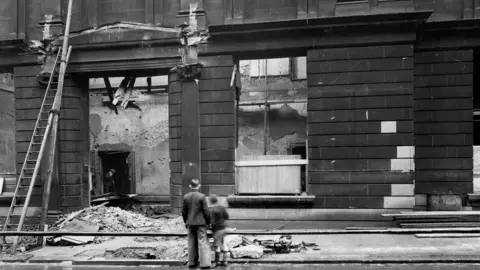 Leodis photographic archive
The exact locations where high explosive bombs fell during a World War Two air raid have been fully mapped for the first time.
An estimated 25 tons of bombs were dropped on Leeds on 14 March 1941.
It led to the deaths of 65 people and caused more than 100 serious fires, damaging 4,500 buildings.
Students at Leeds Beckett University have used a range of sources to create the interactive map to mark the 80th anniversary of the raid.
Officially too small to qualify for Blitz status, which is defined as 100 tons of explosives, German aircraft targeted the city in two waves.
It aimed to damage the gas works and the industrial areas surrounding the river Aire.
However, others sites were also hit including the Town Hall, City Museum, telephone exchange and residential homes.
Dr Henry Irving, senior lecturer in public history, said he and the students were struck by how little had been written about the raid.
"The students also worked to connect individual incidents with the people affected, adding details about the legacies of the raid," he said.
Dr Irving added it had been an emotional experience.
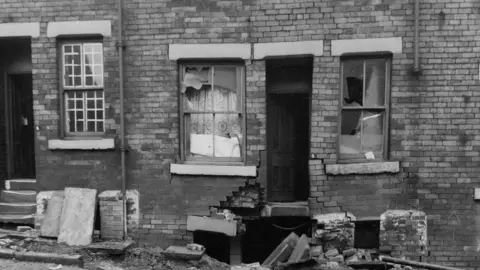 Leodis photographic archive
Part of the project focussed on the role of women.
Among those taking part in the project was Leanne Speight, whose great-grandmother worked in a munitions factory.
Leanne said women like her great-grandmother had done something "extraordinary" and had overturned gender stereotypes, but they thought they were just doing "their bit".
"Reports published afterwards show women did not hesitate to tackle fires caused by incendiary bombs, even when high explosives were falling nearby," Ms Speight said.
The students used an array of sources including Home Security reports and academic texts, alongside photographic archives and genealogical databases.

Follow BBC Yorkshire on Facebook, Twitter and Instagram. Send your story ideas to yorkslincs.news@bbc.co.uk or send video here.
