Why are leaves on trees turning brown in summer?

 Ed Hirons
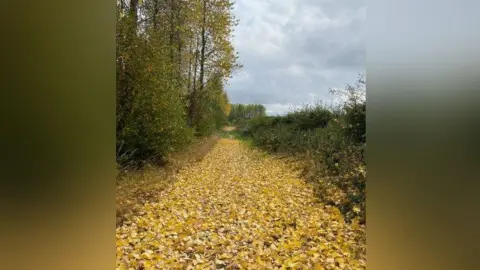
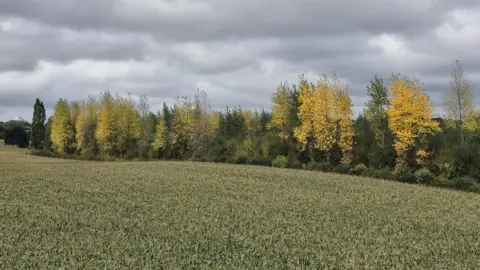
Forestry experts have said leaves turning brown and falling from trees is not down to an "early autumn" - but rather "stress" caused by a lack of water and prolonged heat.
National Forest officials have witnessed a number of trees in Derbyshire shedding leaves, which usually happens during September and November, as temperatures cool.
But due to the warmest summer on record in the UK, experts have said trees such as silver birch have started to shed early.
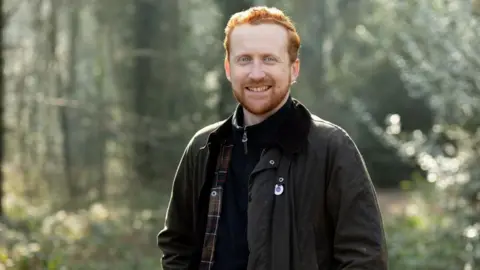
Ed Hirons, woodland manager at National Forest, told the BBC: "It might look like autumn is here already but these brown, crinkly leaves are trees putting out stress signals due to the lack of water from the drought we've experienced."
People who manage woodland are being urged to look at ways to help the soil and site recover, and what interventions could be implemented in future years if it happens again.
Mr Hirons said comparisons had been made between the warm summers of 2022 and 2025.
But he added the big difference in 2025 had been the prolonged length of warm, dry weather where temperatures had been above average and rainfall had been below average.
 The National Forest
"This is not brought on from autumn, which is triggered during a change in daylight conditions, which is still a fair few weeks away [and] is usually late September, early October," he said.
"The symptoms we've seen, they can appear concerning and that brings focus to individual sites that are suffering more than most.
"The species that are suffering the most are of shallow roots such as silver birch, sycamore and field maple.
"You won't have to go far [in Derbyshire] to see it."
Mr Hirons said there was not much that could be done at this stage but work was under way to look at possible interventions to mitigate the impact in coming years.
These include planting a range of diverse species of tree with different root depths.
"You can't go around watering whole forests, but you could for individual street trees," he said.
 The National Forest
Mr Hirons added the lack of water and the impact on trees could have a wider effect on the ground soil, where other things grew.
"There are other small impacts on the ecosystem and there does seem to be, anecdotally, walking round, a bigger mass of blackberries coming out earlier from brambles, so these berries are putting on quite a glut because of the sunlight we've had throughout the spring," he said.
"So there's changes and future studies will probably show the true impacts, but now is about what we can see and what we can feel on the ground.
"It's something that we will constantly monitor moving forward."
Follow BBC Derby on Facebook, on X, or on Instagram. Send your story ideas to [email protected] or via WhatsApp on 0808 100 2210.