Have your say in a fresh plan to aid the recovery of nature

 Getty Images
As one of the most nature-depleted regions in the world, a new nature recovery strategy could support plant and animal species in Northern Ireland.
Officials want the public's opinion on the latest plan to tackle the issue, with the strategy document now published for consultation.
A recent nature report says one in nine species in Northern Ireland is currently at risk of extinction, and another found nature in Northern Ireland was under "unsustainable" pressure.
Meanwhile, the Woodland Trust suggests thousands of people live in "tree poor" neighbourhoods.
What is the government doing?
The latest action plan - the Nature Recovery Strategy - was published on Tuesday and people have until 18 March to have their say.
Northern Ireland's first Environmental Improvement Plan (EIP) was approved in September 2024.
It brought in objectives for habitat and species loss, greenhouse gas emissions, water, air and soil quality, waste management and more.
Lough Neagh is the poster child for Northern Ireland's environmental issues - the UK's largest lake is plagued by blue-green algae and it is the subject of a number of interventions.
Climate change is posing a serious threat to nature, and Northern Ireland's first draft Climate Action Plan was published in June.
What is in this latest strategy?
 Getty Images
The Nature Recovery Strategy for Northern Ireland sets out how the Department of Agriculture, Environment and Rural Affairs (Daera) will meet international and national targets on biodiversity up to 2032 and includes actions across government, business and society.
While it covers actions already in existence or present in other policies and strategies, it also has additional proposals.
The five strategic objectives of the draft strategy are:
- Well protected nature and accelerated restoration
- Reduction of the pressures on biodiversity
- Sustainable use of biodiversity through nature-friendly policies and practice
- Nature valued and mainstreamed across all of government and society
- Building strong, integrated evidence and knowledge to enable action and reporting for nature
As part of the UK, Northern Ireland is committed to international goals including the Global Biodiversity Framework, which aims to ensure biodiversity is valued, conserved, restored and wisely used by 2050.
It is also committed to the 30 by 30 target, under the Convention on Biological Diversity – that requires 30% of land and sea to be protected for nature by 2030.
The consultation document describes it as "complex and challenging" and adds that there "uncertainty remains" about what areas may qualify to contribute to the 30 by 30 target.
The Royal Society for the Protection of Birds (RSPB) welcomed the "high ambition for nature recovery" but said it was disappointed the proposals in the draft strategy didn't "guarantee the ambitious action needed to ensure nature will be restored".
"The time for plans about undertaking yet more consultations has passed. We need clear, bold and actionable commitments from government, backed by evidence and funding, not plans about plans," RSPB NI director Joanne Sherwood said.
She called for Daera to "significantly strengthen the strategy" and set out "how it will be implemented and monitored".

Can the decline be reversed?
Research suggests Northern Ireland has lost 50% of its biodiversity based on a 1970s baseline, with ecosystems like rivers, lakes and other freshwater bodies also failing to meet good or high ecological status.
The 2023 State of Nature report found that 12% of species assessed across NI are under threat of extinction, and about 40% of the plants and wildlife in our most protected sites fall short of the "favourable condition" standard.
Agriculture and Environment Minister Andrew Muir said there was "a long way to go" to halt and reverse the trend.
But he said nature could recover "if we start recognising its value, stop doing things that harm it, and treat it with the respect it deserves".
Why nature protection is so important
Some environmental challenges, such as the enduring case of blue-green algal blooms, can impact wildlife, pet and livestock health; and the local economies reliant on fishing, tourism and recreation can also face significant disruption.
In a previous review, the chairman of the Office for Environmental Protection, Dame Glenys Stacey, said nature underpinned the Northern Ireland economy and so protecting the natural environment was fundamental to achieving economic and social goals.
And nature protection is essential for long-term solution - examples of needed protections include restoring wetlands and peatlands, reducing water pollution, farmers adopting sustainable practices, and wildlife breeding programmes.
And, although conservation groups are working hard, efforts are not yet happening at the scale required.
What can individuals do to help?
 Getty Images
There are a number of ways that individuals can support nature and cut their carbon footprint, according to the RSPB.
Some of the charity's suggestions to help wildlife include:
- Creating a den for frogs, toads and newts
- Creating a leaf-mould cage for hedgehogs and toads
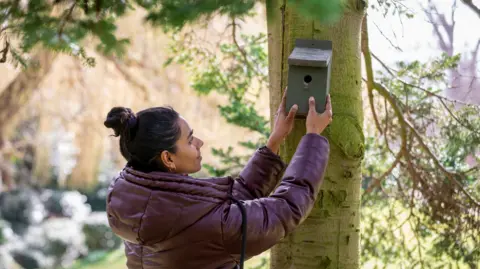
- Building a nestbox so that birds can have a safe place to rest and raise a family
- Planting a hedge, poppy seeds, sunflowers, trees or shrubs
- Be water-wise by reducing usage
The RSPB also provides top tips on how people can reduce their carbon footprint, such as:
- Use energy efficient products like LED lightbulbs and A-rated appliances
- Reduce heat loss by improving insulation
- Harness the power of the sun using solar panels
- Reduce, reuse and recycle
- Use public transport, cycle or walk
- Campaign and vote for action on the nature and climate crisis
BBC Earth has also provided some ways that individuals can help to save the planet.
