Packham and Strachan to tell stories about wonder of winter wildlife

 BBC
BBCA year after Storm Éowyn wreaked havoc at Mount Stewart, the estate on the Ards Peninsula will be home to BBC Winterwatch 2026 for four nights.
It is the first time the programme has been broadcast from Northern Ireland.
Viewers across the UK will see how nature on the estate is thriving, despite the loss of more than 10,000 trees last year after gusts of up to 100mph hit during the storm.
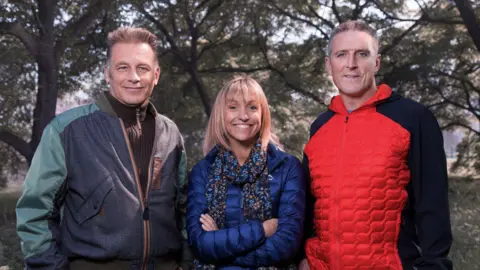
Presenters Chris Packham, Michaela Strachan and Iolo Williams will also bring stories from across the UK about the wonder of winter wildlife.
Who are the presenters?
 Jo Charlesworth/PA Wire
While the storm tidy-up took most of 2025, some trees have been left where they fell, with their root plates exposed.
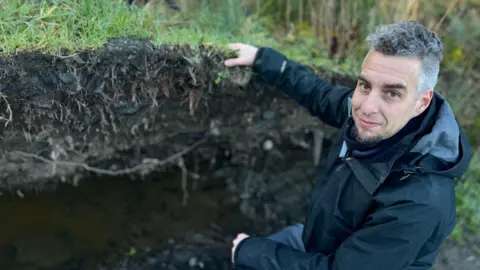
The National Trust area ranger Toby Edwards said "trees don't live forever" but there are "positives" that have come from the storm-related destruction and subsequent repair.
"A woodland needs to be rich and diverse - of age structure, of light levels, and habitats and conditions.
"So all of the plants from the herbaceous levels right the way up to the canopy trees can provide for the natural ecosystem."
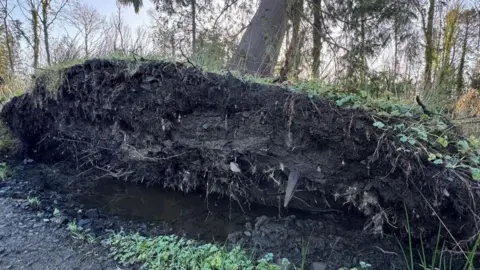
When trees fall and pull up the topsoil with their roots, he added, they "may look dead", but they are actually "teeming" with life.
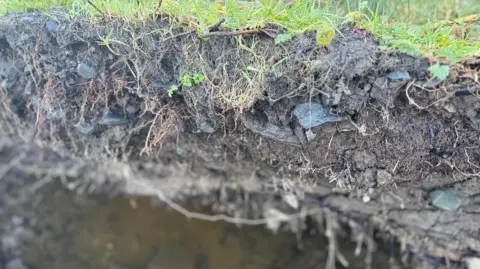
"What we've got here now is we've got some new bare soil, and if you look in underneath, we've got this fantastic little wet hollow.
"So this is where all of your larvae of beetles and flies are going to be, providing food for amphibians.
"Of course when they hatch out, they're flying, they feed the birds, other small mammals, and the birds and the small mammals feed the larger, and we have pine martens, red squirrels here, birds of prey, and it goes all the way up through the food chain."
Future of Mount Stewart
With climate change making extreme weather more likely, the National Trust is making preparations for the future at Mount Stewart.
Its gardens were established by Edith, Lady Londonderry, in the 1920s.
She is regarded as one of the great garden designers of the 20th century.
But the estate's gardens team is now working to move the "significant" plant collection from the front of the estate, where it faces on to Strangford Lough.
"With sea level rise, again extreme weather events, water levels in the lower formal gardens are changing," said Edwards.
"They're potentially going to become more saline, the water level is going to rise as well.
"So we're looking to move the whole collection steadily inland into the centre of the estate, that always would have had some formality to it from a horticultural point of view.
"But now we've got all that potential to do new things with new understandings as well on old technology."
Although the National Trust was gifted the gardens and house of Mount Stewart in the mid-20th Century, the charity only acquired the surrounding lands 10 years ago.
Since then, Edwards has been part of the team unlocking the estate's nature recovery potential and they have discovered "a number of new species that haven't been recorded in Northern Ireland for decades".
They include the screech beetle - his personal favourite - so-called because it shrieks when disturbed.
But some of the other species may be more to others' tastes.
'Winners and losers'
"A lot of people out there will probably recognise the great spotted woodpecker as a prime example that has made its way over to the island of island and is now rapidly expanding.
"Little egrets, that would have been a rare bird 15 years ago but they're almost common as muck now.
"We're also getting great egrets turning up too."
Some species are being recorded for the first time, something Edwards suspects may be influenced by climate change.
"As the weather systems and average temperatures are changing, some species are moving north and others are descending.
"So there are winners and losers in this, some species are expanding."
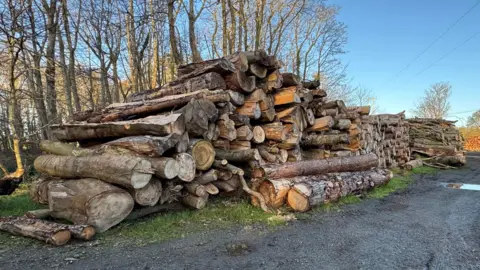
Long-term thinking is a way of life when it comes to managing woodland and farmland.
But there are other issues to think about - what trees to plant to build strength and diversity into the woodlands, and how to support the farms and businesses that operate on the estate as things get more challenging.
"We need to think about how we can build resiliency into our landscapes and our habitats, for our farmers to have a resilient business and be nature-friendly as well," Edwards said.
"We're going to get more and more of these extreme weather events from one day to the next, be it wind, rain, heat, and so on.
"But if we can do what we can to help these species and habitats be as resilient as possible to these changing climates, then hopefully we'll get out the other side of it."
Episode one of this series of Winter Watch is on BBC Two on Tuesday at 19:00 GMT.
