Large numbers of sea hares 'not unusual'

 The Guernsey Scientist
A Guernsey based scientist has encouraged islanders to report sightings of sea hares, after hundreds were spotted in island waters.
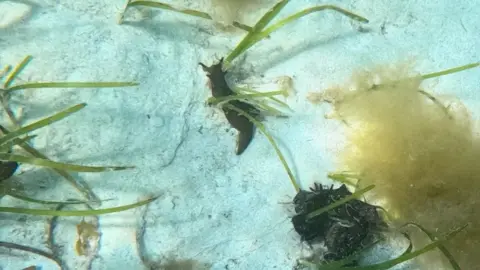
The sea hares, often called sea slugs, were seen in large numbers by local residents around the QEII Marina, prompting questions on social media about a potential population boom.
The sea hares are predominantly spotted sea hares, or Aplysia Punctata, and can grow up to 20cm (8ins) in length.
Liz Sweet, also known as the Guernsey Scientist, said the large numbers present in shallow waters around the island was "not that unusual."
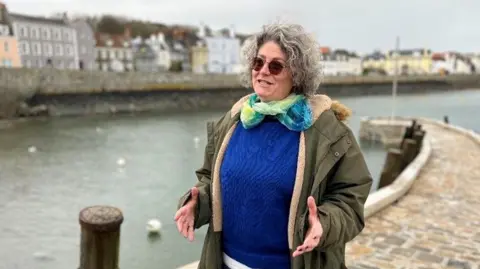
"We get sort of boom-and-bust cycles…the numbers massively explode just before they start breeding and unfortunately when they finish the adults will die," she said.
The sea hares feed on algae and seaweed and have no dedicated predator.
Sweet said rising sea temperatures appeared to have created more favourable conditions for sea slugs, including an abundance of food.
Unlike other species, she said dotted sea hares favoured shallow waters for breeding which made them more visible to people on the shore.
"[They are] pretty much everywhere at the moment, you see them a lot on the West Coast, anywhere that's sheltered – so look in your rock pools," she said.
'Please take pictures'
She said sea hares offered a "fascinating glimpse" into the animal kingdom, as each creature had both male and female sex organs.
"Sometimes you will get chains…and the one at the front will act as a female, and the one at the back will act as a male… and the ones in the middle will act as both, so it's quite bizarre," she said.
Sweet encouraged residents to report sightings of sea hares, and any wildlife on the island, to the online community iNaturalist - and encouraged them to take photos if possible.
