'I smashed a door in her face - that's when I got help'

 Getty Images
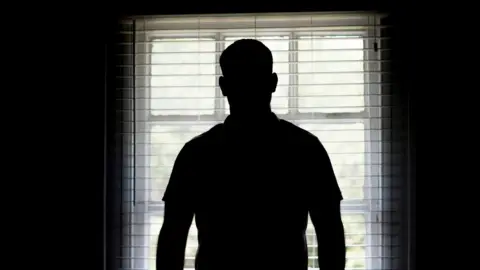
An abuser said he reached "breaking point" when he punched his fist through a door while his girlfriend was standing behind it.
She immediately left the house and Greg, which is not his real name, realised how close he was to losing her.
"I needed to change, I couldn't carry on the way I was," he said.
Meanwhile, Joe, also not his real name, said his watershed moment came when his partner of decades listed all of his controlling behaviour.
"I didn't think what I was doing was abusive. When somebody said 'you're an abuser' I was like I've never laid a finger on her'," he said.
- If you have been affected by any of the issues in this article, help can be found at BBC Action Line
Joe believes his coercive and controlling actions stemmed from jealousy and the fear she might cheat on him.
This resulted in repeated patterns of toxic behaviour including using "every trick in the book" to stop her going out with friends.
Both Joe and Greg referred themselves to attend sessions with Wiltshire charities, FearFree and Society Against Abuse, which run behaviour-change courses.
There has been scepticism over whether abusers really can alter their behaviour, but one expert said there are a large number of abusive individuals who can change and do change.
 Getty Images
The Crime Survey for England and Wales estimated that about 3.8 million people over 16 experienced domestic abuse in the year ending March 2025. Figures also show that about one woman is killed every three days by a man in the UK.
The government has started backing programmes like the charity's behaviour-change courses in a £53m package that it said directly targets perpetrators.
Joe said the work with Society Against Abuse over the past year has helped him learn about relationship boundaries, why he had the behaviours and learning how to catch them and process them before acting.
"I couldn't believe that I had put the person that I love the most in the world through that pain," he said, adding the people working with him said he was a "different person" to the one they had met six months previously.
Both said they witnessed similar behaviours in their own childhoods.
Greg has had shown techniques to reduce abusive behaviours.
"The hardest thing is admitting it, and you'll deal with it properly for probably the first time on that course.
"There's nowhere to hide, so you have to be a bit open-minded towards it," he said.
Speaking about if the course has changed him, he said learning techniques such as taking time out has helped him remain calm when he would have previously "flown off the handle".
 Lydia Little
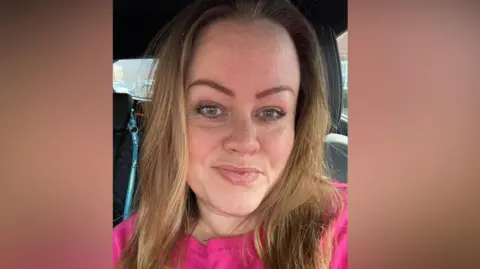
Lydia Little, from Charity FearFree, explained they start with a one-to-one appointment, learning about the person's history and childhood.
She said many grew up watching violence as children, so "people have to teach you there is another choice", with people attending courses coming "from all walks of life".
"Working on understanding and recognising emotions when those are getting out of hand is a really big part of this work," she said.
Little often gets questions on why the charity works with perpetrators.
"It feels like a dirty topic to talk about it - there's no heroism in this work. It doesn't always feel like you are saving someone.
"If we don't invest in programmes that interrupt the people that are causing harm then we are never going to reduce the amount of victims that we see," she said.
 Society Without Abuse
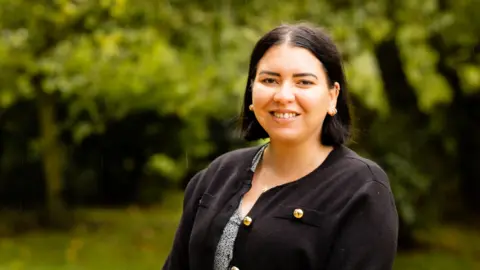
Society Without Abuse has been running Open2Change since 2021.
The programme is not a short undertaking, with courses often lasting up to nine months.
Programme manager Louisa Wrighton said they do get people returning.
"I think people come in with the intention that they want to change those behaviours, but then there's a lot of shame and guilt.
"And worry of judgment. So actually, the easiest thing is just to back away from it and pretend it didn't happen," Wrighton said.
Funding comes from a variety of places, including the Police and Crime Commissioner, National Lottery Community Fund and fundraising.
Wrighton added that charity also "offers a lot of support to victims", but working with the perpetrators helps to address the "root cause" and "makes those causing harm accountable".
 Society Without Abuse
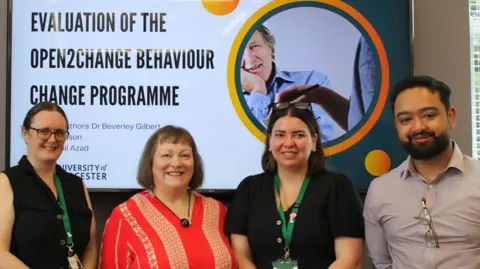
Dr Beverley Gilbert, an expert in domestic abuse at the University of Worcester, interviewed a number of people on the Open2Change scheme for an evaluation and said they "all indicated they were less likely to reoffend".
"There are a quantity of abusive individuals that it wouldn't matter what you did, they will never change because their abusive attitudes and their behaviours work for them. That is not a reason not to do anything with anyone.
"There are a large number of abusive individuals who can change and do change. Most I spoke to were very clear in their desire to do better," Gilbert added.
Follow BBC Wiltshire on Facebook, X and Instagram. Send your story ideas to us on email or via WhatsApp on 0800 313 4630.
