'We're devastated over Batten disease drug decision'

 BBC
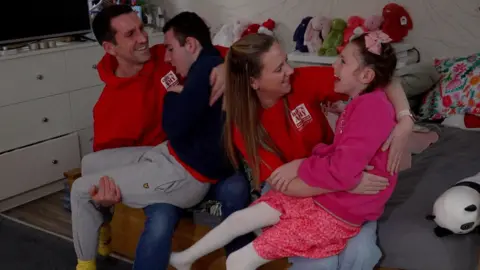
BBC"They hit all their milestones and then you've got to witness them lose every single ability one by one."
Lucy, the mother of two children with Batten disease, describes the terrifying speed at which the rare degenerative condition can progress without treatment.
Her son Ollie was diagnosed in 2015, at the age of four. His sister Amelia was two.
At the time there was no treatment. But mum Lucy and dad Mike fought to get access to a drug called Brineura, which they say has kept their children alive for a decade.
But NICE, which makes funding recommendations for the NHS, has concluded that a lack of long-term evidence means Brineura is not cost effective.
Lucy said the treatment had changed everything for the family.
"Ollie and Amelia have had a fantastic quality of life, and it's slowed the disease down massively and we're so grateful for that," she said.
Hundreds of parents have fought to get the NHS to fund the drug but NICE said there was still not enough evidence about the long-term effectiveness.
The main issue is the high cost of the drug, which involves an infusion through a port in the chest which then goes up to the brain.
"It's given Amelia 10 years extra quality of life," Mike said.
"How much is that worth? To me it's priceless."
Lucy said: "I don't think you can explain in words how quick this disease progression is without the treatment.
"These are children who are born healthy.
"They hit all their milestones and then you've got to witness them lose every single ability one by one, but also you're seeing the fear in that child's eyes because they don't understand what's going on."
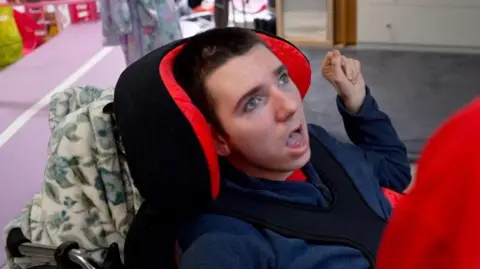
Lucy and Mike heard about the drug trial being run from the USA which was accepting children from Britain.
The trial had just closed but the couple flew to Paris to meet drug company representatives and persuade them to make a handful of extra places available on compassionate grounds.
The effect on their children, they said, was dramatic.
Parents, including Lucy and Mike, argue the benefits to their children justify that cost.
The recommended price is £522,782 per person per year, although the NHS negotiates a discount.
NICE has consistently questioned the long-term benefits of Brineura, also known as Cerliponase alfa.
In 2019 they negotiated a five-year managed access agreement with the drug company, which meant costs were split between them, while more data was gathered.
That agreement ran out in 2024 but was extended while further meetings and assessments were carried out.
Last year NICE announced that all children currently being treated with Brineura could remain on it for life, regardless of the final decision.
That decision was published on Wednesday and stated that, even though parents and clinical experts had judged it was a "transformative treatment", there was still not enough evidence about the long-term effectiveness and it was not recommended.
This means that while those children already on it can continue, children diagnosed from now on will not get it.
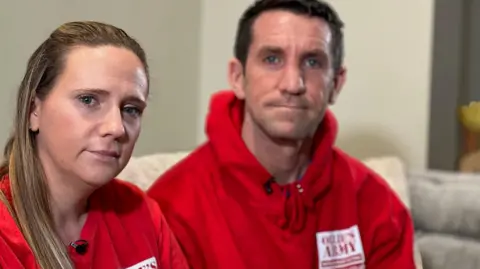
"I just can't believe we're 11 years on from when our children were diagnosed and we're right back at the beginning again," Lucy said, with tears streaming down her face.
"It's like – what was the point in everything that everyone's gone through?
"To then know that it's not going through just because of the cost."
But this battle is now for other people's children - not because Ollie and Amelia are already on Brineura - but because last August their parents made the incredibly difficult decision to take them off it.
They said Amelia had started to have bad reactions to the infusions and her device broke, which would have meant more brain surgery to insert a new one.
"We just thought this isn't fair," Mike said.
"You don't just keep them on it….you don't just keep them alive, it's all about quality of life.
"And unfortunately for our children we noticed the quality of life had dipped a bit.
"So we made the very very hard decision to take them off the treatment."
'This is all there is'
Ollie and Amelia, now 15 and nearly 13, have been living without the infusions for six months but their mum said regular medical check-ups had shown they were both stable.
"They've been really well. We were told that they would deteriorate rapidly and that's not the case," she said.
"So even without the treatment there's a lasting effect."
But no-one knows what will happen next.
"We've got to make the rest of their life very special," said Mike.
"They're still smiling, they're still healthy thank God, so we can still do things as a family.
"Obviously one day we won't be able to.
"So we just take each day as it comes and make each day special."
They said they would continue fighting for the drug for future children.
"We've put years and years of our lives into this, Ollie and Amelia's lives into this, their siblings' lives into this as well," said Mike.
"But it is absolutely worth the fight for the future – for the young children that are going to be diagnosed."
They and hundreds of other parents are now looking into the possibility of a judicial review.
"There is no other treatment," said Mike
"This is all there is, this is all that families have got. This is hope."
A spokesperson for NICE said the funding body and NHS England had "used all available flexibilities to reach a positive solution".
They had collected "four years' of real-world clinical data on the treatment's efficacy" and used specialised technology for its assessment which "allows a cost-effectiveness threshold ten times higher than usual" along with discussing a potential commercial agreement with the drug company for the last nine months," they added.
"We are, therefore, deeply disappointed that the company was unwilling to agree a reduction to the £522,000 per patient per year list price that would have allowed newly diagnosed children to benefit from this treatment."
Read more stories from Cheshire on the BBC, watch BBC North West Tonight on BBC iPlayer and follow BBC North West on X. You can also send story ideas via Whatsapp to 0808 100 2230.
