How is climate change impacting island life?

 PA Media
Extreme changes in weather patterns could become the norm for the Isle of Man, an island meteorologist has said.
Weather patterns, bringing excessive heat and rainfall to the island, has had a knock-on effect on fisheries and crop and livestock farmers, Gary Salisbury, forecaster at the Ronaldsway Met Office said.
His comments come after the weather watcher's 2025 report, which stated the island saw its warmest spring and summer since records began in 1947, the driest March for over 70 years and one of the wettest autumns on average for 30 years.
Salisbury said the Isle of Man was "very vulnerable" to weather changes, because "all our travel [in and out of the island] is by sea and air".
'Exceptionally dry spring'
Salisbury said a dry spring, which the island saw last year, has had a big impact to farmers growing crops and feeding their animals.
"March is when farmers are planting their crops but if you've got no rain, that's a problem for getting stuff growing.
"All cows on the Isle of Man are grass-fed, the grass has to grow, but the ground was just dust", he said.
The unusually dry spring also presented issues for the island's fisheries, with river levels decreasing as a result of the changing weather patterns.
Only 13mm (0.5in) of rainfall was recorded in March last year, some 50mm (1.9in) below the average expected rainfall for this month, according to the Met Office.
This drought however came after a "very wet" spring the previous year.
"It's the swings from one extreme to another that causes the problems", Salisbury added.
 PA Media
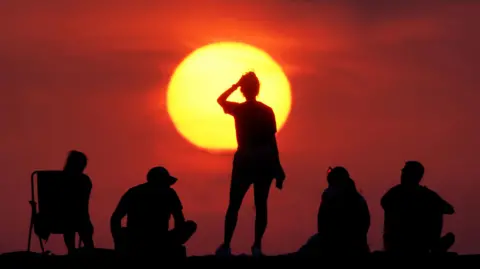
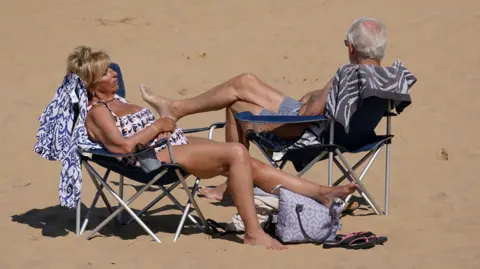
Dry weather then brought a warm, sunny summer for the Isle of Man, with average daily temperatures reaching 16C, (61F ) the hottest day of the year coming on 12 July with 26.7C (80F).
Recorded temperatures from June to August resulted in the warmest summer on record, the Met Office confirmed.
Salisbury put this down to "consistently warm temperatures" which the island saw not only in summer, but "all year round, day and night".
"All of the top 10 warmest years have been since 2000 - our climate is changing, it's here and now".
Salisbury said the "converse" happened during the autumn months, which brought "very wet weather" and floods.
"The wettest time of the year is traditionally autumn, but now we're seeing those months even wetter, with a 10% uplift in the amount of rainfall."
November and December saw a combined average rainfall of 325mm (12.8in), whereas the 30 year combined average for the two months sat near 190mm (7.4in).
The forecaster added his concern for the prospect of rising sea levels and tidal surges which have, in the past, resulted in costly damages.
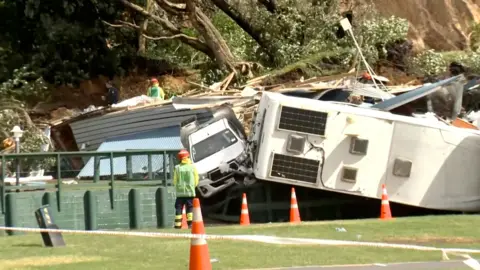
In 2014, the east of the island was badly affected after rising tide levels caused waves to crash onto land, namely at Douglas Promenade and Castletown.
Salisbury warned the island was very close to a similar event, when a tidal surge occurred during a high spring tide, during Storm Amy in October.
"That's not a prediction of the future, that's the roll of the dice, it could happen now.
"Sooner or later the dice is going to roll and we'll have a big storm surge on the day of a high spring tide which will cause millions of pounds worth of damage.
"There's a lot of decision makers here which are a bit dismissive of it being a real problem", he said.
Adverse weather at this time almost brought disruptions to the island's ferries.
"Think back 30 years, we were told then there'd be more floods and droughts and people were sceptical thinking how can you have more floods and drought, 'surely it can be only one or the other?'
"But that's exactly what we're seeing, it's less talking about what could happen in the future, it is happening, it's measurable and it's affecting us now."
Read more stories from the Isle of Man on the BBC, watch BBC North West Tonight on BBC iPlayer and follow BBC Isle of Man on Facebook and X.