Ancient Egyptian sick notes and invoices go on show

 The Metropolitan Museum of Art
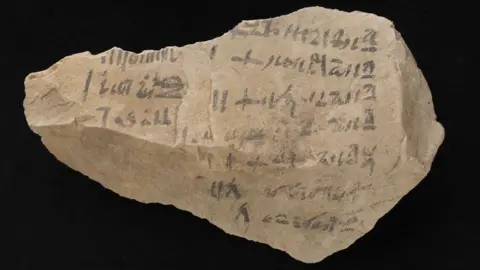
About 3,500 years ago, a craftsman called Panebu was recorded as off work - because he had been bitten.
The note about his absence is among dozens of ancient Egyptian everyday objects which have gone on display.
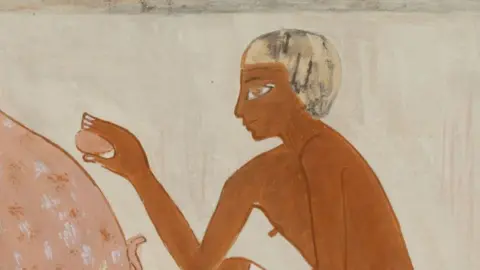
The exhibition at the Fitzwilliam Museum in Cambridge concentrates on the people who built the civilisation thousands of years ago.
They "are part of a huge body of information about these craftspeople who become living individuals, with similar concerns to us today", said curator Helen Strudwick.
 Musée du Louvre
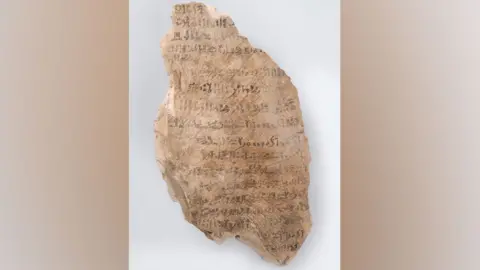
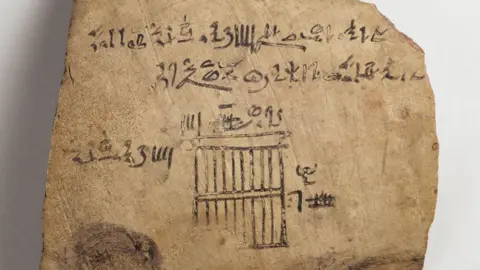
This includes an urgent order for windows, written alongside an illustration of a man with arms raised to show the size required.
The text, dating to between 1295 to 1186BC, says: "It's a job to do four of this type exactly, exactly! Hurry, hurry by tomorrow."
Ms Strudwick, senior egyptologist at the University of Cambridge museum, said: "We can all recognise the tone of voice of the man who needed his windows the next day."
 Musée du Louvre
The texts were written on shards of stone or pieces of pottery known as ostraca, used as notepads for writing reminders, or for administration.
The ostracon about Panebu, which does not record what or who he was bitten by, is among several on loan to the UK from the Louvre Museum in Paris for the first time.
Panebu was working on the royal tombs in the Valley of the Kings in ancient Thebes at the time.
Other absences were recorded on the same ostracon, including that the foreman Ramery was off sick, while on two consecutive days, the whole workforce attended a woman's funeral and no work was done.
 The Ashmolean Museum
Ms Strudwick said: "These remarkable ostraca... take us right into the lives of the craftsmen.
"We can sympathise with Panebu suffering from a bite [and] mention of the foreman Ramery starts to give us an idea about the organisation of these workers."
There is also a 3,200-year-old receipt for decorating a coffin on display, which showed that on average a complete coffin cost roughly the same as three months' wages.
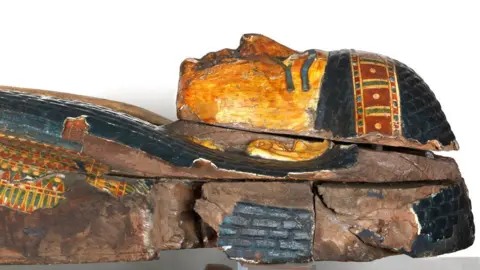 Fitzwilliam Museum, Cambridge
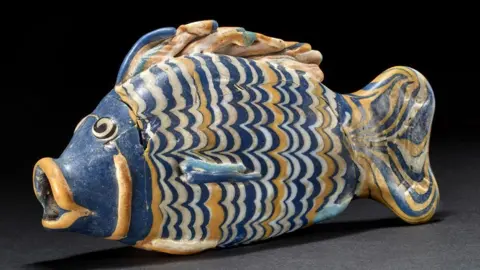
The museum describes the exhibition as the first to bring to life the ancient Egyptian makers at work.
Other artefacts on display include unfinished objects, which reveal their working methods, including changes to designs and corrected or covered-up mistakes.
In July, curators revealed the "rare and exciting" discovery of 4,000-year-old handprint on the back of one of the objects.
Made in Ancient Egypt runs until 12 April.
 The Trustees of the British Museum
Follow Cambridgeshire news on BBC Sounds, Facebook, Instagram and X.
