Mum wins row to live in son's annexe, even though he doesn't want her

 BBC
BBCA mum has won the right to continue using an annexe next to her son's house as her main home, despite his objections.
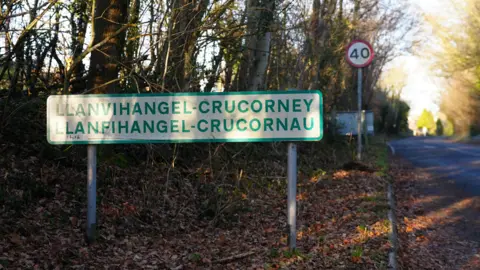
Juliet Light wanted the legal right to live in a converted stable block at the farm she owns in Llanvihangel Crucorney, Monmouthshire, saying it had been her main home since December 2019 and providing utility bills as evidence.
Her son Gareth Rees, who lives next door to his mother's annexe, argued her main residence was in nearby Pandy and claimed she was preparing to sell the annexe and the land around it.
On 22 December, Monmouthshire council said "on the balance of probabilities" Mrs Light demonstrated the legal right could be granted.
A planning condition imposed in 2011 for the annexe when it was approved meant it had to be a second part of the home – like a holiday let or an extension.
In Mrs Light's application for a certificate of lawful development, she accepted her use of the annexe was at odds with that condition, but because the four-year period in which the council could take enforcement action had passed, the breach of the planning permission was deemed lawful.
Mr Rees claimed the longest continuous period his mother lived in the annexe was eight months, from December 2021 until September 2022.
He argued his mother's application was "incorrect and misleading", claiming she bought a separate property with her husband in Pandy.
He said his mother used the annexe but did not stay overnight.
Council planning officer Kate Bingham said Mr Rees did not want to make an affidavit in support of his claims contesting what his mum had declared.
Ms Bingham said Mrs Light's statutory declaration stated she moved into the annexe in December 2019 "despite the occupier of that dwelling being the applicant's son".
This meant the council had "no evidence to contradict the statutory declaration and evidence provided by the applicant", Ms Bingham said.
She added: "Therefore, on the balance of probability, it is concluded the building has been continually occupied for at least four years as a separate dwelling."
Her report also confirmed the gardens of the two properties were physically separated with a fence and separate parking areas.
The report said the annexe has a separate water and electricity connection and the two properties pay separate council tax and are under separate legal ownership.
