Step forward in law to protect kids with allergies

 Family handout
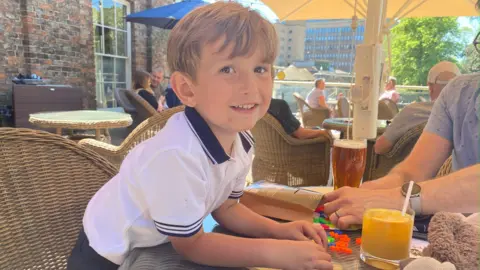
The family of a five-year-old boy who died from a severe allergic reaction at school said they were one step forward in getting a new law implemented to help keep children safe.
Benedict Blythe died after accidental exposure to an allergen - cow's milk protein - at Barnack Primary School, between Stamford and Peterborough, in December 2021.
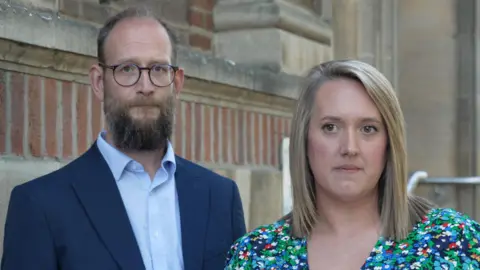
His mother, Helen Blythe, said she hoped the introduction of Benedict's Law would make allergy safety policies for all schools in England mandatory.
At the House of Lords on Tuesday, the government confirmed that it would consult on and publish new mandatory statutory guidance for schools on how to manage conditions and allergies.
The amendment would place a legal duty on schools to have spare adrenaline auto-injectors, ensure that staff receive allergy training and that allergy action plans were made for pupils.
"Having these in place will provide enough awareness for teachers and also support for them so they can provide the care so children can safely attend school," Blythe said.
 Family handout
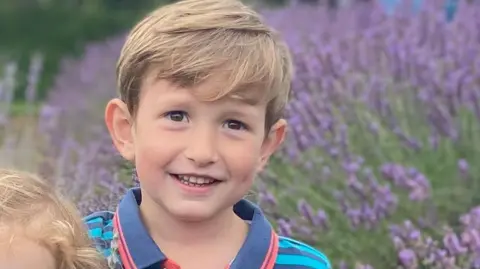
Benedict had asthma and a number of allergies, including eggs, nuts, kiwi fruit and milk.
Blythe said she was assured the school had policies and training to manage his allergies, and said it was "one of the reasons we felt secure and safe in him going to the school".
Benedict's parents said they had worked with the school to put together an allergy action plan which involved storing the milk, labelled with the child's name, in the staff fridge and pouring it into Benedict's cup in the classroom before handing it directly to him.
An inquest heard that on the day of his death, that process was not followed because his milk had been poured in the staff room and then taken to him in the classroom.
On 1 December 2021, while at school Benedict vomited twice before he collapsed.
At 12:57 GMT he was pronounced dead at Peterborough City Hospital due to food-induced anaphylaxis.
 DJ McClaren/BBC
An inquest jury found the school did not follow all the measures in place to prevent the fatal anaphylactic reaction - and there were risks of contamination with other milk and delays in administering an adrenaline pen.
Speaking to Louise Hulland on BBC Radio Cambridgeshire, Blythe said there would be "an expectation" that schools would need spare EpiPens.
The Children's Wellbeing and Schools Bill is currently moving from Lords Report Stage to consideration in the House of Commons.
Blythe said: "Until I hold this [bill] in my hand, emotionally we do not want to get ourselves too excited."
"For the first time a generation of children will be entering school from September with proper allergy protections in place, something we wish had been in place for our son Benedict, but which we're proud to have been able to deliver for other children and families in his memory," she said.
Follow Peterborough news on BBC Sounds, Facebook, Instagram and X.
