Repair hub helps charity become more sustainable

 BBC
BBCA charity has praised a repair hub after it saved hundreds of its donated items from going to landfill.
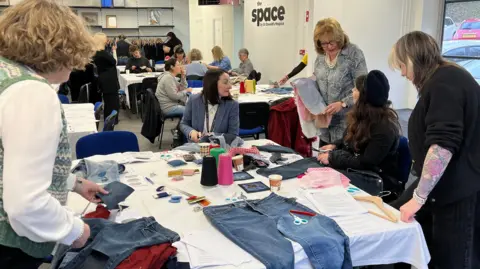
St Oswald's Hospice, which is based in Newcastle, has partnered with Northumbria University to put on Care & Repair mending workshops to teach volunteers sewing techniques.
These include darning or Sashiko - a Japanese stitching technique to strengthen worn fabric.
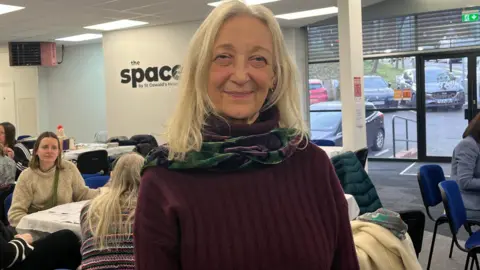
Anne Pierson-Smith, projects leader and a professor of fashion at Northumbria University, said learning repair skills was "important because it involves both the producer and the consumer".
The workshops are being set up before the introduction of new EU legislation to change the way the UK produces and uses textiles.
The European Green Deal, due to come in to force by 2030, mandates that clothing producers change to circular business models, which would make their products more durable and repairable.
"We should have more of an understanding of how we can care for and repair things because all of us overproduce and over-consume," Pierson-Smith said.
St Oswald's said the quality of donations had deteriorated in recent years due to fast fashion and more people donating damaged clothes.
Caryan Watts, retail development manager, said the charity tried to "make the most of every saleable donation" but a lot more "disposable fashion" was coming in.

"People should think about what you would want to see if you went into a shop - would you wear it yourself?
"If you could see it hanging somewhere and someone buying it, then absolutely," she said.
So far Care & Repair has saved about 250 garments and raised more than £430 with additional donations being made by workshop participants.
Participant Chloe Wright said: "I like to customise my own clothing, I love sustainability. I've actually been to ever single workshop since they began.
"It's something I've been in to from a young age. More places need to do events like this."
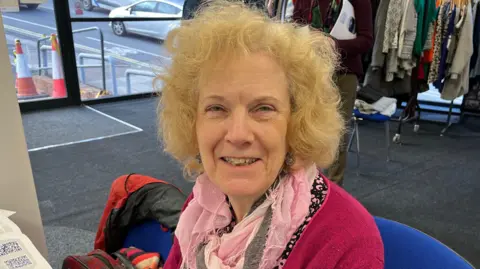
Hospice fundraiser Anne Gilchrist said times had changed from when she was growing up.
"You didn't throw something out, you used it for something else," she said.
"When you see the donations, you can't believe how much stuff there is in the world - we don't really need any more."
