'Crippling three-year wait for court has caused PTSD'

 BBC
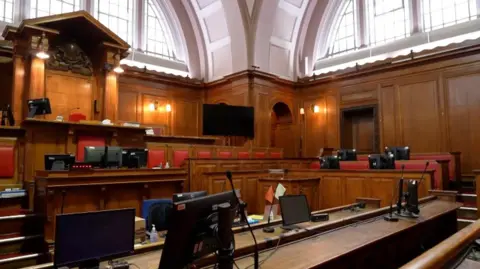
BBCA survivor of alleged domestic abuse has described the "crippling" anxiety of waiting nearly three years for her day in court.
The woman, who the BBC is referring to as Jane to protect her anonymity, said "you can get a speeding fine into court quicker than you can domestic abuse".
"The anxiety it's been causing me - I can't even explain to you how crippling that is," said Jane, adding that the wait has caused PTSD and depression.
A Ministry of Justice (MoJ) spokesperson said victims are facing "unacceptably long waits for justice after years of delays in our courts" and they are "pressing ahead with plans to reform" the system.
Jane added that if feels like there is not "enough recognition within the courts" about what delays to cases have on victims.
Cases like Jane's are not uncommon, figures show there is currently a backlog of 80,000 criminal cases waiting to go through the courts in England and Wales.
Earlier this year, the government unveiled a raft of measures to try and clear the backlog.
They include creating so-called swift courts, providing additional investment and handing power to judges to decide where cases are heard, which the MoJ says will end the ability of criminals to "game the system by dragging out proceedings".
Swift courts - which will see jury trials scrapped for crimes that are likely to carry a sentence of less than three years - have proven the most controversial of these reforms.
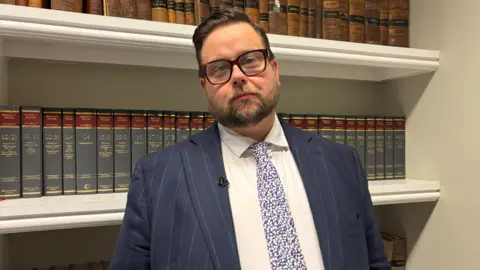
The choice to reduce trial by jury has been criticised by those in the industry such as the Criminal Bar Association.
Edward Hetherington, a barrister based at the Bristol-based Albion Chambers, is against reducing such trials - pointing out some crimes with sentences of less than three years can be serious, such as grievous bodily harm, drug supply and sexual offending which falls short of rape.
"If you're accused of one of those things and you're convicted of it, it will change your life." Hetherington said, adding that he thought making greater use of empty courtrooms was a better solution.
"We have courtrooms across the country, in Bristol, in Somerset, in Gloucestershire that are sitting empty for weeks at a time," Hetherington said.
"If you just put judges in the courtrooms that we have and maybe build a few new courts, you will very quickly have a court system that is absolutely able to handle the capacity."
A MoJ spokesperson said jury trials may only account for 3% of criminal trial cases, but they account for over 60% of crown court hearing time.
"Over 90% of all criminal cases are already heard fairly without a jury, by magistrates.
"That is why we are pressing ahead with our plans to reform the system based on Sir Brian Leveson's independent review, alongside modernising it for the 21st century with record investment," they added.
Follow BBC Gloucestershire on Facebook, X and Instagram. Send your story ideas to us on email or via WhatsApp on 0800 313 4630.
