Images of face released in bid to solve mystery of man found dead in wetsuit

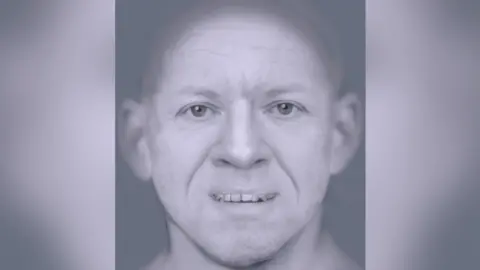 Face Lab at Liverpool John Moores University
Detectives hope a new digital recreation of a man's face could help them work out who he was - 18 months on from his highly decomposed body being found in a remote mid Wales reservoir.
The discovery of the man, who was wearing nothing but a XL Zone3 Agile wetsuit, sparked extensive police searches and international appeals, but no loved ones have ever come forward.
Specialists at a Liverpool university have now used photographs, dental records and CT scans of the man's skull to reveal he had "striking facial features", including an overbite.
Det Insp Anthea Ponting of Dyfed-Powys Police said she hoped the new images might finally solve the "unusual" mystery of the man in the wetsuit.
"Ultimately we're trying to do as much as we can to identify and return him to any family members that are out there who may be missing him," she said.
"We believe this is our best chance to identify the male."
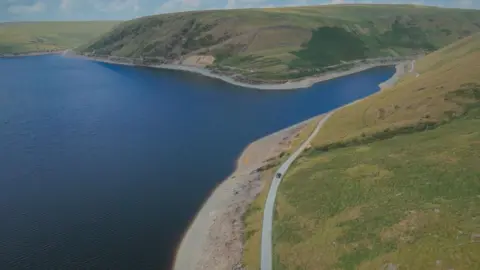 BBC Crimewatch
The mystery of the man in the wetsuit grabbed people's attention across the UK after police first appealed for the public's help in October 2024.
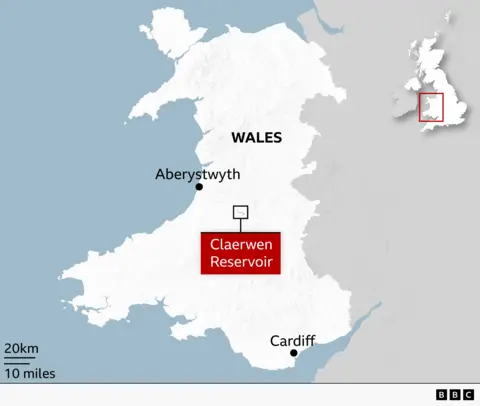
Earlier that month, a lone walker had spotted the man's body floating a few metres out from shore at Claerwen Reservoir, the largest and most remote of a series of reservoirs in the picturesque Elan Valley in Powys.
Police search teams set out on foot and by boat, looking for any belongings left behind on the shoreline by someone planning a wild swim.
A police helicopter was also scrambled to fly at low level over the bare upland hills and farm tracks surrounding the reservoir, on the lookout for vehicles or tents.
Due to the reservoir's depth, the water can cause cold water shock and signs warn against swimming or other water-based activities.
Despite this, the Elan Valley dams are no stranger to deaths - 55 people die in inland waters across Wales every year and the local fire station keeps a boat.
In the case of the man in the wetsuit, no belongings have ever been found. The man also had no jewellery or distinctive features like scars or tattoos.
And, despite the area being 20km (12 miles), from the nearest town, with no public transport service, no clue suggesting how the man got there has been uncovered either.
Detectives asked local police forces to scour their missing person databases, and checked the man's DNA and fingerprints with national records.
When that didn't produce any results, they cast the net wider, using the limited details they had to check for a match with the National Crime Agency's larger missing persons register.
Eventually, they reached out to Interpol, asking for international police appeals to be sent out to 24 European countries.
"Each time we have reached out to the public we've been provided with some lines of inquiry to follow up on, but unfortunately none have proven to be the key to finding out who this person is," said Ponting, who was on call the day the man's body was found and has led the case ever since.
She added it was "more unusual than not that we are in this situation", but the team was determined to get to the bottom of this "big unsolved case".
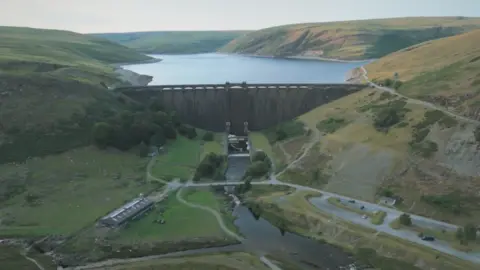 BBC Crimewatch
Due to the level of decomposition, police believe the man might have been in the water for up to 12 weeks.
Residents of the nearby town of Rhayader previously questioned how someone could get to the reservoir with no obvious means of transport and why their belongings would not be found on the shore.
Even in the height of summer, they said the reservoir had few visitors and it was unusual for anyone to swim there due to the warning signs.
Despite theories abounding as to how he got there, police say there is no evidence at this point to suggest a crime has been committed.
An inquest, which was opened and adjourned in February 2025, was told the death was "not currently thought to be suspicious".
Ponting said: "We obviously remain very open-minded, but we have to be guided by the information that's available to us.
"We know very little about him other than what we've been able to establish from the post-mortem examinations."
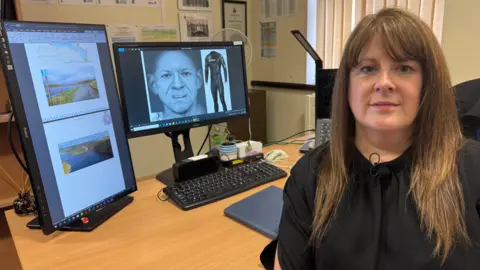
So far, the investigation team has established that the body found was a white male, aged between 30 and 60 and about 6ft (1.8 metres).
"The wetsuit that he was wearing was classed as an XL size which gave us a weight range of approximately 200 to 220 pounds," Ponting said.
"And that is pretty much what we were able to establish from our initial inquiries."
She is now hoping the new facial reconstruction by a team at Liverpool John Moores University might change all that.
Police provided the university's Face Lab team with photographs, a post-mortem examination report, a forensic dental report and a CT scan, which the specialists then used to create a 3D model with medical imaging software.
They used the dental report and images to create the shape of the man's lower face and mouth, identifying that he had protruding teeth and a left-sided cross bite.
They then estimated the shape of the man's face, lips and nose by adding muscles to the model and established he had a rounded chin and square jawline, with a down-turned nose.
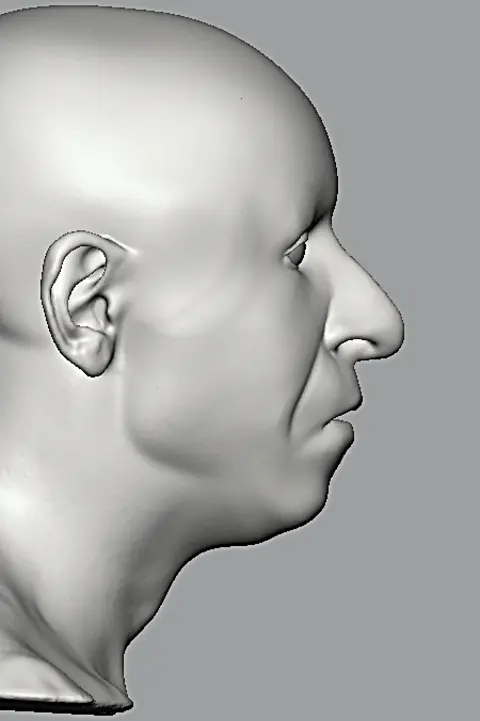 Face Lab at Liverpool John Moores University
Ponting added: "We have now been provided with a very clear and detailed estimation of what the man could have looked like, which I sincerely hope will result in some positive information coming forward.
"The image has already been processed through the Police National Computer for any matches and has been shared with Interpol, and we are once again asking the public for their assistance.
"This is someone's family member - someone's loved one - and I would like nothing more than to return him to his loved ones who might be missing him."
Additional reporting by Stephen Fairclough

Get our flagship newsletter with all the headlines you need to start the day. Sign up here.
