Charity launches screen time study for babies

 1001 Critical Days Foundation
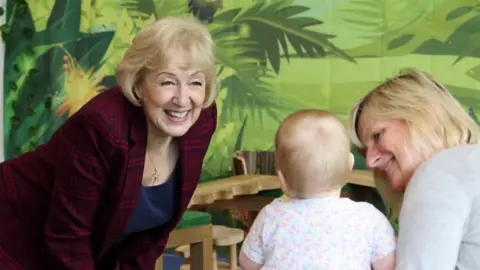
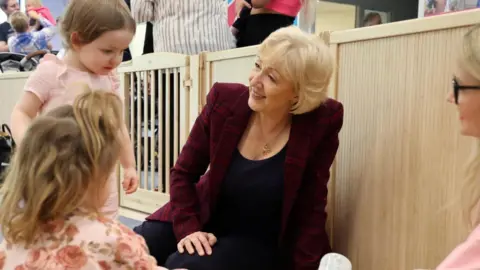
A charity founded by a former MP has launched a study to explore how screen time affects babies during the first 1,001 days of life.
The research has been commissioned by the 1001 Critical Days Foundation, which supports babies and aims to understand how digital exposure impacts early brain development.
It will be led by the interdisciplinary Action on Digital Device Immersive Conditions Team (iADDICT) – a group of academics from universities in Leeds and Nottingham.
Former Northamptonshire MP Dame Andrea Leadsom, the charity's founder, said it was "incredibly important" that parents could make informed decisions about screen use.
"It's very tempting to just pass an eight-month-old or a 12-month-old an iPad and put it somewhere that they can just be fixated by that so that you can carry on and get some rest," Leadsom said.
"I'd completely sympathise with that, and it may be that that's an absolutely fine thing to do, but I think what parents and carers do want to know is, is it fine?
"And if so, are there certain things that are better to be watching than other things? Is an iPad better or worse than a television because of the distance away from the eyes and so on?"
The study aims to fill a gap in understanding how screens affect children in their earliest years, and the findings are expected to create practical, evidence-based guidance for parents and carers.
 1001 Critical Days Foundation
Amber Horn, a parent and foster carer from Northampton, said she welcomed the research and added that screen use in her household depended on her children's needs.
"As a rule, my children never had screen time, a lot of it was only sort of in the morning when we were getting ready and they were sitting down," she said.
"I do have special needs children that do end up having more screen time because obviously it self-regulates them, whereas I wouldn't dream of giving my three-year-old a screen in the restaurant who actually sits really lovely and has no screen time because she doesn't have any technology."
Leadsom added there was a "significant volume of research coming from around the world".
"A study in Japan shows that around 29% of babies are watching up to three or four hours of screens a day," she said.
"And all of the evidence from parents and carers is they want more information on how to be a good parent and what it is that their baby and toddler needs," she added.
The research begins this month, with a final report expected in April 2026.
Follow Northamptonshire news on BBC Sounds, Facebook, Instagram and X.
