Jeane Freeman: SNP politician who led Covid response
 Getty Images
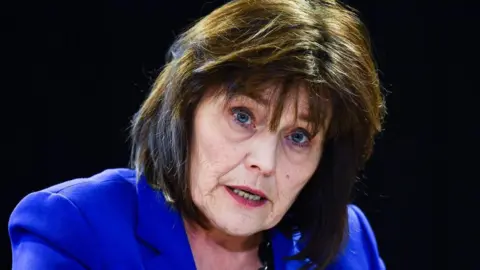
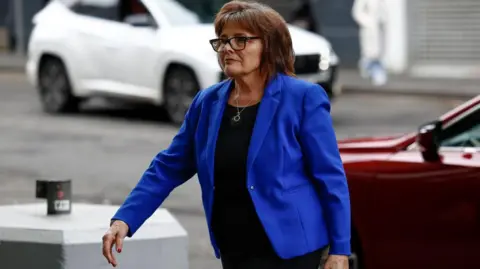
Jeane Freeman - who has died aged 72 - will forever be associated with the Covid-19 pandemic of 2020 when, alongside then First Minister Nicola Sturgeon, she led the Scottish government's response to the unfolding crisis.
It was an event which would tax even the most experienced of cabinet ministers. In fact, Freeman had only been an MSP since 2016 and had taken over the role of cabinet secretary for health in 2018.
At the best of times, health is a notoriously difficult department to run. Its budget is vast, as are its staff and infrastructure. Regular statistics on waiting lists and times put any politician at the head of it under enormous scrutiny and pressure.
It was to some extent Freeman's bad luck that her time in the role coincided with the pandemic and an inherited, developing crisis around the safety of two of Scotland's new hospitals.
There was little room for anything else during her time in office, but the work she did built on decades of experience in politics and public life.
Freeman entered the Scottish Parliament relatively late. She was 62 when she won the Ayrshire seat of Carrick, Cumnock and Doon Valley in 2016 – by which time she was a well-known and influential figure in the world of Scottish politics.
Her move towards political office was in parallel with her personal political journey.
Originally a nurse and member of the Communist Party, she switched to Labour in the 1980s and founded Apex Scotland, a criminal justice charity which worked on the rehabilitation of offenders. The role earned her an OBE in 1996.
Freeman ran unsuccessfully as a Labour candidate in council elections and was one of many high-profile women controversially frozen out of the selection process for the party's campaign for the first Scottish Parliament election in 1999.
Instead, she was recruited into a senior role in the civil service and worked with ministers in the early days of the new parliament.
Two years later she became one of the most powerful people in what was then called the Scottish executive, when she was appointed special advisor to the new First Minister Jack McConnell.
She worked across departments, gaining a reputation as something of an enforcer. Looking back, she said working on the NHS takeover of the private Golden Jubilee Hospital in Clydebank was one of the best things she did.
After leaving that role in 2005 she set up a public affairs consultancy and served on the boards of several public bodies.
This brought talk of a "Labour mafia" from the party's political opponents. For a while, sections of the media called her the "quango queen", though some of her critics would in time become colleagues.
 Getty Images
Because her time spent working for a Labour first minister changed Freeman.
She became aware of what she saw as the limits of the devolved settlement, and over the next decade began to regard independence as the answer to Scotland's challenges.
With her partner, Susan Stewart, she created Women for Independence, playing an important campaigning role in the 2014 referendum. Though Freeman's conversion to independence was relatively recent, the group also reflected her life-long feminism and commitment to ensuring women's voices were being heard.
From there it was a short step to the SNP, where she was somewhat fast-tracked under Nicola Sturgeon's leadership to a seat in her native Ayrshire ahead of the 2016 election.
Unusually, Freeman spent the entirety of her time at Holyrood in government, first as minister for social security and then, in 2018, as health secretary.
In an interview with Holyrood magazine upon joining the cabinet, Freeman said: "It is a big job. If I'm honest, I think the real pressure in this job is that you are dealing with human beings.
"This is about people's lives. Whether their condition is life-threatening or life-limiting, it matters to them so it should matter to me. And it does. That's the real pressure."
 Getty Images
True at the best of times, this was doubly so when Covid struck in 2020. Governments across the world battled to limit the spread of infection, implement lockdown, and keep the economy going.
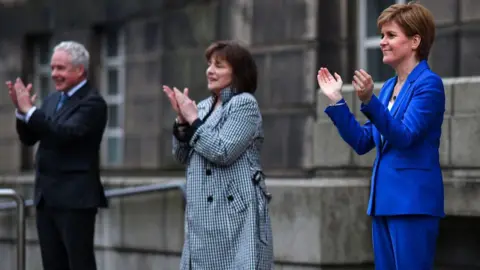
Freeman stood beside Sturgeon in press conferences throughout the next year. There would be praise for their calm stewardship and she was there at the start of the vaccine roll-out.
But the decision to discharge elderly hospital patients to care homes during the first few weeks of the pandemic without a requirement for a negative test was one which hung over Freeman for the rest of her time in politics and beyond.
The worst mortality rates were later seen within care homes as the virus spread among vulnerable residents, and it was another month before the guidance on testing was changed.
Speaking to the BBC in 2025, Freeman said she understood the anger of those who lost loved ones and recognised that people died because of that policy - but stood by their decisions as being the best they could make at the time.
She regarded tackling waiting times as her big mission when health secretary. It's fair to say Covid robbed her of her desire to do this.
The other controversy which hung over her time in office was inherited from Sturgeon's time in the health department - the question of whether deaths at the new Queen Elizabeth University Hospital in Glasgow were related to problems with its ventilation and water systems
Amid constant claims of cover-up and political attacks, including repeated calls for her resignation, Freeman set up a public inquiry in 2019.
More than five years later in January 2026, NHS Greater Glasgow and Clyde admitted that on the "balance of probabilities" the hospital environment, particularly the water system, caused some infections.
 Getty Images
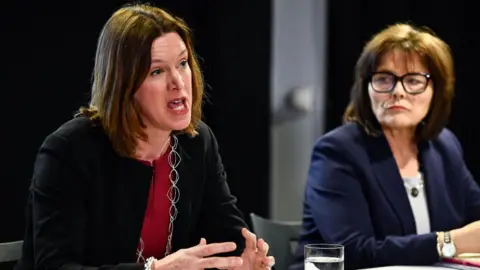
Freeman potentially prevented a similar crisis developing at the site of the replacement Sick Children's Hospital in Edinburgh in 2019. Faced with last minute concerns over the new building's ventilation system, she postponed its opening to get the problem fixed.
That led to a two-year delay and an additional £40m in costs before the hospital fully opened, but there was no repeat of the Glasgow deaths.
Covid, the hospital infections and their respective public inquiries cast long shadows over Freeman's post-Holyrood life. She gave evidence when called and spoke openly about her record, decisions, and regrets.
At the same time, she quietly began volunteering at the Beatson cancer unit in Glasgow, taking the tea trolley round wards. Her partner said it was a task she loved.
We don't yet know what the hospitals inquiry will conclude. At the time of Freeman's death, it has become a source of almost daily controversy.
Jeane Freeman was earnest in her regrets and unusually candid for a former politician about the mistakes her government made and the pressures they were made under.
In an interview with the radio station LBC about the UK Covid inquiry's findings, she said: "I'm also clear on the decisions that were made that were never binary decisions between a good thing to do and a bad thing to do.
"I've never claimed that we did everything right by any means.
"What I've always said is that I made the best decisions I believed were possible with the information I had at the time."
