Homeless health nurse 'helped me rebuild my life'
A County Down man who ended up on the street after returning from Scotland said his future looks brighter thanks to a homeless health nurse.
Curtis Durose, 33, said he left Northern Ireland because of a "chaotic life" but when he came back and tried to "rebuild", the "old chaotic problems" reappeared.
The former business owner said it has been "eye-opening" to experience real support which helped change his life in a short time.
Homeless health nurses work across Northern Ireland helping people access healthcare.
After exhausting places to stay and a night on the streets, Durose spent a couple of nights in the hospital "because I couldn't find anywhere else to go".
He is now in temporary accommodation at the Simon Community in Bangor.
"It's kind of eye opening when you come from a space where you don't have any support and then you realise just how much you can get from random people who, although it may be their job, it doesn't come across like it's their job.
"It comes across like they just genuinely want to help."

 Getty Images
After moving home from Scotland after a contract ended, Durose said he felt "stuck in this middle ground" between trying to get a job and housing but not having the support to do both until he came to the hostel.
"Prior to coming here, I started to think that I've had like an undiagnosed ADHD," he added.
"I've also suffered with mild addictions as well throughout my life.
"I would put down due to the chaotic past."
He said the homeless health nurse Lisa Ewart coming into the hostel has been the "biggest and best part about what she does".
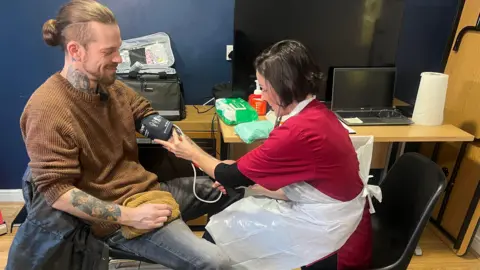
Durose said a nurse checking in regularly and putting addiction and GP supports in place helped him rebuild his life.
"From what it was before I ended up here in a very short period of time things have changed considerably for better," he said.
Support services for homeless people
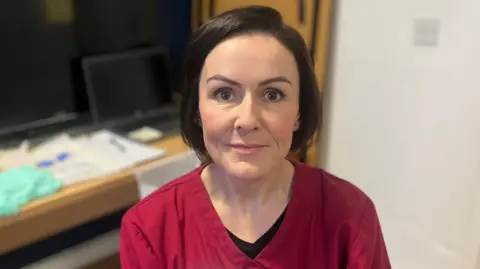
Lisa Ewart is a homeless health nurse in the south eastern trust.
She sees between 150 to 200 people a year in homeless health hostels such as the Simon Community, Women's Aid refuges and Depaul housing, as well as street sleepers.
Her role is to try and access people experiencing homelessness who have health issues, many of which are complex or chronic.
The first thing she does is get the access to primary care services, starting with getting them registered with a GP, which she said can be challenging.
"There's a lot of barriers to people accessing, even GP services, because they need proof of address, they need ID and things like even accessing your benefits you need a bank account and service users don't always have that.
"Sometimes there's a lot of stigmas attached to people experiencing homelessness and they're not met with the compassion that maybe other service users are met with, so they they're reluctant to engage with healthcare."
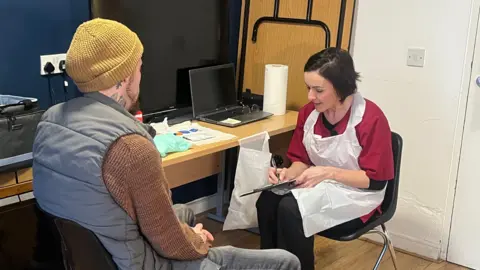
Ewart said people experiencing homelessness were affected by physical and mental health issues but there was "fantastic" support available within hostels.
"Things like mental health services, getting their regular medication and you get them stable," she said.
"They may need referrals into community addictions, to physio, OT - just linking in with all of the community teams as well - trying to get them back on their feet.
"Whenever somebody is well in their own physical and mental health, they're much more tenancy-ready and that's so important for getting people back into the community and able to sustain their own homes."
No GP access for homeless people
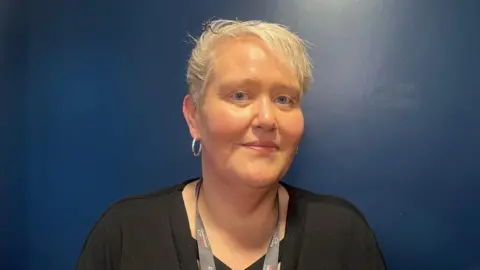
Adele McBurney is a senior practitioner at Bangor's Simon Community.
She said a big issue for those who are homeless is that they do not have access to a GP.
"Their mental health has deteriorated, and they feel despair. They feel depressed. They're really at a low ebb in their life," she said.
"When they come in here, it's part of our job to wrap that support around and Lisa is a big part of that."
McBurney said many clients are "intimidated" by GP surgeries and worry if they are going to be judged or that, if they have an addiction, they are not going to get medication, but Lisa's role has changed that.
"It certainly has improved their health conditions and how they communicate and how their medications are regulated now if they need, because Lisa will do follow-up appointments to say did that referral come through, have we got the correct medication? How are you taking it? Is there any side effects?
"If mental health and addictions are addressed properly, your life is far more manageable and it's not as chaotic. It has made a big benefit for moving them on to different housing."
