Flame shells recover from habitat damage, says report

 Graham Saunders/NatureScot
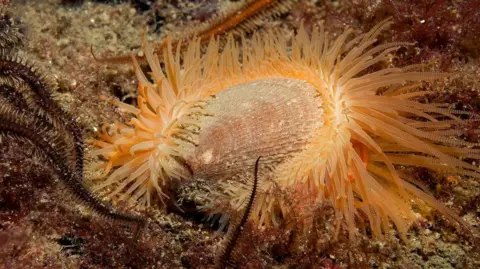
Colourful sea creatures called flame shells have recovered from damage to their Highland loch habitat, according to a new report.
A survey of Loch Carron in Wester Ross in 2017 suggested nests of the bivalve molluscs had been broken up and flattened, with tracks left by scallop dredging found in the area.
Researchers from Edinburgh's Heriot-Watt University returned four years later, after a Marine Protected Area (MPA) designation was in place, and recorded signs of recovery.
Scotland's nature body, NatureScot, said further surveys suggested the flame shell beds have expanded.
Rie Pors, NatureScot's marine habitats ecologist and surveyor, said: "It's wonderful news that an important habitat like this, which is home to so many marine animals and plants, can recover relatively quickly from damage.
"It shows the big difference a Marine Protected Area can make for the animals and habitats in our seas.
"Loch Carron is a real success story, showing what quick and decisive conservation action can achieve."
 Peter Webster/NatureScot
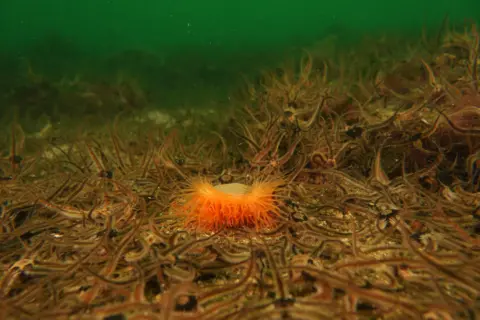
Flame shells are found mainly on the west coast of Scotland and are a type of small, saltwater clam known for their "fringes" of bright, fiery-orange tentacles.
They live hidden on the seabed in nests built from shells, stones and other materials, bounded together to form dense beds.
Conservationists say their nests support other species and help to stabilise the seabed, with Scotland's largest known flame shell bed in Loch Carron.
The species is also protected in five other MPAs around Scotland's coasts.
