Does Scotland's 'Instagram Highway' need a reboot?

 Getty Images
A "warts and all" assessment of the impact of the North Coast 500 road trip has been ordered amid concerns about overtourism.
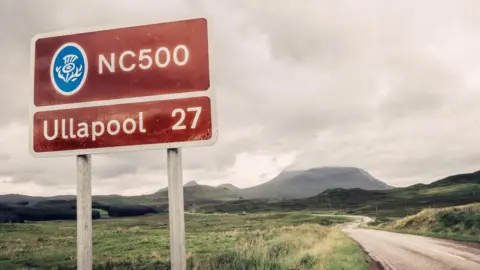
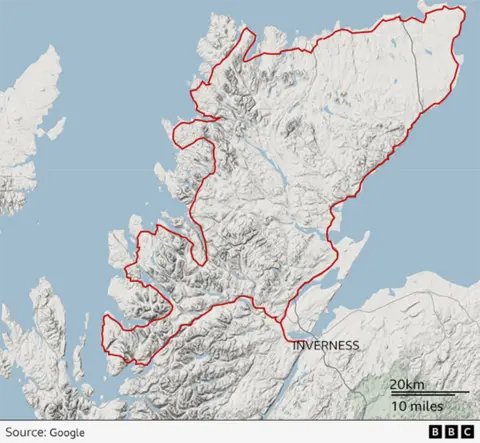
The route, which starts and finishes in Inverness, follows 516 miles (830km) of roads around the north Highlands.
It has been hugely popular but local concerns remain around increased traffic and littering.
NC500 Ltd, the private firm which promotes the road trip, has now commissioned a new economic and environmental impact analysis of the scheme.
When the NC500 was launched a decade ago, its website invited visitors to "take the road that never was, that suddenly appeared, as if by magic".
This plea has since been answered by huge numbers of visitors, pouring tens of millions of pounds into the Highlands economy every year.
'Good and bad'
But the route's popularity continues to divide local opinion as, for many, the "magic road" is simply the way to get to and from home.
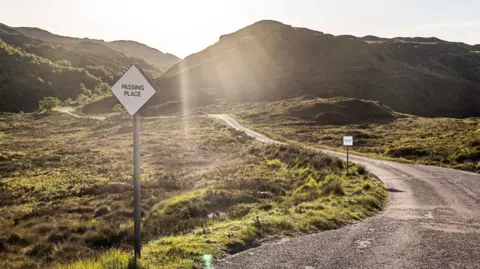
Concerns have been raised about increased traffic, particularly on stretches of single-track road, as well as the litter and toilet waste generated by tourists camping along the route.
David Richardson, development and engagement manager of NC500 Ltd, said the impact study was the start of a new conversation with the local community on how to improve the route.
He said: "We know there's good and we know there's bad. We can't wave a magic wand to make it all right.
"But we can conduct a study, get the results, and work collaboratively to solve the problems.
"We would love to bring the people who complain onboard."
Robin Pettigrew lives in the west coast village of Lochcarron and has seen the dirty side of the NC500 up close with campers dumping their waste into the drains outside his house and cyclists using nearby bushes for toilet breaks.
Mr Pettigrew said he welcomed the NC500 Ltd impact study "so long as it is warts and all" but said it was 10 years too late.
He said: "When the NC500 was first initiated, there was no environmental impact assessment - there was a general consensus 'it's only a road'.
"I'm not blaming the NC500 Ltd for the impact of some of our more feral visitors, of which we have many, but really the kind of constant promotion of it [the NC500 route] has been significantly abused and misrepresented by a number of organisations and vehicle hire companies."
 Robin Pettigrew
Mr Pettigrew said some form of regulatory solution and enforcement was required to guide people to more appropriate places to camp and visit.
He added: "There's a substantial element within the visiting community who don't want to pay for anything, won't use the infrastructure, dump their waste into the verges and cause wildfires with the campfires and barbecues."
How bad is the traffic on the NC500?
One of the challenges for people living along the NC500 - which has been dubbed the "Instagram highway" for its numerous scenic spots - has been the increase in traffic.
Department for Transport (DfT) traffic counters on the route show big increases when comparing data from 2014, the year before the NC500 was first promoted, with last year.
Separate Highland Council traffic counters also show increases in traffic along the route.
The traffic counted by the local authority on the A838 at Laxford Bridge jumped by 28% between 2015 and 2020.
However, a council report last year suggested overall NC500 traffic levels peaked about 2019, reduced during the Covid pandemic, and are now at a similar level to 2015.
As well as the volume of traffic, many residents are concerned about the size of the vehicles using the route as well as some drivers' speeding and poor rural road skills.
Environmental impact of the NC500
Reports from Highland Council's access rangers show they are dealing with increased incidents of littering.
A 2023 report showed that 8,657 outdoor toileting incidents were recorded across the Highlands that year, including 126 times where "black water" toilet waste from campervans had been dumped.
New public toilets and motorhome waste disposal facilities have been built on the route in recent years.
And last year visitors travelling the route were asked to sign a pledge aimed at encouraging responsible behaviour.
The NC500 impact study is expected to be published in spring next year.
Councillor Ken Gowans, chairman of Highland Council's economy and infrastructure committee, said: "The NC500 brings significant opportunities for our communities, but it also presents challenges that require careful management."
Eann Sinclair, Highlands and Islands Enterprise area manager for Caithness and Sutherland, said the route had achieved "recognition well beyond most people's expectations".
"However, it is now some time since an independent assessment of the route's impact has taken place, so it seems fitting that as NC500 Ltd turns 10 we examine its impacts (positive and negative)," she added.
